
I stopped at Tuskegee Institute because I was in the area. That is the entire reason. I had zero idea what to expect.
My mind was blown.
I had pictured a building with some exhibits in it. What it actually is: a working university campus, and the national historic site is spread across it. Tuskegee is the only college campus in the country designated a National Historic Site, and once you are standing in the middle of it you understand why nobody could work out how to carve just one building out of it.
Get your pass first
This is the practical thing I wish somebody had told me, so I am telling you.
You need a visitor pass to drive onto campus. You get it from the office across from the campus entrance, and then you come in through Lincoln Gate. It is free and it is easy — the university also has a request form on its website that you can fill in ahead of time to speed the whole thing up.
None of that is a hassle. It is only a problem if it surprises you at the gate. Make it part of the plan.
Look around before you go in
As you find a parking spot, take a minute to just sit in the hustle and bustle of a college campus going about its day. Students walking to class, people talking, ordinary university life happening on top of all this history. It is beautiful and it is inspiring, and it is not the atmosphere you get at most historic sites.
Then, on the walk from the car, look at what you are walking past.
The cemetery has been there since 1898, and both Booker T. Washington and George Washington Carver are buried in it, along with family members and faculty.
Thrasher Hall was finished in 1893 by students and teachers using bricks they made themselves, on campus. The building is the lesson.
Dorothy Hall went up in 1901 as a trades school for women. Carver lived in it in his last years, and it is now the campus hotel and conference center, which means students are still learning a trade in that building.
The chapel you see is from 1969. The original burned in 1957.
And there is a monument by Charles Keck, dedicated in 1922, of Booker T. Washington lifting a veil. It is called Lifting the Veil of Ignorance, and it is worth standing in front of for a minute before you go in.
The volunteer
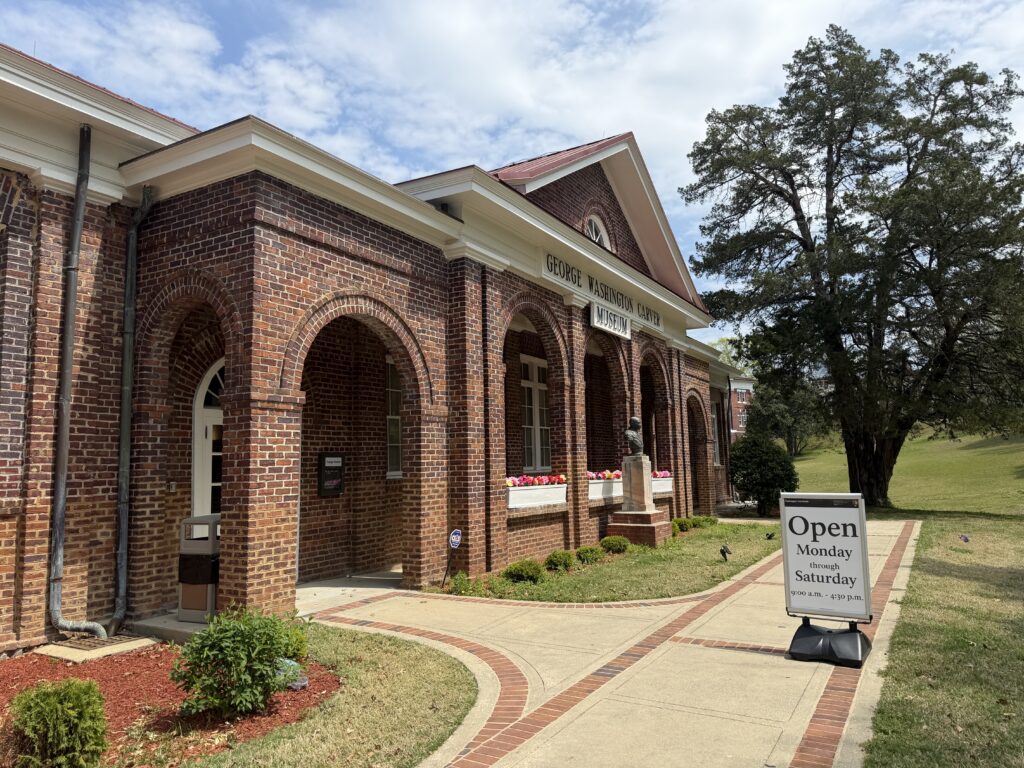
I was greeted by a volunteer who then walked the entire museum with me.
He knew this story completely. Not the placard version — the whole thing. He could explain Carver’s processes, what worked and what did not, and he rattled off the list of inventions still in use today off the top of his head without once reaching for a note.
I have said this about other stops on this trip and I will keep saying it: ask a question and then stop talking. The exhibits are good. The person standing next to you who has chosen to spend their week here is better.
Another phase of the same life
I had already been to the George Washington Carver National Monument in Missouri, which protects the farm where he was born and grew up.
So walking into the museum here felt like an extension of it. Same man, different chapter. Missouri is the boy. Tuskegee is the forty-seven years of work.
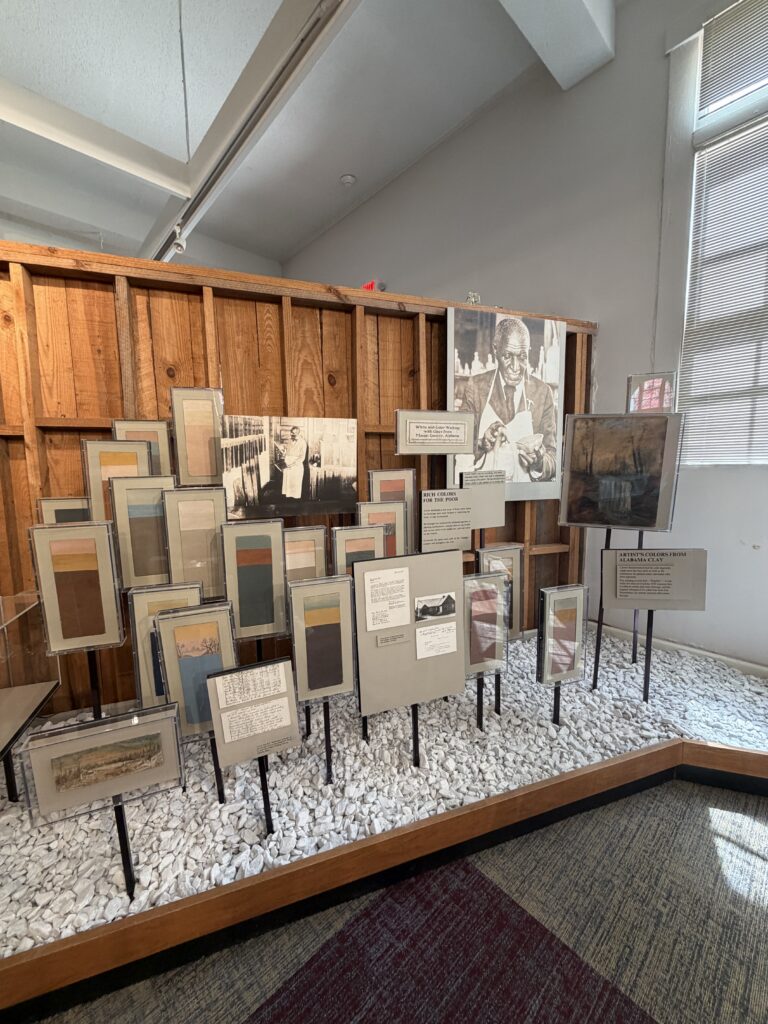
The museum itself is in a building that started life as a laundry in 1915, was converted in 1938 and dedicated in 1941 — so Carver saw his own museum open. It holds his scientific and personal things, and also a side of him people do not expect: geological and mycological specimens, bird mounts, preserved agricultural displays and his own artwork.
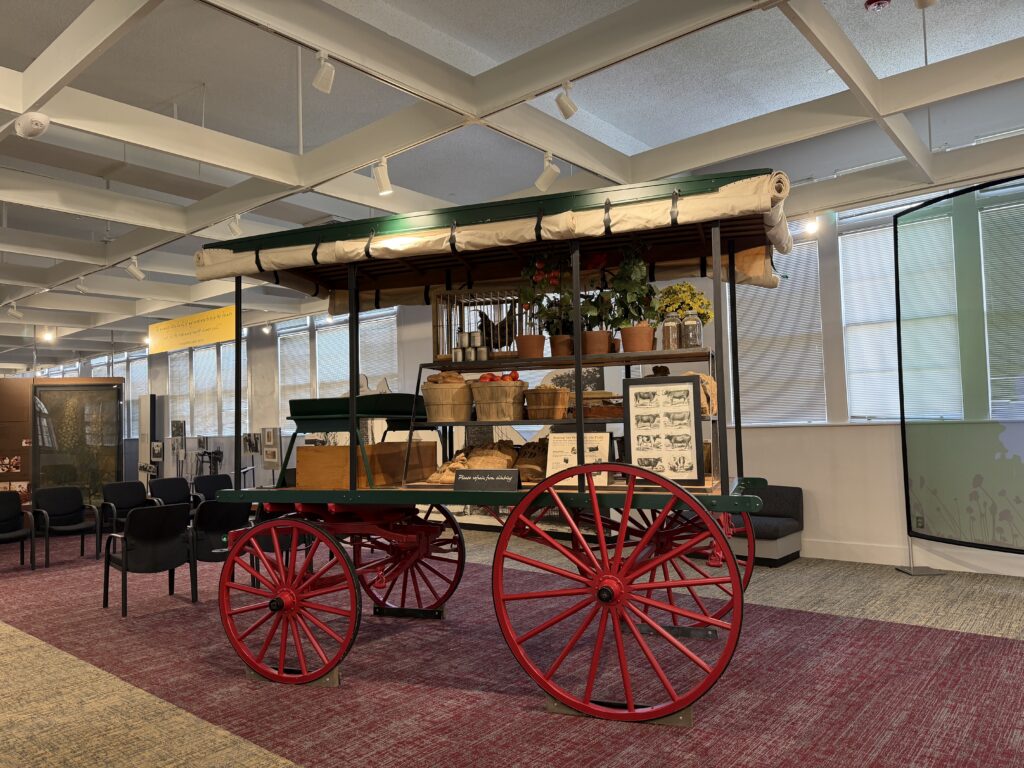
That is the part that stayed with me. The peanut list is what everybody knows. What is actually in those cases is a man who spent his life teaching Black farmers in the South how to put nitrogen back in soil that cotton had stripped, and who took the teaching out to them on the road when they could not come to him.
Give yourself more time than you think
I thought this would be a quick hit.
I stayed more than two hours, and I could comfortably have stayed four.
Between the museum, The Oaks and the campus itself, this is a half day, and it is a half day I did not know I was signing up for when I pulled in. Do not schedule it the way I did.
Traveling with a dog? Where I Would Actually Take My Dog is every park on this site, sorted by whether she can do the activities you came for.
Basics
Entry: Free. There is no admission fee and no park pass required.
Hours: The George Washington Carver Museum is open Monday to Saturday, 9:00 a.m. to 4:30 p.m., closed Sunday. The Oaks is only open Tuesday to Thursday, with guided tours at 9:30, 10:30, 1:30, 2:30 and 3:30. Both close on Thanksgiving, Christmas and New Year’s Day.
Campus pass: This is the one to plan for. You need a visitor pass to drive onto the Tuskegee University campus. Pick it up at the office across from the campus entrance and come in through Lincoln Gate. The university has a request form on its website you can complete in advance, which makes it quicker.
Where: The George Washington Carver Museum is at 1212 West Montgomery Road and serves as the park visitor center. The Oaks, Booker T. Washington’s home, is about a third of a mile away at 1200 West Montgomery Street.
Phone: 334-727-3200. Worth calling ahead about tour times for The Oaks.
How long: Half a day. I came for a quick stop and stayed over two hours, and I would happily have given it four.
Worth knowing: This is an active university, not a museum campus. Term time means students, traffic and parking. That is a feature rather than a problem, but plan for it.
What to pack and wear: Comfortable shoes. The museum, The Oaks and the campus walk between them add up, and the distances are longer than they look on the map.
Alabama is hot and humid from late spring into the autumn, and a good part of this visit is outdoors between buildings. Water, and something for the sun.
Pets
Tootsie sat this one out in the air-conditioned RV.
That was the right call, and it is worth being straight about why. This is not a stop where the dog waits twenty minutes while you nip inside. Between the museum, The Oaks and the campus walk, I was gone for over two hours, and I could have been gone for four.
So if you are traveling with a dog, the question is not whether they are allowed. It is whether you have a way to keep them genuinely comfortable for half a day in Alabama heat. If you do, go and take your time. If you do not, this is a stop to do on a day when somebody else is with you, or to save for cooler weather.
If this interests you
George Washington Carver National Monument in Missouri is where Carver was born, enslaved, in about 1864. He came here in 1896 and stayed forty-seven years. One life, two parks, a thousand miles apart.
Tuskegee Airmen National Historic Site is a few minutes away at Moton Field.
Additional Resources
Tuskegee Institute National Historic Site — the official National Park Service site.
Campus access, hours and tours change. Check with the National Park Service and with Tuskegee University before you go — details here were verified in September 2026.