
Most of what we learned about Harriet Tubman in school fits in two paragraphs. Ranger Tim Van Cleve is here to fill in the rest. The two-pound weight thrown at her head as a child that cracked her skull and gave her epileptic seizures for life. The 13 trips south after her own escape — not just to free her family, but to liberate strangers. The Christmas Eve escape of 1854, when she blindfolded her father so he could truthfully say he never saw her. The Combahee River Raid of June 1863, when she helped liberate 700 enslaved people in a single military operation — a full month before Gettysburg. And the moment decades later when a group of young women from Afghanistan walked into the visitor center already knowing her story by heart.
A note from Missy: Harriet Tubman, and her story, is so much more complex than what I learned in school. It was this park, and subsequent reading, that sparked my interest in better understanding a part of our history that is often overlooked or minimized. Harriet is a role model for all of us fighting for our rights and the rights of others.
Episode Guest
Tim Van Cleve
Harriet Tubman Underground Railroad National Historical Park
Park Stats
- Location: Church Creek, Maryland (near Cambridge, Dorchester County)
- Designation: National Monument 2013 (President Obama); National Historical Park 2014
- Size: 480 acres (NPS) + 14 acres co-managed with Maryland State Parks (visitor center)
- Co-management: Maryland State Parks owns the visitor center and buildings; NPS owns Jacob Jackson Homesite several miles away
- Harriet Tubman’s birth: Approximately 1822, Madison, Maryland (about 5 miles from the park)
- Self-emancipation: September/October 1849
- Underground Railroad trips: 13 trips south, 1850–1860
- Combahee River Raid: June 1863 — 700 enslaved people liberated, 100 joined USCT
- Year of Harriet Tubman: 2022 (Maryland Governor Hogan’s declaration)
- Two parks named for her: Harriet Tubman UGRR NHP (Maryland) + Harriet Tubman NHP (Auburn, New York)
- Visitor center hours: Tue–Sun, 10am–4pm (closed Mondays)
- Groups over 10: Reservation required
Show Notes & Links
- Harriet Tubman UGRR NHP — official NPS website
- Harriet Tubman NHP — Auburn, New York
- Harriet Tubman Byway — self-guided driving tour
- Harriet Tubman Underground Railroad State Park — Maryland
- Harriet Tubman Education Center — Cambridge, Maryland
- Eastern National bookstore — visitor center
- Blackwater National Wildlife Refuge — adjacent
- Soldier of Freedom — 16-minute film on YouTube
- Visit Dorchester — trip planning
Transcript
Harriet Tubman Underground Railroad National Historical Park — Soldier of Freedom
The Parks Podcast, Episode 15 | Tim Van Cleve, Park Ranger, Harriet Tubman Underground Railroad National Historical Park
How the Park Came to Be
Missy Rentz: In celebration of Women’s History Month, we are stopping at one of the 10 parks in the National Park Service system that is named after a woman. And this woman showed strength, resilience, and led hundreds of people to freedom. Join us as we explore Harriet Tubman Underground Railroad National Historical Park. We are very lucky to have Tim Van Cleve, a National Park Ranger at Harriet Tubman Underground Railroad National Historical Park. Tim, welcome.
Tim Van Cleve: Well, thanks, Missy. Thanks for having me and giving me this opportunity to share some stories about Harriet Tubman and the greater Dorchester County, Maryland area.
Missy: Let’s dive into some stats about the park. Harriet Tubman Underground Railroad National Historical Park is located in Church Creek, Maryland. It was designated as a national monument in 2013 and a national historical park on December 19th, 2014, when Barack Obama was president. The park is 480 acres. Most parks have a super interesting journey to how they became a park — how did Harriet Tubman Underground Railroad become a national historical park, and why is it important in the park service system?
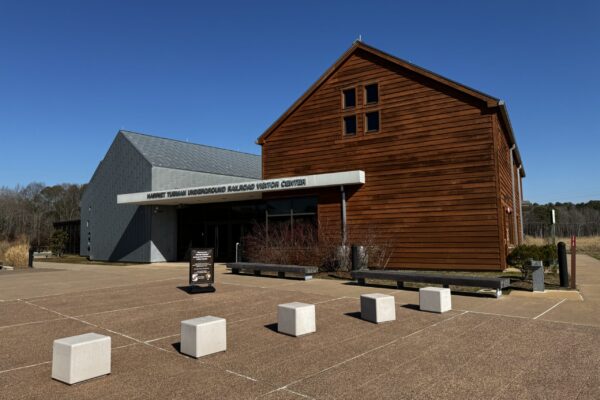
Tim: As you said, it was designated as a national monument in 2013 by President Obama. The national monument is a larger area — the National Historical Park was established in 2014. This park is unique because we co-manage the site with Maryland State Parks. The visitor center is actually on 14 acres — Maryland State Parks owns all the buildings. The 400-plus acres that make up the National Historical Park is actually what the National Park Service owns, a few miles away at the Jacob Jackson Homesite.
Tim: This came about because in 2013 and 2014, they realized that in 2022 it would be the 200th anniversary of Harriet Tubman’s birth. So Maryland State Parks, along with the National Park Service, got together. The visitor center finished and opened in 2017, giving us enough time before the 200th anniversary to get it up and running. In 2022, Maryland Governor Hogan declared it the Year of Harriet Tubman. Our anchor event was a program we did out in the community with community partners in September of 2022. Establishing the park was a way to incorporate her story and the story of the Underground Railroad, and to bring those stories to the public in a way they might not have been well known.
Missy: And I think it’s really interesting that the whole area is really part of the storytelling. There’s museums and a mural, and the whole town really has — even long before the park started — been keeping her story alive. You mentioned it was in the 70s that they developed groups to preserve her legacy.
Tim: Right. As early as the 70s, down at the Bucktown Methodist Church, they were celebrating with a Harriet Tubman weekend. Then that grassroots movement led to the establishment of the Harriet Tubman Center in downtown Cambridge in the 90s. Those folks were here long before we were. They picked up the torch and they were leading the way, telling her story. That happens throughout the United States — the National Park Service sometimes gets to step in and bring a larger awareness, but it’s really important that these grassroots organizations tell those stories first.
Tim: There’s also the Harriet Tubman Byway — a byway through the state of Maryland that runs from Southern Dorchester County up to Philadelphia, following Highway 16 through Maryland, then up through Delaware and Wilmington, eventually ending in Philadelphia, with about 45 historical stops. That brought attention not just to Harriet Tubman’s story, but also to the Underground Railroad, the Free Black community, and the Quaker community — because all of those different communities had a part in the Underground Railroad movement. Take one of those parts out, and historically it might not have been as successful. It really took all of those different communities working together. The Harriet Tubman Byway has a map that can be accessed online, and it’s a really nice drive through the countryside of Maryland and Delaware.
Harriet Tubman’s Story — Deeper Than the History Books
Missy: This episode is airing during Women’s History Month. She’s extraordinary in so many ways. I was so emotional after visiting the museum that I needed to process my day. Can you tell us a little bit about her life — deeper than what we learned in the history books?
Tim: Just going back to where you started — she actually has two parks named after her. Our sister park is up in Auburn, New York, where Harriet Tubman settled. So this woman has two parks dedicated to her. She was born in southern Dorchester County in 1822, about five miles from the park in an area known as Madison, Maryland, down a country road called White Marsh. She was born into slavery, and at an early age she has a lot of suffering in her life. She sees three sisters sold into slavery and would never see them again.
Tim: When she was young, she was at the Broadus Farm where she was enslaved, about seven miles from the park. While there, she went over to the Bucktown Village Store — and one of the most traumatic events in her life was that she was hit in the head with a two-pound weight. That caused epileptic seizures for the rest of her life. She was ordered back into the field the next day despite her head bleeding — it had cracked her skull. She was a young girl, going through that would be so traumatic.
Tim: She was really close with her father. He taught her how to handle an ox team. The timbering business down in the Madison area was an economic force — they would sell timber to the shipyards up in Philadelphia and Baltimore. She was always coming in contact with African-American sailors, historically referenced as blackjacks. She’s certainly getting information from them. She learned she was going to be sold into slavery. In September 1849, she and her two brothers took off — but they didn’t make it very far. Her brothers got scared and they turned back. A couple of months later, right before Christmas, she learned she was going to be sold into slavery by her slaveholders. In Maryland at that time, slaveholders were debt-ridden and selling off enslaved people to the deep South, where the rise of cotton and sugar plantations had created enormous demand.
Missy: So when you talk about being sold into slavery — she was a slave, but the fear was she was being sold to another plantation or slaveholder far away.
Tim: Right. She most likely would have been sold south — to a slaveholder who came from the South looking for enslaved people, and then taken away, never to be seen again. Like her three sisters. In October 1849, she took off by herself — and that is her emancipation. She made her way up to Philadelphia and got in contact with William Still, who was a major player in the Underground Railroad there. From then on, she would never be enslaved again. It was a year later, in 1850, that the first of her 13 trips helping freedom seekers north would begin — starting with her niece and her niece’s two children from the Cambridge auction block here in Maryland. Basically from 1850 to 1860, she made 13 trips.
Missy: The fear that must have been in her as she was escaping for herself — and then to keep coming back. Tell us about some of those trips.
Tim: She always wanted to come back and get one of her sisters. She came back — her sister said no, because her children had been split up and she wasn’t leaving them. And she came back one time to find out that her sister had passed away, which is just heartbreaking. She came back in 1854 for what’s called the Christmas Eve Escape. She’s going to liberate her brothers and her brothers’ families, who were up on a farm in Caroline County. They were hidden in a corn crib. What’s interesting — she didn’t tell her mother, because her mother would have gone hysterical and given up the secret. And she blindfolded her father, Ben Ross — because if asked, “Did you see Harriet?” he could legally say, no, I didn’t. They hugged, they talked for a little bit. Then later that night, she led her brothers and their families out. She came back again in May of 1857 to get her parents out.
Missy: How would they have communicated with each other to coordinate all of this?
Tim: There was a network. People like Sam Green — who was actually thrown in a Baltimore jail for owning a copy of Uncle Tom’s Cabin, which was illegal — and Jacob and Dinah Jackson. Jacob Jackson was a free Black man down in the Madison community. He was literate, a self-taught veterinarian, very profitable as a farmer, and they would apprentice African-American children and show them a trade. For the Christmas Eve Escape, Harriet Tubman — who was illiterate — had a letter written to Jacob Jackson. They were reading his mail. They knew he was communicating with people. She put a code in it: “Tell my brothers to be looking unto heaven when the good old ship of Zion comes, to step aboard.” That coded message — tell my brothers. That means she’s coming down to get her brothers. When the good old ship of Zion comes, tell them to step aboard. So they need to get ready. Jacob Jackson then had to get notice up to Caroline County. She’s not just showing up — there’s a lot of communication. There’s a really intricate network. The reason they call it the Underground Railroad is because there are stations, conductors, people moving through — a lot of communication.
Missy: There’s got to be a lot of trust in that situation too. You can’t read, you can’t write, and you’re trusting these people.
Tim: Harriet Tubman said — every time I saw a white person, I didn’t know. On one of her escapes, they were running through the woods and they saw a man walking down the road singing to himself. They thought he was crazy. He was actually singing directions to her — to a barn he had food and clothing in. But there was also an escape in 1853 or 54 that didn’t involve Harriet Tubman — it involved a white Irishman helping to get people out up in Caroline County — and they were betrayed by a free Black man who basically wanted the reward money. You couldn’t trust anybody. It didn’t matter what your skin color was. You really had to be careful.
Missy: While the museum and the park is telling the story of Harriet Tubman and the Underground Railroad, she is an example of something much bigger that happened throughout that region.
Tim: Right. And I also try to let people know it wasn’t just Maryland’s Eastern Shore, Pennsylvania, New York, and Massachusetts. The actual Underground Railroad stretched all the way to Iowa. There’s slavery in Kentucky — people going up through Indiana, using rivers and waterways to get to Windsor, Canada, which is across from Detroit. I spent nine years down at Cane River Creole National Historical Park in Louisiana. We know enslaved people used El Camino Real, a historic trail, to get through Texas to Mexico. Mexico outlawed slavery in the late 1820s — they knew if they got to Mexico, they’d be free. It’s just bigger than what you see in the museum. That’s what I love about planting the seed and telling people — hey, it also happened over here. It even happened in my home county in Montgomery County, Indiana.
Planning Your Visit
Missy: When you go to a lot of parks, you expect a grand entrance and lots of hiking trails — that’s not what this historical park is about. It’s rather small and unique in all the community engagement. This is just one stop as you’re planning your trip.
Tim: We’re lucky to be right next to Blackwater National Wildlife Refuge, which has been here forever. This time of year it gets a lot of attention because of the migrating birds — thousands and thousands of ducks and geese every day. We get a lot of folks from the other side of the bridge — Annapolis, D.C. — who come over for the birding. They’ve been doing it for generations. You can spend a whole day doing just those two sites right there. And of course the Harriet Tubman Education Center downtown in Cambridge — open Thursday, Friday, and Saturday afternoons, a volunteer organization. And then the byway, Highway 16. If people are heading back to Annapolis or D.C., I’ll send them up the byway to hit some of those sites, then they can take 404 and Highway 50 right over the bridge. There’s a lot to do — you can spend a nice weekend exploring everything from Annapolis to Southern Dorchester County. Cambridge is historic, and of course Oxford and St. Michaels get a lot of tourist traffic. A little farther north, Chestertown. There’s just a lot of things to do over here.
Missy: So when someone decides they’re going to head your way, where’s the best place to start planning?
Tim: I always tell folks, start with the National Park Service website. Everything’s going to be up to date — the times, hours of operation, location. We rely these days too much on Google Maps, and sometimes it will send you the wrong way. The park website is nps.gov/hatu. That’s the best place to start. At the bottom of the front page, if they scroll down, there is a contact us link that goes right to my email — so I’m the one who’s going to be answering any questions. And then if you want to build out, you can go to visitdorchester.org. The State Park has a nice website as well. But anything National Park Service related — whether it’s my park or Glacier, Everglades, the Smokies — always go to the National Park Service website first.
Missy: When somebody comes to the headquarters, what can they experience there?
Tim: When they arrive at the visitor center, they can watch a 16-minute movie called Soldier of Freedom — it’s actually on YouTube. We have our cooperating association, Eastern National Bookstore. And then they can go through the exhibit, which has really good sections explaining her life, the different episodes of growing up here in Dorchester County, her 13 escapes, her self-emancipation. Also a part that I actually didn’t know until I got here was her involvement in the Civil War. She was part of what’s called the Combahee River Raid, which took place in June of 1863 — a full month before Gettysburg and Vicksburg. She was down in South Carolina, recruited by the Union, and she did some reconnaissance on the Combahee River, which runs deep into the interior past several plantations. She told the enslaved people there — we’re coming to get you. Then she helped lead a Union force in three steamboats up the Combahee River and liberated 700 enslaved people. One hundred of those men joined the United States Colored Troops to fight for their freedom. We have a really good exhibit about that. And then there’s also her life up in Auburn, New York, and her involvement with the women’s movement there.
Missy: There’s also a half-mile walking trail around the venue, and a beautiful pavilion with picnic tables. Packing a lunch and sitting down by the water — there were a lot of birds, it was just a beautiful, serene place to soak up your experience.
Tim: We have a pavilion and picnic tables, and also picnic tables out on the grounds by the pond — that gets a lot of use, it’s very serene. The pavilion is for rent for groups — all done through the State Park. Any groups over ten require a reservation, and we have a link on our website. And I’d mention the art in the exhibit — the detail it goes into is really incredible. You can see her evolve as a young girl into a woman. Just incredible work.
Missy: What else should people know about planning a trip?
Tim: We are closed on Mondays. We’re open Tuesday through Sunday from 10 to 4. If you can make it during the week, you’ll probably have a better chance of fewer visitors. Plan on at least an hour to an hour and a half to see everything — and if you’re like me and like to read every single sign, maybe a little more.
Speed Round
Earliest park memory?
When I was a youngster in Indiana, we would drive through Vincennes, Indiana, where there is George Rogers Clark National Monument. I always begged my parents to stop. Sometimes they did. That’s really my earliest memory of the parks — and also as a kid going down to the Smokies.
What made you love the parks?
The history. As a kid — the history and the story. Young boy thinking, oh wow, battles. And then when I got into graduate school, it really worked out where I paired my graduate work with the National Park Service. It just clicked. It was a nice fit.
Favorite thing about Harriet Tubman Underground Railroad National Historical Park?
Talking to the visitors and telling not only her story, but the bigger story of the Underground Railroad and how she fit into that story. And then guiding them to those sites that would incorporate that story.
Favorite thing to do at the park?
Talking to visitors.
Park on your bucket list?
Isle Royale — because I’m a big backpacker and I want to go up and hang out with a moose.
Three must-haves for a park visit?
My passport book, because I like to collect the stamps too. A bottle of water. And maybe some literature — but not too much. I kind of like to explore on my own.
Favorite campfire activity?
I’m a backpacker, so we basically cold camp — we usually don’t ever have a fire. But after a hard day’s backpacking, I love a good meal.
Tent, camper, or cabin?
Tent.
Hiking with or without trekking poles?
Without.
Favorite trail snack?
Smoked salmon.
Best animal sighting?
About ten years ago, I was with a National Park Service buddy in the very northern part of Glacier. We’d been out in the backcountry for about seven days backpacking, and we saw a moose in a pond just sitting there feeding on the grasses below the waterline. Not a care in the world. That was pretty cool.
Favorite sound in the park?
Birds. One of my favorite parks is Salinas Pueblo Missions National Monument in New Mexico, where I’ve worked. One of the missions has an area known for its songbirds that come through. I’ll take my lunch out there and just eat and listen to the birds.
Greatest gift the parks give to us?
Beauty and education. Whether it be historical education or scientific education, you can really just pick and choose what you want to learn. There’s such a vast variety of history and knowledge within the parks. And of course the beauty. I don’t know if visitors realize how many international visitors we get — because you’re not going to find the Grand Canyon in the middle of Europe. The National Park Service is top notch, and the whole world knows it.
Missy: Tim, thank you so much for sharing stories of Harriet Tubman, of the park, and your knowledge. Really appreciate you being part of this episode.
Tim: Missy, thanks for having me. I enjoyed it. And I hope a lot of folks will come and visit us.
Missy: Thanks for joining us on today’s episode. Until next time — we’ll see you in the parks.
Music for The Parks Podcast is performed and produced by Porter Hardy. Follow us @TheParksPodcast or visit TheParksPodcast.com.