
I thought I knew a lot about the story of Harriet Tubman, but what I was taught was the tip of the iceberg. I’m so grateful for this park, and a place to go to learn more about her story, struggles, and major impact that she made on this country.
The headquarters location is home to a Visitor Center and an incredible museum. You can watch a short video about Harriet’s story, but then plan to spend time walking through the museum. They’ve done an incredible job curating the content and telling her story in a way that you feel very connected to her.
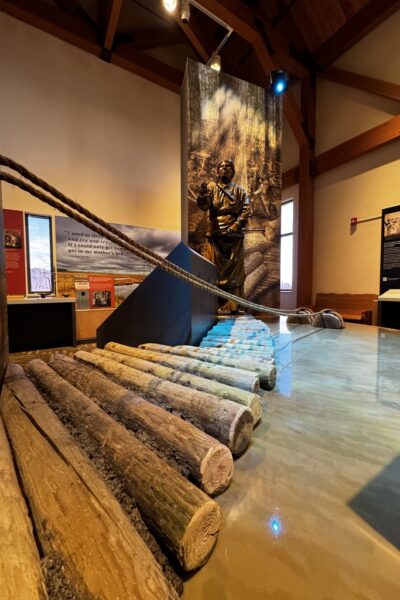
I’m someone who likes to read every sign in the museum (don’t tell my dad…I used to give him such a hard time for this as a child). It took me a good hour or so to see everything in the museum. And of course, I had to stop by the gift shop to stamp my passport book and buy a Christmas ornament.
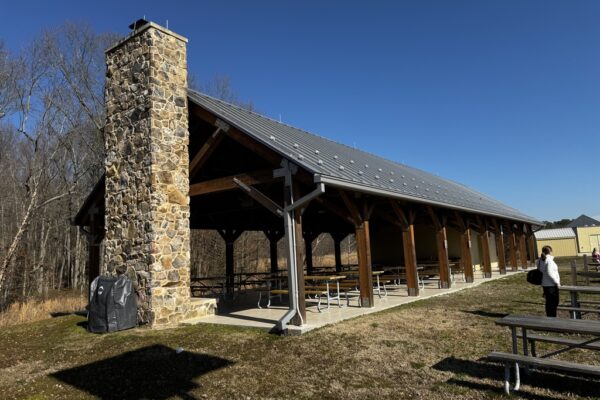
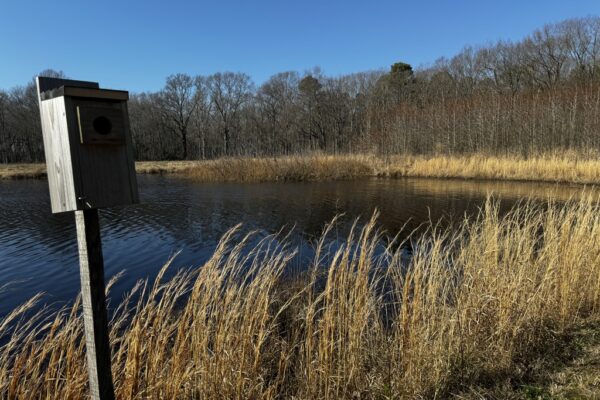
After leaving, I took advantage of the nature that surrounds the Visitor Center. They have a stunning pavilion that overlooks a pond. It was the perfect spot to enjoy a picnic lunch and talk about our experience.
In one of our first episodes, the Park Ranger suggested we take time to process and contemplate the information. This is one of those parks that requires some space for reflection. Taking advantage of a sunny February day to soak up nature helped with the process.
This isn’t your normal park. I was expecting to show up and have hiking trails and more activity. You won’t get that here. But you can get it throughout the community. It’s incredible to see how organizations have worked together to keep Harriet Tubman’s story alive. Between National Park Service, Maryland State Parks, and local community organizations, you can find several museum spots, hiking trails, murals, etc that will enhance your experience and learning while at Harriet Tubman Underground Railroad National Historical Site.
Missy’s Honest Take
Who this is essential for: Everyone. But especially anyone who thinks they already know Harriet Tubman’s story. What you were taught was is the tip of the iceberg. The museum does something extraordinary — it makes you feel genuinely connected to her as a person, not just a historical figure.
Set your expectations correctly: There are no hiking trails at the main visitor center. If you arrive expecting a traditional park experience, you might be surprised. But the organization of sites throughout the surrounding community — NPS, Maryland State Parks, and local groups working together — means outdoor experiences are available if you plan ahead.
The thing nobody tells you: Take a picnic. The pavilion overlooking the pond is one of the most peaceful spots for reflection you’ll find. After the weight of the museum, sitting outside in the sunlight helps you process. Don’t rush past it.
Podcast connection: Episode 15 of The Parks Podcast covers this park. Listen before or after your visit — the ranger’s perspective is deeply moving.
Basics
Location: Church Creek, Maryland
Parking: The park has a large parking lot. They even have an electric charging station at the far end.
Bathrooms: Available in the Visitor Center.
What to wear: This spot is where you will visit the museum. Your outside activities will be very limited. However, I did bring a picnic and was happy that I had a coat. So I’d say dress for indoor museum viewing and prepare for a little bit of outdoor time.
What to pack: An open mind and heart. You are going to explore the story of Harriet Tubman and she is an incredible woman. They have a gift shop, so maybe bring some money to support the park and take home a souvenir.
Pet regulations: Probably not a good spot for dogs. They aren’t allowed in the Visitor Center, and you’ll want time to explore the museum.
What kind of park this is: This is not a hiking park. Come for the museum, the visitor center, and the story — and plan to actually sit with it. The ranger in Episode 15 of The Parks Podcast said it best: give yourself space to process and contemplate. Build that into your visit.
How long to plan for: At least two hours for the museum if you read everything (and you should read everything). Add time for the pavilion and grounds. If you want to explore the broader experiences — murals, historic sites, and community landmarks throughout the area — that’s a full day or more.
Best time to visit: Year-round. This is primarily an indoor experience so season matters less than at other parks.
Additional Resources
I came out of the museum and sat at the pavilion and didn’t say anything for a long time. Not because I was sad, exactly — though there was that. More because I was trying to hold something that felt too big to put down too quickly.
The ranger told us to give ourselves space to process. I didn’t fully understand what that meant until I was sitting outside on a February afternoon, watching sunlight on a pond, thinking about a woman who led people to freedom by reading the stars.
Some parks teach you things. This one changes something.