
You can buy a first aid kit at any outdoor store, and some of them are good. I’d still rather build my own. My brother Jeff is a surgeon and an avid outdoorsperson, and he built mine several years ago. Every time I see him, he goes through it and adds what I’m missing.
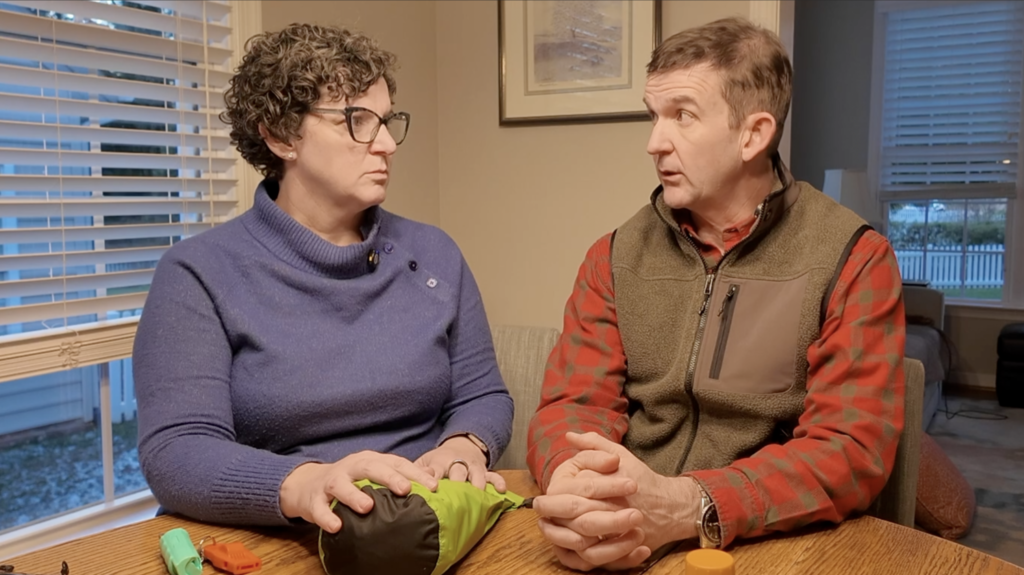
For this Base Camp, we sat down at our parents’ kitchen table, unpacked the whole thing, and he walked me through why each piece is in there.
It’s a hybrid kit, part first aid and part survival. This page covers what goes in it and why. It isn’t a guide to treating injuries. For that, take a class, and there are links at the bottom of the page.
Why carry one at all
Jeff’s answer is that you never know what you’ll find out there. It might be you who needs it. It might be another hiker, someone at a car crash on the drive in, or your dog.
Most of what goes wrong outside is small. The vast majority of injuries are inconveniences, not emergencies: a blister from new boots on a beautiful day when you went a little too far, or a splinter. But a small problem you can’t walk out on becomes a big one. Handling the small stuff yourself is what keeps it small.
There’s another reason, and it’s the one I feel most. Knowing what’s in my kit and how to use it makes me more willing to go out and push my comfort zone a little.
Why build your own
Jeff has used store-bought kits from REI and L.L.Bean as a starting point. He restocks them with things from the drugstore, because it’s cheaper and he knows exactly what’s in there. A pre-made kit might come with a couple of Band-Aids. You’ll always need more than a couple.
Building your own also builds a habit. His rule is that he doesn’t finish an activity until he’s ready to go out again. When he gets home, he looks at what he used and replaces it right away, or puts it on the list for his next errand run.
Pack for what you can do
Jeff joked that I could probably perform surgery with what’s in my kit. His real point is that whatever you carry should match your ability.
In his words, none of us can perform surgery in the wild. Not effectively. But all of us can take care of bleeding, reduce the chance of infection, and keep a problem from getting worse until we reach help.
That’s what programs like Stop the Bleed teach, and local hospitals and clinics put a lot of work into running them. If you take one class this year, make it that one.
Jeff carries more than most of us should: suture, chest seals and airways. Those live in his vehicle, not his day pack, and he carries them because he’s trained to use them. Know your skill set and pack for it.
Start with a waterproof bag
Bandages don’t do well wet, and you want this kit to go everywhere with you. Mine is a 2 liter Sea to Summit roll top dry bag. It clips onto my backpack, or onto a tube or a raft if I’m on the water, and it packs down small. A zip-top bag works too. You don’t need anything fancy.
Survival: stay warm and make do
Jeff sorts the kit into categories, and the first one is survival. What do you do if you’re in trouble?
A mylar blanket. One of the biggest hazards outdoors is hypothermia. Temperatures drop at night almost everywhere in the country, whether it’s a cold December day or a mild spring evening. A mylar blanket is compact, cheap and easy to carry.
Duct tape and paracord. For securing a splint if you ever need one. Carry a small roll, or wrap duct tape around a pen so it packs flat.
A knife. Jeff calls it a tool. It cuts bandages, trims branches, and cuts away clothing when something needs to be looked at. A small tool with a pair of scissors goes a long way.
A fire kit
Fire is warmth, and it’s also a signal: smoke during the day, light at night.
A cheap lighter. Jeff’s first choice. It’s a dollar at any gas station. You can’t fly with one, so pick one up when you land.
Waterproof, windproof matches. Pricier and usually only at outdoor stores, but a good backup.
Fire starters. A few small store-bought starters, plus pieces of old bicycle inner tube. Once rubber catches, it stays hot and is hard to put out, which is exactly what you want in the rain. I also carry an old 35mm film canister of cotton balls soaked in petroleum jelly.
For building the fire itself, see How to Build a Campfire.
One jar, two jobs
That petroleum jelly does double duty. Under a sock or a bandage, it cuts the friction that causes blisters, and it helps where pack straps rub your shoulders or waist. I carry a blister product too, but Jeff says plain Vaseline works. Anything that does two jobs earns its spot.
The first aid basics
Gloves. For helping someone else. You might come across a car crash on the way to or from the trailhead. Jeff points out they’re handy when you change a tire, too.
An elastic bandage and safety pins. For swelling, sprains, and twisted ankles or knees.
Antibacterial wipes and soap. When you’re hurt outdoors, soil gets into the wound, and keeping it clean is what prevents infection. Jeff would add a small bar of basic soap. In his words, soap and water is the heart of what they do in an operating room.
4×4 gauze pads. Sold in packs at any pharmacy, for cleaning and for pressure.
Band-Aids. Not many, but in two sizes: a couple of large ones for a heel that’s rubbing, and a few standard ones for everything else.
Burn care. Getting burned is common around a campfire, and a burn has to stay clean and covered so it doesn’t get infected. Jeff’s choice is triple antibiotic ointment and a dressing.
His rule of thumb for all of it: stop the bleeding, keep it clean, then get help.
Medicine, based on your risks
This part depends on who’s with you. If someone is allergic to stinging insects, carry their EpiPen. That’s a prescription, so talk to your doctor.
Jeff also packs Benadryl for allergic reactions, and pain relief: Tylenol and an anti-inflammatory like ibuprofen. Sometimes you just have to gut it out and get yourself out, and those make that possible.
How much to pack
Multiply by the number of people and by how far you’ll be from help.
Jeff and I both hike solo a lot, so our kits hold enough for one of us and maybe one other person. A family of five carries more, or makes sure everyone carries their own.
A walk in a park near a city needs very little, because you can get out. Western Montana or southern Utah is different. You may be days from help, and with staffing challenges in the parks, help is taking longer to arrive. Pack enough to look after yourself for a couple of days.
A kit that grows with the trip
Jeff’s system is modular. Start with a wallet kit: a couple of Band-Aids, a little antibiotic cream, hand sanitizer, and a few pills of ibuprofen or Tylenol. Then build a day kit, a three day kit and a week plus kit, adding as your trips get longer.
A way to call for help
Jeff carries a Garmin inReach, a satellite messenger. He turns the subscription on a month at a time when he’s heading into the backcountry, and off when he’s not. Plans and prices change, so check Garmin for current pricing. It won’t connect everywhere: in a deep crevasse or heavy tree cover it can take a while, or not link up at all.
If you don’t carry one, rangers have told us the same thing more than once. Stop at a ranger station, tell them where you’re going, and check back in when you’re off the trail.
A whistle. One ranger always names a whistle as a must-have. It carries much farther than your voice, you won’t go hoarse, and it generally doesn’t attract wildlife.
A notebook and pen. Jeff’s addition as we packed up. A waterproof notebook (Rite in the Rain and Field Notes both make one) and a plain BIC pen. Write down times, locations and what happened. If you’re lost and circling, leave a note on a tree with the date, the time and your name, so anyone who reaches your last known spot can follow. Breadcrumbs, like Hansel and Gretel.
Personal safety
In bear country I carry bear spray. One ranger told me to carry pepper spray as well, so I do, along with a Birdie personal safety alarm. Jeff calls this the risk from two-legged predators. Rules for carrying pepper spray vary by state, so check before you travel.
His last word on it: your best defense is common sense and situational awareness. Know where you are, know the risks you’re facing, and know your skill set.
Two small comforts
Green tea. We put it in years ago mostly for a nice cup on the trail. Jeff says it earns its place. Warmth matters, the caffeine keeps you alert, and if you spend enough time outside, you will end up out longer than you planned. If you’re hiking out in the dark, or spending a night you didn’t plan on, a point of comfort helps. Instant coffee works too, if not as tasty.
Trash bags and zip-top bags. A trash bag gives you warmth and shelter from rain when the weather turns, and it does, especially near the mountains. It’s also easy to leave one with someone who needs it, rather than your expensive jacket.
What I’ve added since
At the end of filming, Jeff named three things my kit needed: allergy medicine, burn care and 4×4 gauze pads. All three are in it now. He’ll go through it again the next time I see him, and something else will probably go in.
He said it best at the end. There are simple, inexpensive things you can do that give you the confidence to get outside more often. This kit is one of them.
Thank you
Filmed with my brother Jeff. Thank you for building my kit, for keeping it current, and for the time at the kitchen table.
This page covers what goes in a kit and why. It isn’t a substitute for first aid training. Stop the Bleed and the Red Cross first aid classes both teach the hands-on skills.
The checklist
Bag: a waterproof bag
Survival: mylar blanket, duct tape, paracord, a knife or small tool with scissors
Fire: lighter, waterproof matches, fire starters
First aid: gloves, elastic bandage and safety pins, antibacterial wipes, soap, 4×4 gauze pads, Band-Aids in two sizes, blister care, burn care
Medicine: allergy medicine, pain relief, an EpiPen for anyone who needs one
Signal: whistle, waterproof notebook and pen, a satellite messenger
Safety: bear spray in bear country, pepper spray where allowed
Comfort: tea or instant coffee, trash bags, zip-top bags
Learn the skills
Stop the Bleed, from the American College of Surgeons
Find a Stop the Bleed class near you
Your local hospital or clinic may offer classes too.
Before you go
Restock as soon as you get home.
Pack for the number of people and how far you’ll be from help.
No satellite messenger? Tell a ranger your plan, and check back in.
Prescriptions, like an EpiPen: talk to your doctor.
More from Base Camp
This page covers what goes in a first aid kit and why. It is not medical advice or a substitute for first aid training.