
In an early episode of The Parks Podcast, Karl Rand from Shenandoah National Park told me that his favorite thing to do at a campfire was make pie iron pizza. I had never used one. So I bought a pie iron, took my nephew Teddy along, and we worked it out over a fire.
A pie iron is two cast iron plates on long handles that clamp shut. You butter two slices of bread, put something between them, close it, and set the whole thing down in the coals. That is the entire idea.
Here is everything we figured out, including the two things I still get wrong.
Season it before the first fire
If food sticks to a pie iron, it is almost always the seasoning, and almost always because this step got skipped.
Rome cast iron ships with a wax coating that has to come off before you cook in it. Melt the wax off over the fire, wipe the iron clean with a paper towel, coat it inside and out with a high heat oil like canola, and heat it for about fifteen minutes. Then do it a second time and wipe out the excess.
Over the fire, not on the stovetop and not in the oven.
If the seasoning wears thin later, you can redo it any time. You do not have to live with a pie iron that sticks.
Coals, not flames
This is the one that decides whether dinner works.
A pie iron goes down into the hot stuff at the edge of a fire that has been burning a while. Drop it into a tall flame and the outside scorches before the middle is warm.
So light your fire early. You want it burned down by the time anyone is hungry.
What goes inside
Bread, butter, and whatever you are putting between them. That is genuinely most of it.
For pizza: bread, butter, pizza sauce, cheese and toppings. We used pepperoni.
For dessert, the same process with pie filling. We made apple, which is where the name comes from.
Butter both slices
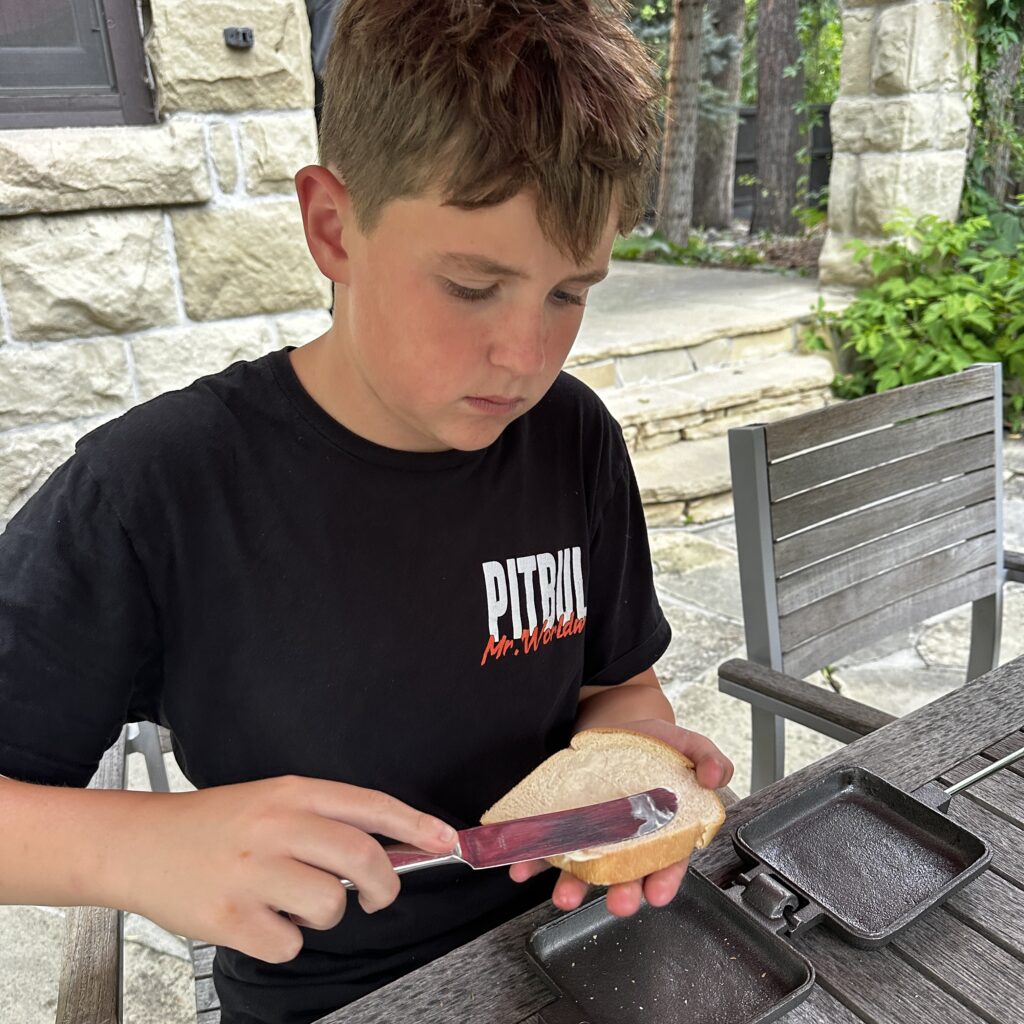
Butter both slices of bread. Put the first one into the iron butter side down, so the butter is against the cast iron.
How much sauce
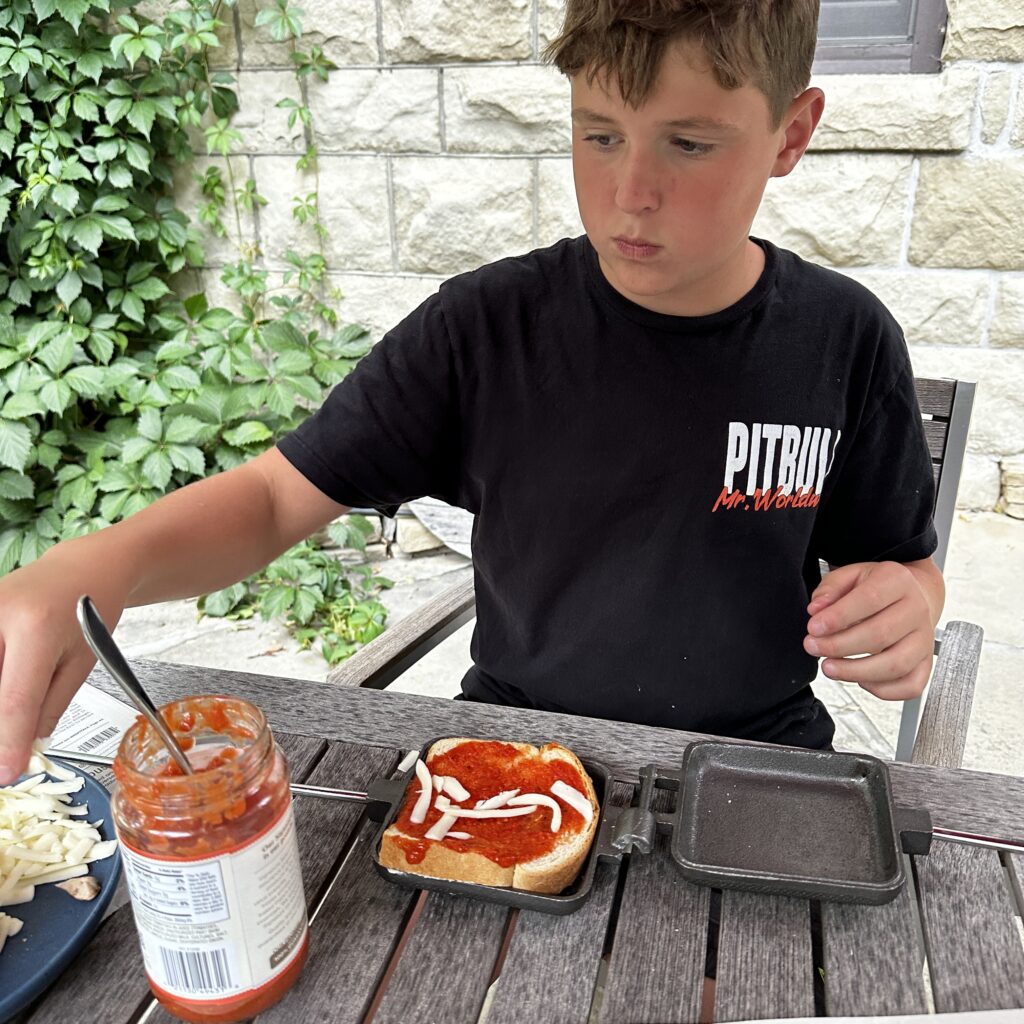
We tested this. We started with a very light layer of sauce, worried about ending up with a mushy pie. It lacked flavor.
The next one got a heaping tablespoon or two, and it was much better. It did not make the bread mushy.
Same with the toppings. You can put quite a bit in. Five or six slices of pepperoni gave us a lot of flavor and the iron still closed fine.
Put the second slice on top, butter side up, and close the iron.
How long in the fire
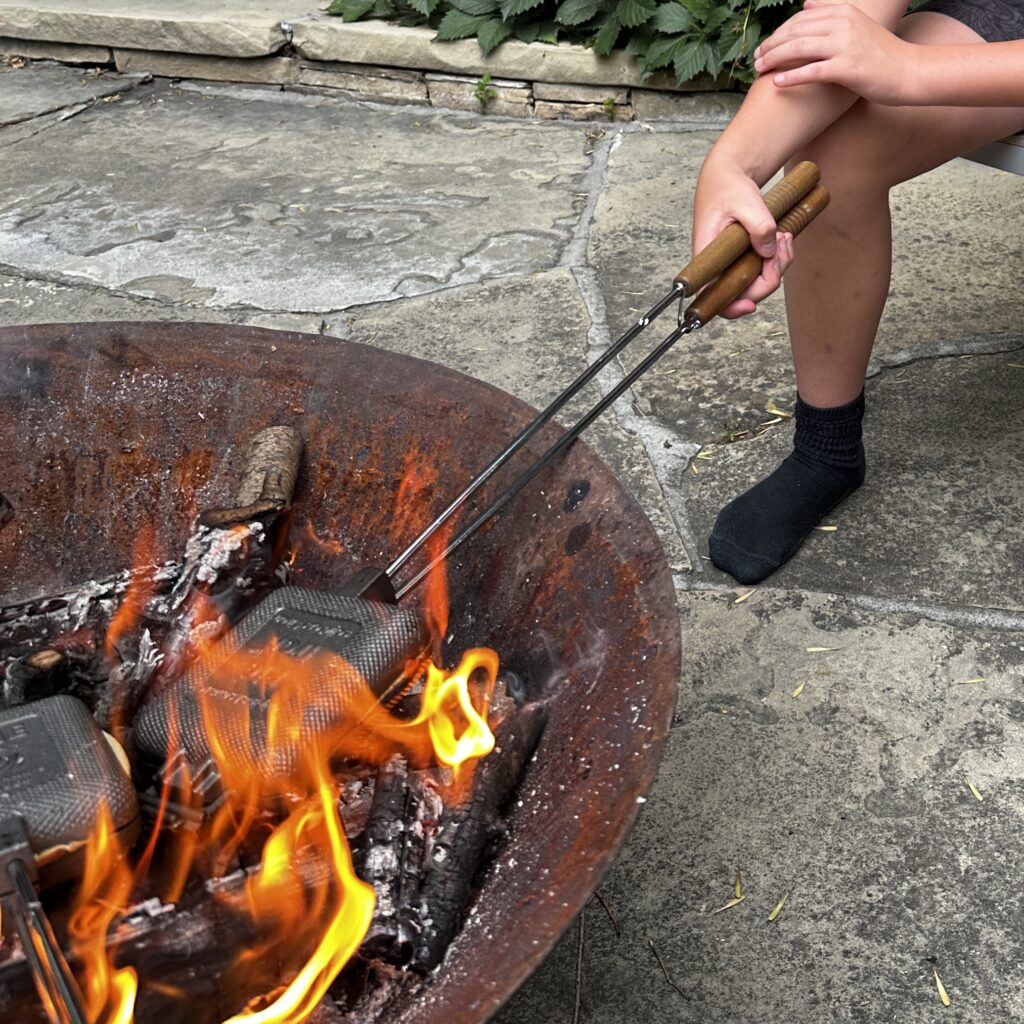
Rome says three to six minutes, and that is about right. Rotate it periodically so both sides get the same heat, and take a peek inside before you commit to it. Cast iron over an open fire is not an exact science, and looking costs you nothing.
You will overstuff it
This one is entirely my own fault and I have not learned my lesson. Put too much in and the filling squeezes out of the sides and drips into the fire, and you lose some of it.
A delicious problem, but a real one.
Let it cool before you eat it
It comes out of the fire much hotter than it looks. Slide it onto a plate and give it a minute.
Cleaning up
Rinse it and dry it straight away. Water left sitting on cast iron will rust it, and a pie iron lives outdoors, so it never gets the benefit of a warm dry kitchen.
If something stuck, that is the seasoning talking. Redo it and carry on.
What else to make
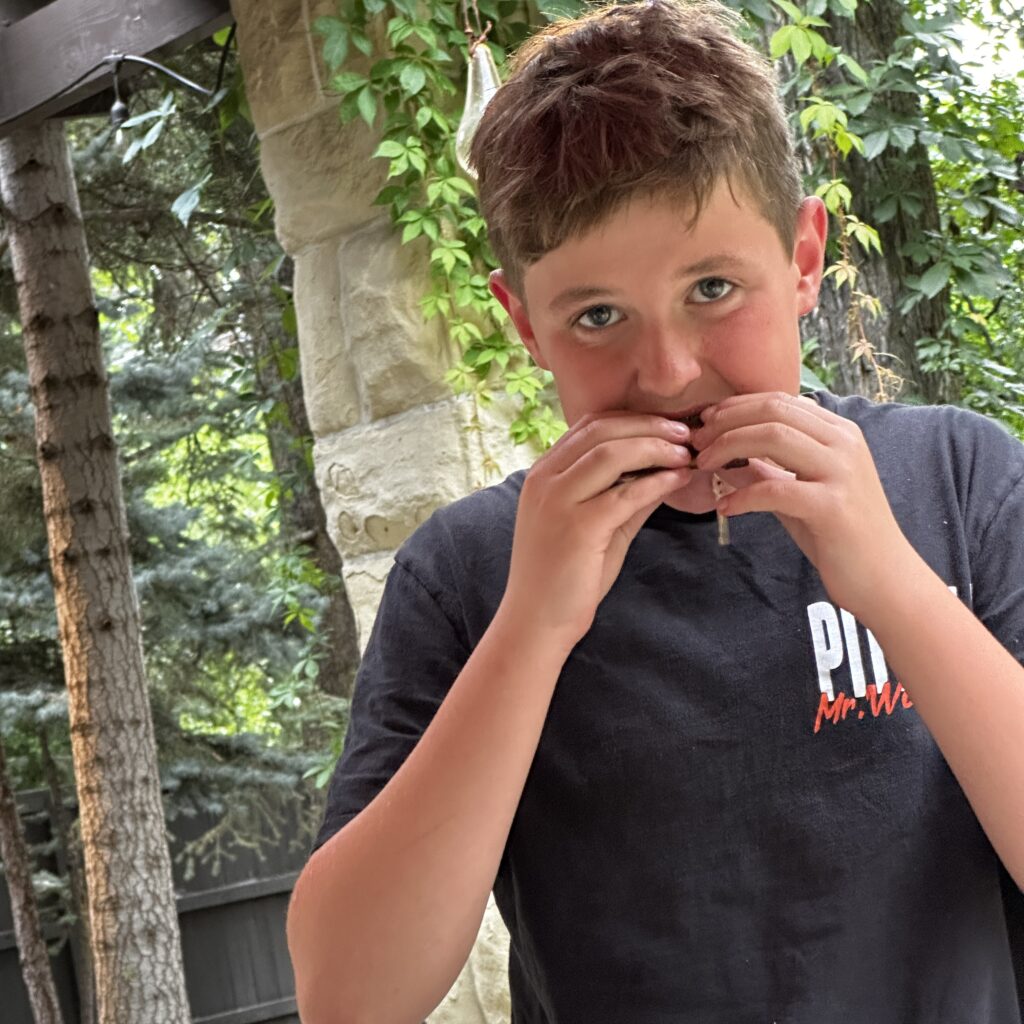
We did not stop at pizza. Apple pies for dessert, same process, different filling.
Since then I keep seeing people making hamburgers in them, and a few things I would never have thought of. It is two plates and a hinge, and I still do not know everything it does.
Here is the part I did not expect, and it is most of the reason to own one. A pie iron turns dinner into the thing everyone is already doing. Nobody stands at a stove while the rest of the group sits at the fire. Everyone builds their own and cooks it themselves, so you are not taking orders and nobody is eating around the one ingredient they do not like. Kids can do it with a bit of supervision.
Podcast connection: Episode 3 of The Parks Podcast is the Shenandoah National Park conversation with Karl Rand, who is the reason I own a pie iron at all.
What you will need
A pie iron, seasoned before its first use
Bread and butter
Filling: sauce, cheese and toppings, or pie filling
A heavy glove or long tongs
A plate to slide it onto
Safety
Cook in the coals at the edge of the fire, not in open flame.
The handles get hot. Use a glove or tongs every time, not just when you remember.
Set it down on a plate, never straight onto a table.
It is far hotter coming out than it looks. Let it sit a minute before anyone bites into it.
Children can build and cook their own with supervision. That is the best part of it.
The gear
Rome Pie Iron is the one I use, and the page covers what it is like to own and where to get one.
More from Shenandoah
Shenandoah National Park is where this started, and it is worth the drive on its own.
Fire rules and burn bans vary by park and change through the season. Check with the park you are visiting before you light anything.