
Pompeys Pillar is a place I keep going back to. When I am in Montana it is one of the stops I end up making, and the reason is simple: it is an easy adventure with a lot of history in it.
It sits just off I-94, about twenty-five miles east of Billings — a break in the rims that run along the Yellowstone River, with the eastern Montana plains opening out behind it.

This one is BLM
Pompeys Pillar is managed by the Bureau of Land Management rather than the National Park Service.
You will not notice a difference standing there. I am mentioning it because we have talked about that difference so much on The Parks Podcast that it felt odd not to say it here.
It became a national monument on 17 January 2001. Fifty-one acres, run by the BLM alongside the Friends of Pompeys Pillar.
The walk in
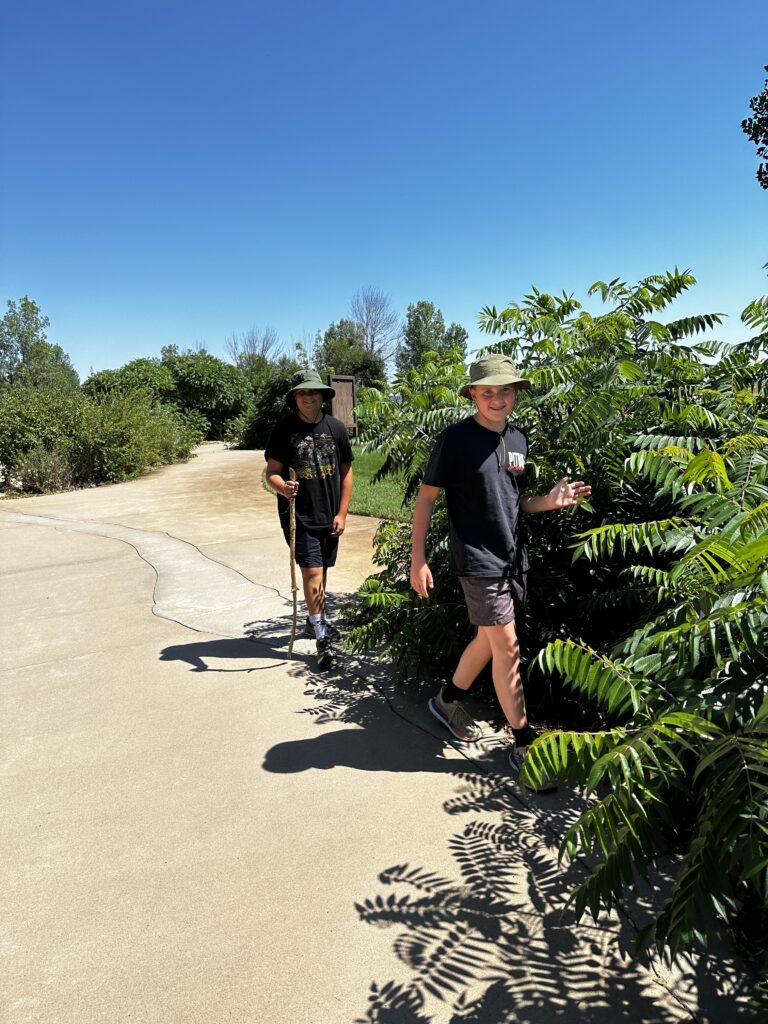
When you arrive you are met by a path with the course of the Yellowstone River set into the sidewalk, guiding you toward the Pillar. The story of the place is told along the way.
The Visitor Center has a good exhibit on the history and the journey. Start there if it is open.
The signature
From the path you walk up the Pillar itself. A hundred steps on the boardwalk brings you to the landing.
And there it is: Wm Clark, July 25th 1806, cut into the sandstone on the way home.
This is the part worth slowing down for. It is the only physical evidence of the Lewis and Clark expedition still visible anywhere along the route they traveled. Everything else is journals, reconstructions and markers. This is the actual hand of the man, on the actual rock, where he actually stood.
Who Pomp was
The rock is named after a toddler.
Jean Baptiste Charbonneau was Sacagawea’s son, born in February 1805, which made him about seventeen months old when the expedition came back down the Yellowstone. Clark was fond of him and called him Pomp. He named this rock Pompy’s Tower after him. It became Pompeys Pillar when the journals were published in 1814.
And the boy grew up into one of the more remarkable lives of anyone attached to that expedition. At eighteen he went to Europe with a German duke and spent nearly six years there, coming home fluent in English, French, German and Spanish. He spent the rest of his life in the West — trapper, guide, scout in the Mexican-American War, briefly the alcalde of a California mission town, then the gold rush. He died in Oregon in 1866.
A hundred and fifty feet of sandstone with a seventeen-month-old’s nickname on it, and he turned out to be somebody.
Keep going up
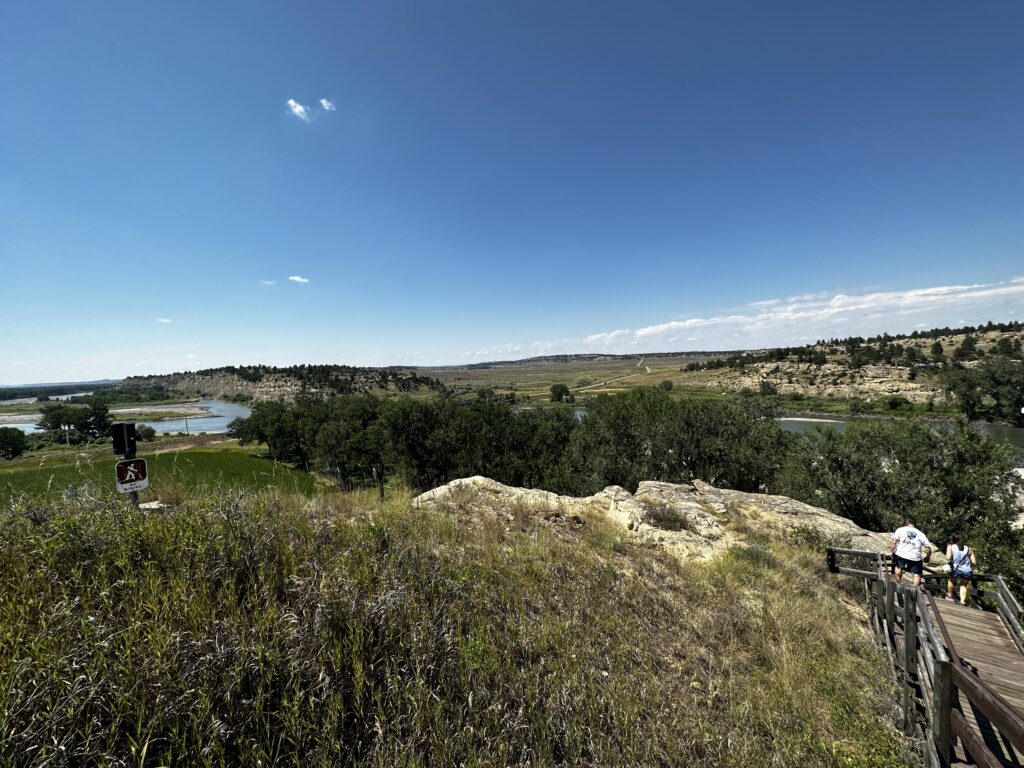
My favorite part is the rest of the stairs, past the signature, up to the overlook.
The views from up there are stunning — the river, the cottonwoods, the plains running out to the rims. When I was there you could use the binoculars to look at an osprey nest.
I really like Pompeys Pillar. An hour or so is plenty to see all of it, and you come away having had both the nature and the history without having to work for either.
Podcast connection: Episode 21 of The Parks Podcast is Pompeys Pillar — William Clark, the signature, and the boy the rock is named after.
Basics
Managed by: the Bureau of Land Management, not the National Park Service.
Where: Yellowstone County, Montana — about 25 miles east of Billings, off I-94 at exit 23.
Season: it opens for the summer and closes in the fall. In 2026 that is 1 May to 1 October. Gates are open 8am to 4pm daily, except Tuesdays, when the site closes for maintenance.
When the gates are shut, including Tuesdays, you can park outside and walk in during daylight hours.
Entry: Charged per vehicle for one to six passengers. Check the current rates before you go. The America the Beautiful pass covers it, and there is a monument annual pass on Recreation.gov.
The climb: 100 steps on the boardwalk to the landing at Clark’s signature, then more stairs to the overlook. The Pillar is about 150 feet high.
Parking: a lot right beside the Visitor Center.
Bathrooms: in the Visitor Center.
Mosquitoes. You are on a river bottom. If you react to bites, bring spray, and consider long sleeves and long pants in summer.
How long: an hour or so covers it.
Pets
Dogs are welcome on the grounds on a leash. They cannot come into the Visitor Center, and they cannot go up the boardwalk on the Pillar — which means not to the signature and not to the overlook.
The walk in along the path is hers, though, and this is a short visit. If somebody can stay down with her while the other goes up, you both get the whole place.
Traveling with a dog? Where I Would Actually Take My Dog is every park on this site, sorted by whether she can do the activities you came for.
Additional Resources
Pompeys Pillar National Monument — the Bureau of Land Management site.
Season dates, hours and fees are set each year and change. Check with the BLM before you go — details here were verified in September 2026.