
My experience
I remember when they were talking about putting this memorial on the Mall. I think it was the first addition in a very long time, and it was quite a political debate about whether it would disrupt what was already there.
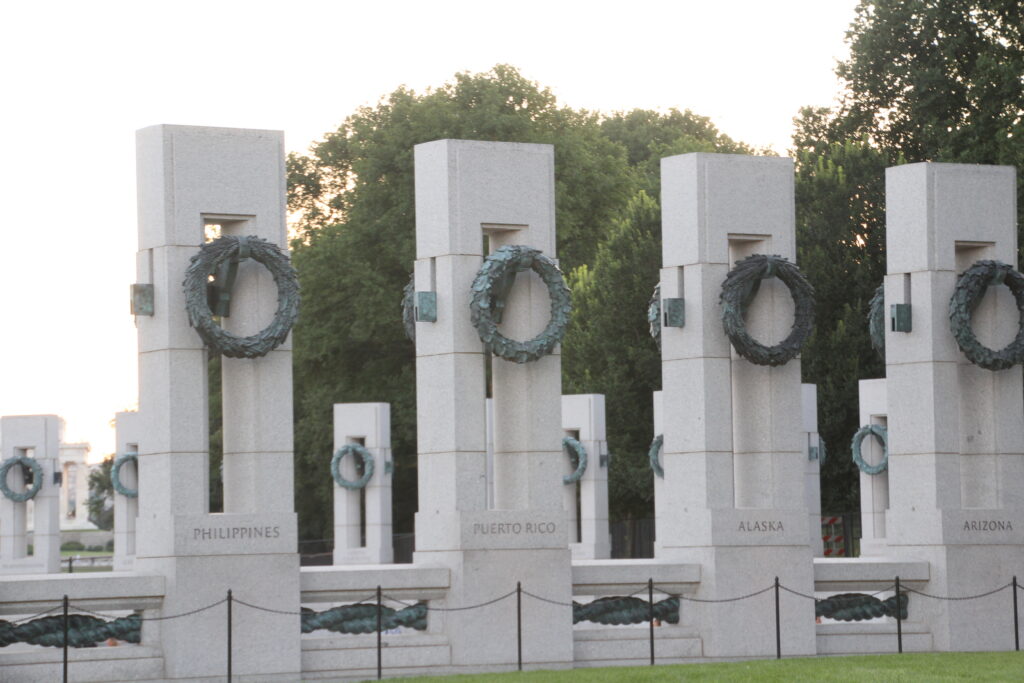
And now when I walk around it and see hundreds and hundreds of people soaking in the history, taking their picture under the state name that means something to them, I chuckle to think about the controversy this place once caused.
It is a beautiful memorial to that war.
The night I showed someone my DC
I had a friend who had not lived in Washington very long — maybe a year and a half, two years. And it just was not working for her. She was really struggling to feel connected, to adopt the city.
So one cold winter night I said, “Put your coat on. I’m going to show you my DC.”
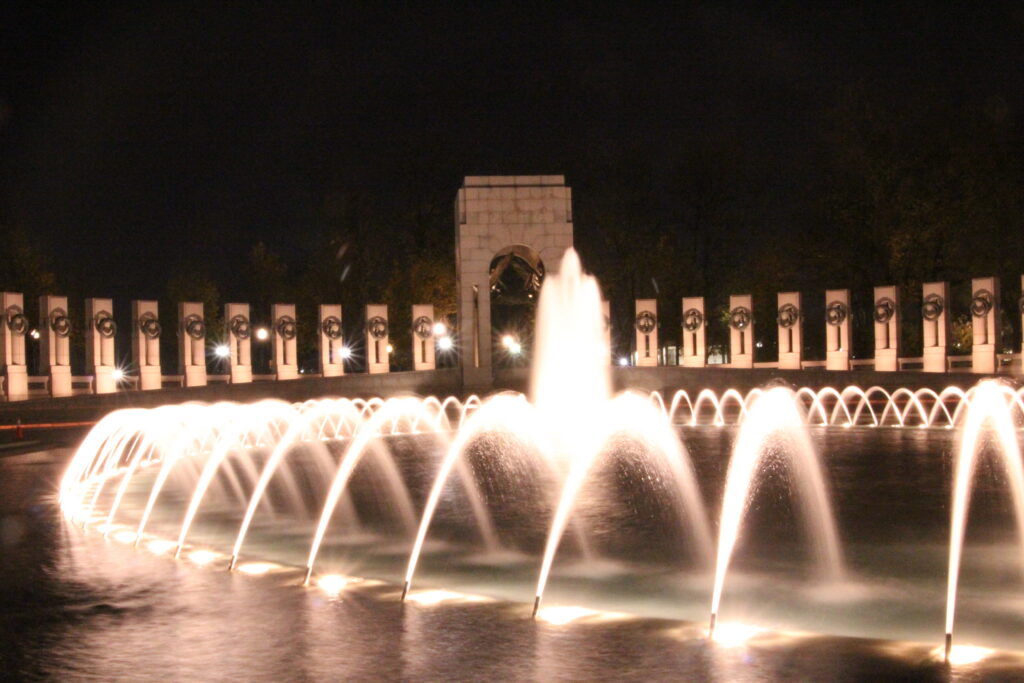
We went down to the Mall and walked around the monuments. And I remember it was this one where we sat down on the amphitheatre-style steps and just observed.
It was a changing moment for her.
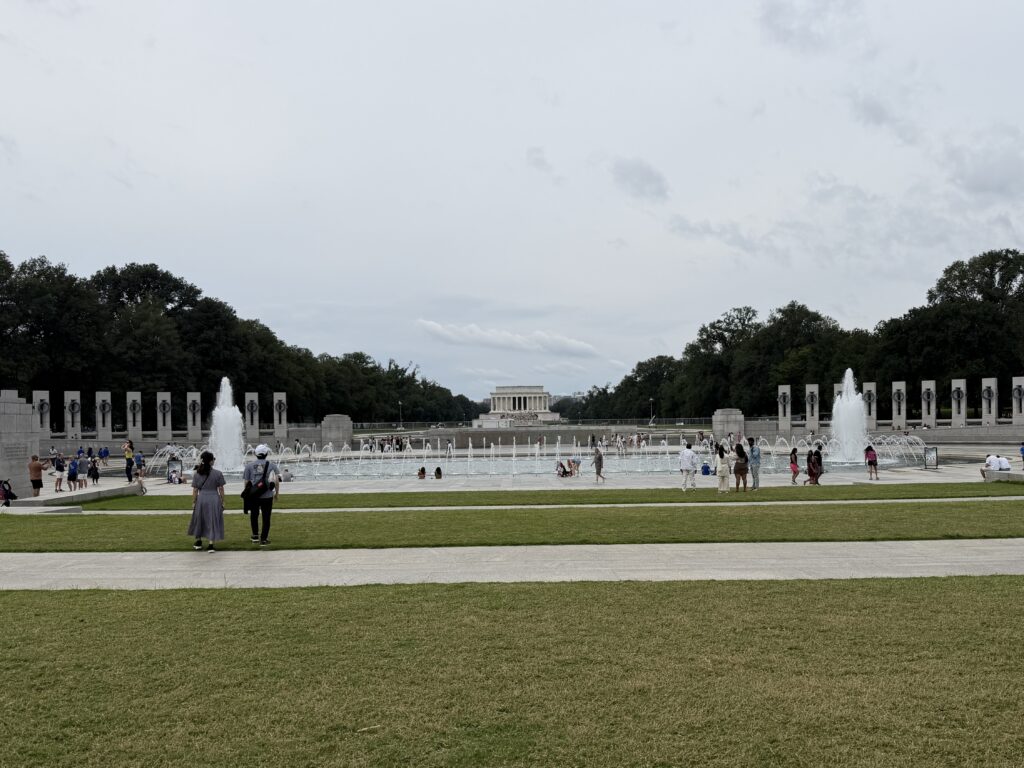
I think Washington has the power to change ideas, and change thinking, and change perspective — if you are curious, and open to the opportunity. And I think those are the characteristics we have to bring when we are taking in parks and monuments and memorials. They are all meant to mark a moment in time. It is up to us to process that, and to find how it changes us.
The fight I remembered
This was a contested memorial, and the way the argument ended is sharper than I knew.
The objection was the view. The National Coalition to Save Our Mall argued that a memorial here would break the unbroken sight line between the Washington Monument and the Lincoln Memorial, and that it would take away the open ground people had always used to demonstrate on. There were lawsuits.
Congress ended the argument by passing a law that exempted the memorial from further review and dismissed the legal challenges outright. The reason given was that the veterans it was meant to honour were dying faster than the dispute could be settled.
So the people who objected did not lose the argument. They ran out of time to keep having it.
It was designed by Friedrich St. Florian, opened in April 2004 and dedicated that May, and it was built over the old Rainbow Pool.
What to look for
The pillars are not just states. There are fifty-six of them — the forty-eight states as they were in 1945, the District of Columbia, the territories of Alaska and Hawaii, and the Philippines, Puerto Rico, Guam, American Samoa and the US Virgin Islands. It is the map as it was, not as it is. That is why people keep finding a name that means something to them.
The two arches. Forty-three feet each. Atlantic to the north, Pacific to the south, for the two theatres of the war.
The Freedom Wall. Four thousand and forty-eight gold stars, and each one stands for a hundred American dead. Just over four hundred thousand people, turned into something you can stand in front of and fail to count.
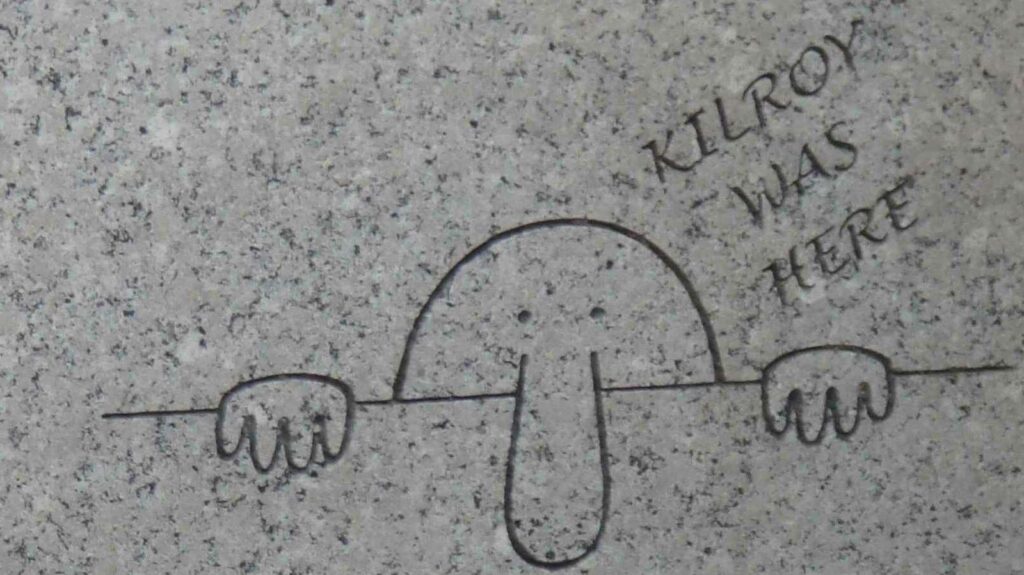
And Kilroy. There are two “Kilroy was here” engravings hidden in the memorial. Not labelled, not explained — tucked into the stone for anyone who bothers to look.
Who Kilroy was
James J. Kilroy inspected rivets at a shipyard in Quincy, Massachusetts. Riveters were paid by the rivet, and they had been rubbing out the chalk marks that showed where an inspector stopped counting, so the next shift could count the same rivets and get paid twice. Kilroy’s fix was to scrawl KILROY WAS HERE in crayon — too big and too permanent to quietly erase.
Then the ships were welded shut and sailed. And American servicemen crawling through sealed compartments in the middle of the ocean kept finding this name already there, in places nobody could possibly have been.
So they started writing it themselves. On every beachhead, in every latrine, in every theatre of the war. The joke being that however far you got, and however first, Kilroy had beaten you there.
The drawing came from somewhere else — the bald head with the long nose peering over a wall was Mr Chad, a British doodle from about 1938 that turned up beside complaints about rationing. Somewhere in the war the British picture and the American phrase met and merged.
Two stories, both possibly apocryphal, both too good to leave out. German intelligence kept finding the name on captured American equipment, and Hitler is said to have suspected Kilroy was the code name of a high-level Allied spy. And at Potsdam in 1945 Stalin reportedly used a VIP bathroom and came out asking his aides who Kilroy was.
What I’d tell a friend
Find your state. Everybody does it, and everybody should. The pillar you are looking for might be a territory.
Sit on the steps. This is one of the few memorials on the Mall that gives you somewhere to sit and stay a while. That is not an accident and it is the best thing about it.
Go at night. It is open around the clock, it is lit and the fountains are running, and the crowd is gone.
Hunt for Kilroy. There are two of them hidden in the memorial. I had never heard of Kilroy until I started reading about this place, so I have walked past both of them more than once. Next time I am looking.
Plan your visit
Entry: Free. No fee and no ticket.
Hours: Open 24 hours a day. Rangers are on duty during the day.
Where: Between the Washington Monument and the Lincoln Memorial, at the east end of the Reflecting Pool. You will walk through it on the way between the two whether you mean to or not.
Parking: Limited metered street parking on Ohio Drive SW and around the Tidal Basin. Metro or walking is easier.
Worth knowing: There are benches and steps here, which is rarer on the Mall than you would think. If you are doing the monuments in one go, this is the place to stop.
What to pack & wear
Pay attention to the weather. Washington, DC is hot and humid in the summer, crisp in the fall and cool in the winter, and you are outside the whole time.
Comfortable shoes, and water — there are places to refill a bottle along the way.
Pets
Leashed dogs are welcome. It is all outdoors and the National Park Service lists the Mall memorials as pet friendly, so there is nowhere your dog has to wait for you.
Six-foot leash, clean up after them, and keep them out of the fountains — which is easier said than done on a hot day.
Hours, parking and pet rules change. Check with the park before you go — details here were verified in September 2026.