
My experience
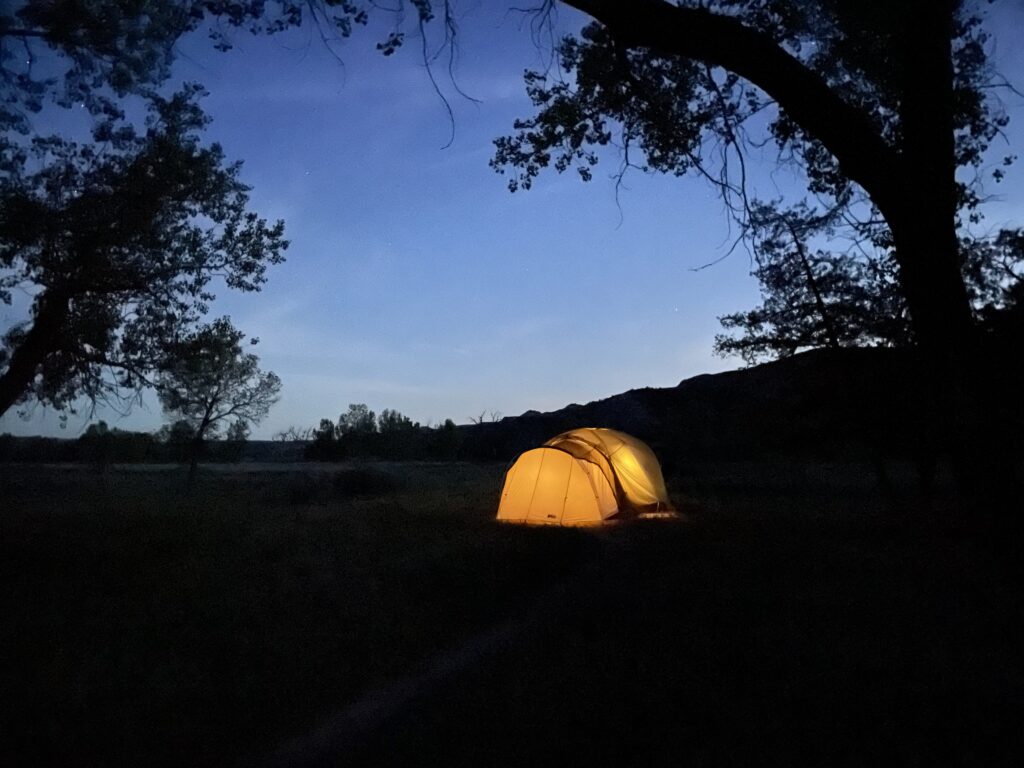
I got to Theodore Roosevelt near the end of my 2021 road trip, and by then I had enough confidence to have no plan at all. Just show up. It worked — a campsite wasn’t hard to come by.
I hadn’t expected the drive in to look like that. I knew badlands as a South Dakota thing. Nobody had told me the same country runs hundreds of miles north into North Dakota and does it just as well. I spent the approach saying out loud that I couldn’t believe this existed.

I checked in, talked to a ranger about what to do, then drove out to set up and make a plan. On the way I passed bison. Not one or two — loads of them. And here’s what makes this park different from Yellowstone: I was the only car on the road. I could stop. I could sit and watch.

Cottonwood Campground is spacious, and it had more of a community feeling than anywhere else I stayed that year. People walked around. People stopped to talk. I met someone there who I ran into again a few weeks later, hiking in Olympic.
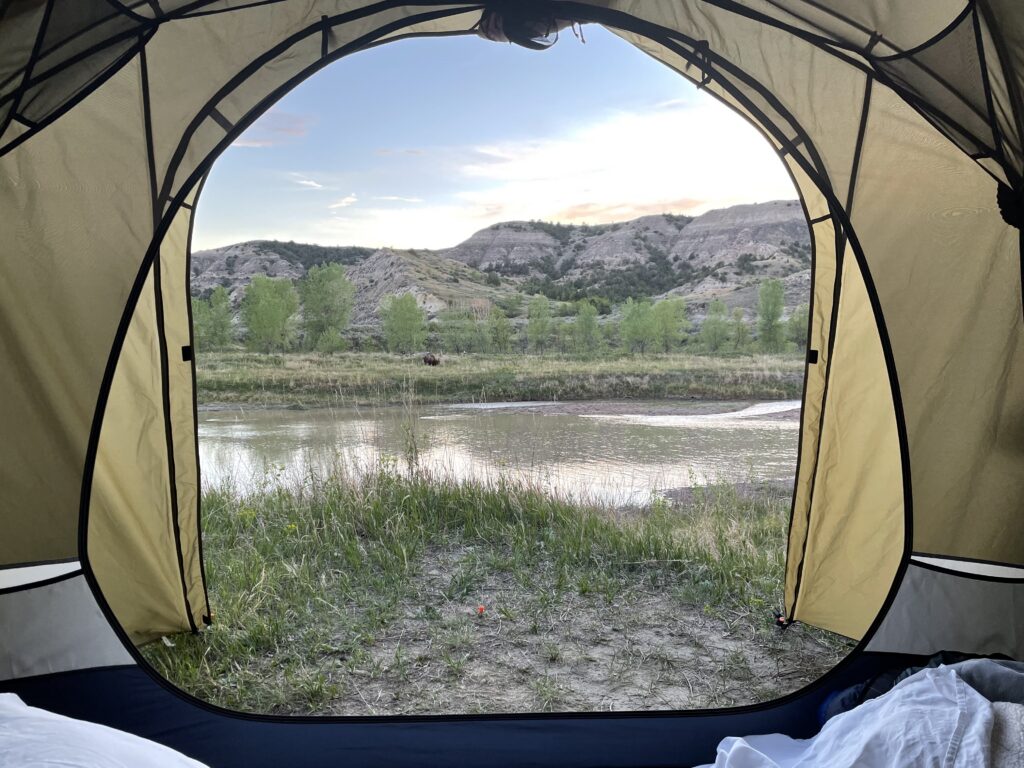
My site was right on the Little Missouri. I woke with the sun and lay listening to fish jumping. One morning I unzipped the tent and there was a bison grazing on the far bank.
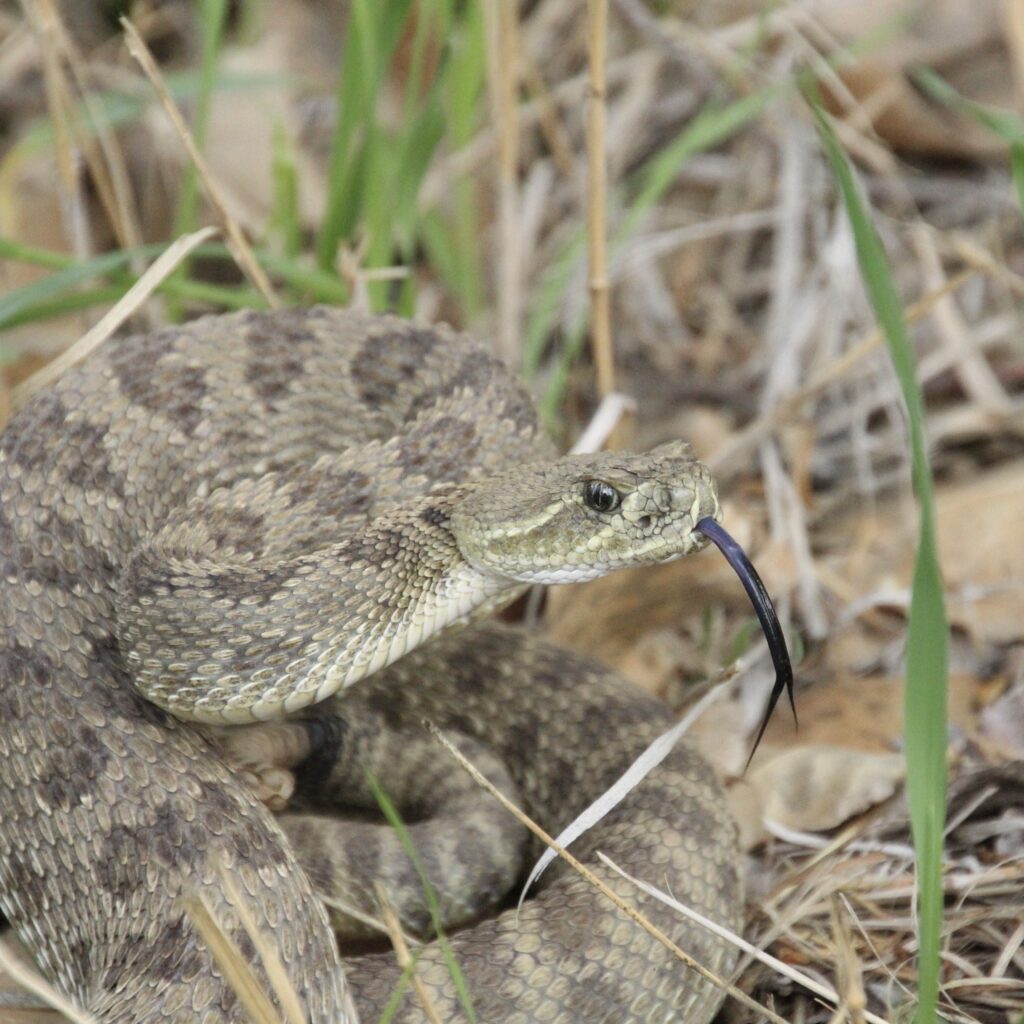
And then there was the rattlesnake.
I was talking to a wildlife photographer when someone nearby said, “Oh look, a rattlesnake.” He said: grab your camera, I’ll show you how to photograph a rattlesnake. A group of us spent the next hour learning how.
When we arrived the snake was agitated and put on quite a show — and that’s when you get the tongue, which is the shot everyone wants. Then he settled. Once he’d worked out we weren’t a threat he stopped rattling altogether, and by the end we were standing within three feet of him and he could not have cared less.
I hiked. It was beautiful and it was very hot. Prairie dogs, more bison.
It’s one of my top parks, and the reason is simple. I saw almost everything you’d go to a big western park for, and I was one of very few people doing it.
The park comes in three pieces
The South Unit is the one most people mean — off I-94 at Medora, about 46,000 acres, with the scenic loop drive, the prairie dog towns, the wild horses and most of the bison. The rattlesnakes are here too.
The North Unit is around seventy miles away near Watford City, and it’s a different park: deeper, more dramatic country with canyons dropping 600 feet, bighorn sheep and longhorn cattle instead of wild horses, and an in-and-out scenic drive rather than a loop. Even fewer people.
The Elkhorn Ranch Unit sits between them — 150 acres at the end of an hour of gravel road, where Roosevelt’s ranch actually was. There’s a mowed path and some foundations. That’s rather the point of it.
I camped at Cottonwood in the South Unit and drove up to the North Unit to hike. I never made it to Elkhorn Ranch. That’s on the list for next time.
What I’d tell a friend
Eat in town. Medora has good restaurants, and after a few nights of camp cooking that’s worth more than you’d think.
Go early. It gets really hot in summer, so do your hiking before the heat of the day — or come in a cooler season altogether.
And the thing I’d change about my own trip: book the campsite. I turned up without a plan in 2021 and got away with it. You can’t now — both campgrounds went reservation-only on 1 May 2026.
Plan your visit
Entry: Charged per vehicle, with lower rates for motorcycles and for anyone on foot or bike, valid 7 days. A park annual pass is also sold. Rates change, so check the park’s own page before you go.
Or the America the Beautiful annual pass, good for a year at every national park and federal recreation site. If you’re visiting more than two or three parks in twelve months, it pays for itself. US residents and non-residents pay different rates.
Card only. The park went fully cashless on 1 May 2026 — no cash accepted at entrance.
No timed entry or reservation to enter the park.
Camping: Cottonwood (South Unit) and Juniper (North Unit), both on the Little Missouri. Nightly rates are lower off-season. Reservation only via recreation.gov as of 1 May 2026.
Free entry on Presidents Day, Memorial Day, 3–5 July, Veterans Day, and 27 October — Roosevelt’s birthday.
What to pack & wear
I went in high summer and packed for heat — shorts, capris, tank tops — plus a light jacket for the evenings, which cool off more than you’d think.
Water mattered more than I expected. I needed it on every hike, and there’s almost no shade. Sunscreen is just as important.
What I’d do differently: make time for the Elkhorn Ranch Unit. It sounds fascinating and I missed it.
Pets
On paper: leashed, six feet maximum, and welcome on roads, in parking areas and in campgrounds. Not on the hiking trails, not in the backcountry.
Which means a dog here has the run of a parking lot and a campsite while you go and see the park. And the summer heat makes the obvious workaround dangerous — a vehicle is not somewhere to leave an animal on a July afternoon in the badlands. I would not bring a dog to Theodore Roosevelt for a hiking trip.
If you are traveling with one, the Little Missouri National Grassland surrounds the park on all sides, and dogs are welcome on its trails. Six-foot leash in developed recreation areas, reliable voice control out on the open grassland, and pack out what they leave. That includes stretches of the Maah Daah Hey Trail, which runs through the grassland between the park units — the badlands scenery without the closed door.
Fees, camping and pet rules reconfirmed 16 September 2026 from nps.gov/thro. Official park page