
In Mi’kmaq, Skmaqn means “waiting place.” The French called it Port-la-Joye when they established the first permanent European settlement on Prince Edward Island in 1720. The British renamed it Fort Amherst when they took it by force in 1758 and deported nearly 3,000 Acadians — roughly half of whom didn’t survive the journey. In 2018, the name was officially updated to include all three languages, all three cultures, and all three eras. Ethain Arsenault, Visitor Experience Team Lead at the site, joins The Parks Podcast for the full story — and mentions that one of the first Acadian settlers is his own ancestor.
A note from Missy: This park is filled with more history than I imagined. Another great stop on Prince Edward Island, in this episode we take a dive into the rich history of the site, and Canada.
Episode Guest
Ethain Arsenault, Visitor Experience Team Lead
Skmagn-Port-la-Joye-Fort Amherst National Historic Site – Parks Canada
Park Stats
- Location: Rocky Point, Prince Edward Island, Canada
- Established: 1958
- Size: 224 acres
- Trails: 6.4 km / 3.7 miles
- Operational season: Visitor center and programming in July and August; trails and grounds accessible year-round
- Languages: Trilingual signage — Mi’kmaq, French, and English throughout the site
- “Woven Stories” video: 16-minute film on the four cultures of the site; available at visitor center in July/August
- Annual event: Le jour du souvenir acadien (Acadian Remembrance Day) — December 13th — commemorates the deportation
- The only battle on PEI: Privateers from New England attacked and briefly captured the fort; defenders regrouped with Mi’kmaq and Acadian allies and recaptured it
- Co-management: Site co-managed with Epekwitnewaq Mi’kmaq (PEI Mi’kmaq)
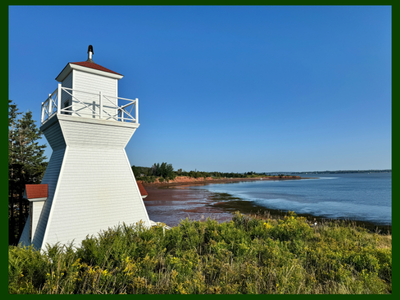
- Two range lights: Functioning navigational aids (not technically lighthouses, but look like them); adjacent to the Blockhouse Lighthouse
- Dogs: Welcome on all trails
- Getting there: 35-minute drive from Charlottetown (just across the harbor — but you have to drive around)
Episode Transcript
Skmaqn–Port-la-Joye–Fort Amherst — A Waiting Place with 300 Years of History
The Parks Podcast, Episode 45 | Ethain Arsenault, Visitor Experience Team Lead, Skmaqn–Port-la-Joye–Fort Amherst National Historic Site (Parks Canada)
Welcome and Park Stats
Missy Rentz: I’m excited to welcome Ethain Arsenault, who is the Visitor Experience Team Lead at Skmaqn–Port-la-Joye–Fort Amherst National Historic Site at Parks Canada. Ethain, welcome to The Parks Podcast.
Ethain Arsenault: Thank you very much for having me, Missy. It’s a pleasure to be here.
Missy: I start each episode talking about stats of parks and historic sites. Skmaqn–Port-la-Joye–Fort Amherst is located on Rocky Point, Prince Edward Island. The site was established in 1958. It’s 224 acres. Some really interesting facts: Skmaqn–Port-la-Joye–Fort Amherst was established in 1720 by the French. It’s the site of a major deportation of the French and Acadians. When the British took over the island, the area served as the seat of government for the island until 1768. It has a six-kilometer, or 3.7-mile, trail system. And Skmaqn — which means “waiting place” in the Mi’kmaq language — was added to the official name of the site in 2018 to reflect the role of the Mi’kmaq people in the history of the site. And I think one thing the whole park system does on Prince Edward Island is embrace the many different cultures. It’s a wonderful place to visit.
Ethain: That’s definitely something we have been working hard on over the last few decades — including Epekwitnewaq Mi’kmaq, so Mi’kmaq from PEI, into Parks Canada places. Of course they’ve always been here. But we have been working more and more closely with them in the presentation and administration of Parks Canada places here on PEI. Excellent pronunciation of Skmaqn–Port-la-Joye–Fort Amherst, by the way, Missy. Very well done.
Missy: Thank you. I have been practicing it. It’s not easy.
Why It’s an Important Historic Site
Missy: There’s a lot to talk about. This site has a lot of history. Why is it important that it is a historic site and part of the Parks Canada system?
Ethain: It is a site that has many stories. This was the original administrative capital of what’s now Prince Edward Island under the English and French regimes. In 1721 the French established Port-la-Joye here, and it was home to the French administrative capital, but also to quite a population of Acadian settlers. And when these two French-speaking peoples were in the area, they entered into an alliance with the Epekwitnewaq Mi’kmaq — every year at Skmaqn–Port-la-Joye–Fort Amherst they would come together and have ceremonies and exchange gifts and have feasts and renew their alliance. It was also, as you said, the first capital of British St. John’s Island — originally, before it became Prince Edward Island — and remained that for about 10 years.
Missy: Was it friendly?
Ethain: Was the interaction between all these peoples friendly? I would not say so. No. Unfortunately. It seems that the interactions between the Mi’kmaq and French were, for the most part, friendly — there was a formal alliance between those peoples, and certainly between the Acadians and the Mi’kmaq as well. But in these days the English and the French were competing for control over North America, and when the Fortress of Louisbourg fell in 1758, the English came to Port-la-Joye and took it over by military force and ended up deporting the French inhabitants.
Missy: When I read the panels and all of the information when I was there, there’s this tone of like acceptance or willingness to collaborate and co-exist. But it’s sticky and nasty and can be tough to blend cultures — which I guess in the end, it wasn’t blending. The English and the French were really more forceful.
Ethain: It’s certainly a complex story, and it was certainly not always peaceful. At the time in 1758 when the English took over Port-la-Joye and it became Fort Amherst, there were somewhat over 4,000 Acadians living on the island at that time. When the English took over and decided they would deport the French-speaking people — mostly Acadians — some 3,000 were assembled at Port-la-Joye and put on ships and sent, for the most part, back towards France. We have a monument on the site now that speaks to that event, because unfortunately something like half of those people did not make the journey. It is quite a somber place. It is actually the site of an event that we have every year on December 13th — le Jour du Souvenir acadien, the Acadian Remembrance Day, that commemorates that event. But at the same time, there’s always this balance of stories, because when the deportation was happening, the Mi’kmaq allies of the French were helping to hide some Acadian families in the woods. And some managed to escape in that way.
Honoring the Mi’kmaq — Co-Management and the Trilingual Approach
Missy: In my notes I talked about how it was in 2018 that you added the history of the Mi’kmaq to the official name. What are you doing now to help tell that story and showcase that history?
Ethain: We do a lot of different things. We work closely with Epekwitnewaq Mi’kmaq — we actually co-manage not just our historic site, but the whole field unit — we co-manage our national historic site with PEI Mi’kmaq. And we have things like all of our interpretive panels and wayfinding, which are now in three languages: Mi’kmaq, French, and English. We have produced a video that you can see if you come and visit our site — it’s called “Woven Stories” — and you can hear the story of the four cultures that have lived on the site, and hear snippets of each of the languages inside of that video. And of course we have certain demonstrations and interpretive activities throughout the summer.
Missy: I love that you showcase a lot of that culture. Then when the French arrived — I think I read there were three boats, like some 300 people came. Why did they want to come, and was it like they had scoped it out?
Ethain: Yeah, it’s a good question. People came to Port-la-Joye under the French regime for different reasons. The Fortress of Louisbourg in what’s now Cape Breton was the major French administrative and military site in Atlantic Canada. It’s a beautiful site, but fairly stark — a lot of barren rock in that environment. And if you have to feed a big population in the garrison, it’s a hard place to farm. So a place that you could easily sail to that had an excellent harbor with excellent farmland was very attractive for the French administration. So people came and saw a business opportunity, and when the French administration came over and set up a capital, it became an attractive place for other people to follow. Many of the Acadians that came through Port-la-Joye and settled there were fleeing the British in what’s now Nova Scotia. So they were looking for better environments to raise their families.
What Remains — The Earthworks, the Lighthouse, and Michel Haché dit Gallant
Missy: It wasn’t long before the British arrived and took over with the mass deportations, and it was under British control where it became a fort — which you definitely see the remains of on the site now.
Ethain: That’s correct. If you come to the site and you walk onto the grounds, you will see the grassy earthworks of the old British fort and you can walk right into them and have beautiful views over the Charlottetown Harbour. But if you are a military buff, you can also see why you might want a fort there at the site where this excellent harbour comes down into a narrows.
Missy: And were they under attack? Was there a need for the fort there during that time?
Ethain: The fort was established both under the French and the English because they were used to having tensions between English and French. The area had been traded several times before 1758 between the English and the French, given back through treaties and that kind of thing. But the other thing they were worried about were privateers from places like New England. And it turned out that was a well-founded fear, as they showed up one time. And Skmaqn–Port-la-Joye–Fort Amherst became the site of the only battle fought on Prince Edward Island.
Missy: Privateers — just private people who wanted to take over. Is that the right interpretation?
Ethain: So these were folks who would have been employed to some degree by the British, or at least encouraged by the British, and would have come up to wreak havoc among the smaller French-speaking settlements in this area of the world. A few ships came into the harbour and managed to drive out the defenders, who fled up river, reassembled themselves, met up with some Acadian and Mi’kmaq allies, and then fought their way back down the river and recaptured the fort.
Missy: There was the fort, and what can people see now that resembles the fort?
Ethain: What you see now is the earthwork — you’ll see grass-covered walls. You’ll see some divots in the ground where buildings would have stood inside of the walls. And if you walk down the hill from the fort towards the coastline, there’s the site of one of the first Acadian houses — you can still see where that was 300 years ago. The person who lived there was named Michel Haché dit Gallant, and he became one of the biggest ancestors of French-speaking people on Prince Edward Island. So much so that people with his last name — Gallant now, or Gallant in French — that’s the second most common surname on Prince Edward Island.
Missy: Oh, that’s funny. I like that.
Planning Your Visit
Missy: Most of my listeners are from the United States and so it’s a little bit different to come to a Canadian park. How would you suggest that someone begin to plan their visit?
Ethain: Getting to PEI, of course you can take the bridge, you can take the ferry, you can fly here. And when you get to Prince Edward Island, you will wish you had a boat because we are both very close and very far away from Charlottetown. We are just across the harbour from Charlottetown — you can see it very clearly — but you have to drive all the way around the bay to get to us. So it’s about a 35-minute drive from the capital of Prince Edward Island in Charlottetown.
Missy: Yes. And to get there as a US citizen, you just have to check both the customs and immigration websites to make sure you have everything that you need. I know we talked about this on the Prince Edward Island episode, but it changes periodically. It’s passport, and I brought my dog so I needed extra things. So I do encourage US citizens going to make sure they’re checking that and can easily get across the border.
Ethain: Yes, that’s great advice. And when you arrive on the island, especially from the US, it can be a little bit of a shock that everything is a bit smaller and a bit more spread out. So making sure you have your transportation organized and knowing where you’re going is always helpful. On the site itself, there is a parking area and a visitor center where you can get oriented — you can grab a map and do the self-guided trail, or you can pick up some of our interpretive materials to help you understand the site better.
Missy: And the site is remarkable. You can really feel all of the layers of history when you are there. You really do feel the weight of what happened there.
Ethain: I would say so. One of the really nice things about the site too is that it offers beautiful vistas. From the earthworks you can see all the way to Charlottetown and across the harbour, and it’s a really stunning view. And then down by the water, near the lighthouse, it’s a beautiful spot to just sit and reflect and enjoy. We have the trail system that takes you around the site and through the area, and it’s about a six-kilometer loop.
Missy: And I have to say — it was on a beautiful warm PEI day and watching the boats go by in the harbour from up on the earthworks was really, really special. When is the best time of year to visit?
Ethain: Our operational season is from late June to early September, so that’s when we have the most staff on site and the most programming. But the site itself is accessible year-round if you want to come and walk the trails. There’s something really special about coming in the shoulder season as well — in May or June before the operational season starts, the wildflowers are beautiful. Or coming in September when the tourist season starts to wind down and you have the site a bit more to yourself.
Speed Round
Earliest park memory?
This may be cheating, but I’m a second-generation parkie — my parents were Parks Canada folk in Jasper. And I have baby pictures of me in a backpack up on top of mountains and things like that. So I guess it wasn’t really me in a park per se, but I grew up seeing images of me on tops of mountains and around glaciers.
What made you love the parks?
When I was a little bit older, my parents took us from PEI and we went back on a nice trip through the Rocky Mountain National Parks here in Canada. We went through Banff and Jasper, and seeing mountains and glaciers and big pine forests for the first time — that was it for me.
Favorite thing about Skmaqn–Port-la-Joye–Fort Amherst?
For me, it’s a site that’s not only really important historically, but it has a personal connection. Michel Haché dit Gallant, one of the first Acadian settlers who lived there, is one of my ancestors. So when I walk on the site, I get to see a place where my family used to be.
Favorite thing to do at Skmaqn–Port-la-Joye–Fort Amherst?
There are a few things, but I think my favorite thing to do is to watch a nice sunset right down by the water, right down by the lighthouse.
Park on your bucket list?
All the way up in the Yukon — I would love to go to Ivvavik National Park. I love to hike and that looks like an amazing place.
Three must-haves for a park visit?
I always have a good camera with me. I always take a notebook with me. And I always bring the best pair of boots I can find.
Favorite campfire activity?
I like to cook a nice trout or a mackerel or some other fish that I can catch on a cast iron pan over an open fire.
Tent, camper, or cabin?
Tent all day long.
Hiking with or without trekking poles?
I’m a recent convert to trekking poles. I wasn’t a believer and I used them in the Grand Canyon, and now I understand.
Favorite trail snack?
I like to pack homemade hummus when I hike.
Best animal sighting?
I started my Parks Canada career in Jasper National Park. One time I was driving on one of the secondary roads by myself and a big black wolf crossed a couple hundred yards in front of my car and stopped in the middle of the road and stared at me. That was my most incredible wildlife experience.
Favorite sound in the park?
Down at Skmaqn — my favorite sound is when the trembling aspen leaves come out for the first time in the spring and they start to flutter in the wind.
Greatest gift the parks give to us?
Simplicity.
Missy: Ethain, thank you so much for taking time to teach us about Skmaqn–Port-la-Joye–Fort Amherst, and sharing just your passion for the parks.
Ethain: Thank you so much, Missy. This was very fun. Anytime — I hope everyone comes and visits us.
Missy: That’s it for today’s episode. Until next time — we’ll see you in the parks.
Music for The Parks Podcast is performed and produced by Porter Hardy. Follow us @TheParksPodcast or visit TheParksPodcast.com.