
Eight thousand acres. Ninety miles of trails. Three lakes. A water park. World-class mountain biking trails recognized by the International Mountain Bike Association. A CCC museum. And a million visitors per year — making it the busiest state park in Virginia. All of it just 30 minutes south of Richmond. Nate Clark, Park Manager at Pocahontas State Park, joins The Parks Podcast to share what makes this urban park one of the most complete outdoor recreation destinations on the East Coast.
A note from Missy: Pocahontas State Park is my go-to park. Just 30 minutes outside of Richmond, this is my home park. I go for relaxation, I go for recreation, I go because Tootsie needs a good walk. I love it during spring, fall, and winter. The heat and humidity give me permission to take summer off.
Episode Guest
Nate Clark – Park Manager
Pocahontas State Park (Virginia)
Park Stats
- Location: Chesterfield, Virginia (south of Richmond)
- Established: 1946 (after 12 years as a Virginia Conservation Commission recreation area)
- Size: 7,919 acres
- Designation: Virginia’s largest state park / Virginia’s most visited state park (1 million+ annual visitors)
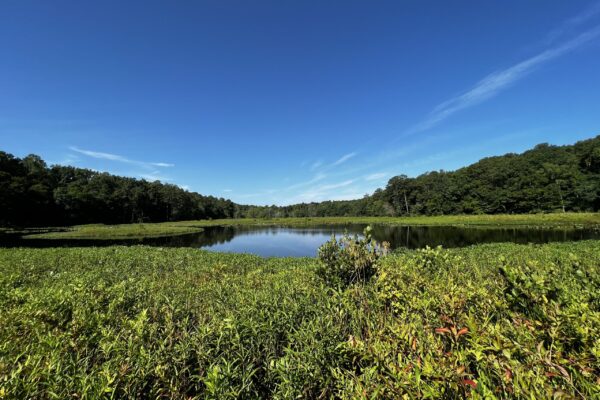
- Lakes: Swift Creek Lake (225 acres), Beaver Lake (24 acres), Camp Swift Lake (7 acres)
- Trails: 90 miles total (6 miles hiking only, 44 miles mountain biking, 13 miles equestrian, plus fire roads/double track)
- CCC history: CCC museum on site — only CCC museum in Virginia State Parks
- Mountain biking: Recognized by International Mountain Bike Association; visitors travel from multiple states to ride
- Aquatic complex: Water park with four bodies of water, wet deck, activity structure, water slides — open Memorial Day through Labor Day
- Overnight accommodations: Campground (tent + RV), yurts, camping cabins, five 3-bedroom cabins, one 6-bedroom lodge
- Plant and wildlife: 446 plant species, 26 mammals (including occasional black bears), 109 birds, 28 reptiles, 23 amphibians, 150+ butterfly species
- Dog policy: Dogs welcome on leash
Show Notes & Links
- Plan Your Visit — Pocahontas State Park
- Camping and cabin reservations
- Trail maps and mountain biking information
- Aquatic complex — summer hours
- Boat and kayak rentals
- CCC Museum — open weekends
- Interpretive and Junior Ranger programs
- Friends of Pocahontas State Park
- Virginia State Parks — all 42 parks
- Virginia Master Naturalist
Transcript
Pocahontas State Park — Virginia’s Largest State Park Is Right Outside the Capital
The Parks Podcast, Episode 23 | Nate Clark, Park Manager, Pocahontas State Park
Welcome and Park Stats
Missy Rentz: Today, we are lucky to have Nate Clark, who is the park manager at Pocahontas State Park in Virginia. Nate, welcome to The Parks Podcast.
Nate Clark: I appreciate you having me on. I appreciate the time today.
Missy: We start each episode with park stats. Let’s run through them for Pocahontas State Park. The park is located in Chesterfield, Virginia, which is just south of Richmond. It was established in 1946 after being part of the Virginia Conservation Commission for 12 years. The park is 7,919 acres. Some fun facts: it’s Virginia’s largest state park. It’s home to three lakes — Swift Creek Lake at 225 acres, Beaver Lake at 24 acres, and Camp Seven Lake at 7 acres. There are 90 miles of trails, including 6 miles of hiking trails, 44 miles of mountain biking trails, and 13 miles of bridle trails. It is a very active park for recreation, but also for the plants and animals that live there, including 446 plant species, 26 mammals, 109 birds, 28 reptiles, 23 amphibians, 150 butterflies, and so many more animals. Nate, I love this park. I feel like I’m on home turf talking to you because it’s the one I go to all the time.
Nate: Awesome. Yeah, it’s a cool park. It’s a really neat place. We’re only 30 minutes south of Richmond and the state capital in a very urban area, so to have almost 8,000 acres of protected land here is just a real gem for this area.
Missy: It is one of those where you’re driving down the interstate — you have I-95 and the hustle and bustle — and all of a sudden there’s this peacefulness that you can escape to. It’s a gift to the community.
Nate: Yeah. If you pull up a map on your phone of the Chesterfield area, there’s a big green blob in the middle of the county, and that’s us. Chesterfield is definitely an urban county — lots of development, lots of stuff going on — so it’s nice to have this protected area right here.
Why Is Pocahontas State Park Important to Preserve?
Missy: I talked about how it was created by the Conservation Commission as a recreation area, and then it later became a Virginia state park. Why is this area so important to preserve for the state parks?
Nate: Well, like we just talked about, in this area having protected public land is kind of rare. We’re the only state park right here in the metro area. There are a couple of others — Farmville, Cumberland, Powhatan, and over towards York River and Williamsburg in that area — but we are the only state park right here in the Richmond area. So to be able to protect and conserve this land and to be able to offer these recreational opportunities like we do is just really great right here.
The CCC Legacy — Virginia’s Only CCC Museum
Missy: We’ve talked to several national parks about the Civilian Conservation Corps. I knew it with the national parks, but I didn’t realize they played such a significant role in the creation of some of the state parks. You all actually have a museum dedicated to the role the CCC played in the park.
Nate: We do. It’s the only Civilian Conservation Corps museum in Virginia State Parks. It’s right down by our visitor center and it’s open on weekends — we have a lot of times our volunteers are staffing the building for us. But it’s a really neat facility and the CCC is such a cool history. The impact and the footprint that they left across the country and in particular here in Virginia is pretty amazing. We have seven original CCC state parks in Virginia, which Pocahontas is not one of because we became a park in the 40s, a little bit after all the other parks opened. But see if I can get this right: the seven original ones are First Landing in Virginia Beach, Douthat in Bath County, Westmoreland in the Northern Neck, Fairy Stone in Patrick County, Hungry Mother in Smyth County — where I worked about five years before I came up here — and Staunton River in Halifax County. Those are the original state parks that we actually opened all seven of on the same day, June 1936. But we’ve got some CCC history here at Pocahontas also. We’ve got some original facilities still — a lot of stonework, culverts on the road, stuff like that that’s original. So it’s a really cool legacy when you look back. The fact that we’re still using some of these buildings and some of the infrastructure that was built back in the 30s is a real testament to the quality and the workmanship that they did. And we have a lot of these CCC cabins around the state in some of those original parks that are still being used as rental cabins today.
Missy: Would they have come in and really built the entire park, or was their purpose infrastructure?
Nate: Well, I think it was a little bit of everything, and then obviously all those parks have developed and grown quite a bit since. I’ll talk a little bit about Hungry Mother because I worked there for five years. There are five log CCC cabins plus the lodge at Hungry Mother that are still in use as public rental cabins. Picnic shelters there were built by the CCC. The beach area was built by the CCC. The dam — Hungry Mother Lake is a dammed impoundment, as is Swift Creek Lake here — is also CCC construction. So it’s a little bit of everything. They built trails, infrastructure, cabins, their own camps, barracks, buildings, and workshops. I’m sure it was quite a sight to see when they were in action building everything.
Missy: I always find the structures to be really beautiful too. I feel like maybe now we put up stuff that’s more utilitarian, and to see the stonework that goes into those original structures is really beautiful.
Nate: Absolutely. Some of the stonework that you see around the state — particularly some of the fireplaces and shelters, some of the culverts and drainage areas off the roads. Hungry Mother had several stone water fountains that the CCC built. So it’s really cool because the construction techniques then were very, very different from now. To think of the quality and the craftsmanship that they did with the construction tools they had — they didn’t have access to some of the things that we have now. So it’s pretty amazing what they left for us.
Conservation and Preservation in the Park
Missy: It’s really great that you guys have a museum so that people can go and learn a lot more about what they did and feel a little more connected to the work as they’re walking through the park. I tend to use Pocahontas for recreation, but I loved seeing as you go through the park — it’s very obvious that the preservation is very important. I noticed a lot of the beehive structures that are set up, but also a lot of land that’s protected that’s not meant for us to use. Can you talk a little bit about the preservation and restoration projects at Pocahontas?
Nate: Yeah. Resource management for us is part of our mission — we’re the Department of Conservation and Recreation. So on the recreation side, there’s all we talked about. The conservation side is the resource management. It could be natural resources, physical resources like the CCC buildings, or cultural resources like we have some artifacts and things in our museum. We try to — it’s always a balance with Virginia State Parks because conservation and recreation is just a balance between the two. But honestly, the biggest conservation aspect that we have is just protecting these lands. It’s an 8,000-acre park and the developed area is probably a quarter of that at most. So you think about all that undeveloped land here in the park still — that’s a great habitat for all the species that you talked about. We’ve got all the typical mammals and plants and birds that you’ll see in Virginia. Deer, very good white-tailed deer population. We have a couple of bear sightings every year, which is actually really cool — two or three a year we get some sightings. And if you think about it, it’s just perfect habitat. It’s 8,000 acres of protected area through here. The biggest thing is that we’re just protecting all this land across the commonwealth that will never be developed and will always remain in the state that it is.
Missy: Yeah, it’s so great. And I mean, when you’re there and because it’s so big, you really do feel that impact of being in preserved spaces and natural spaces.
What to Do — Recreation for Everyone
Missy: I mentioned I come for the recreation. I almost feel like when I come there, it’s like a playground for children of all ages at Pocahontas State Park.
Nate: Definitely is.
Missy: What can people do when they come to visit the park?
Nate: Everything. Well, I guess we’ll kind of break it down into overnight use or day use. For overnight, we’ve got a campground — a rather large campground that has sites that will accommodate most sizes of RVs and motorhomes as well as all the way down to your typical tent, which is usually my still preferred method. Also in the campground, we have yurts and camping cabins. The yurts are basically a wood-framed, canvas-covered permanent tent — there’s furniture inside, a bed, a sofa, a table and chairs. Our camping cabins are relatively rustic buildings but they’ve got a couple sets of bunk beds and table and chairs, and they do have electricity. So the camping cabins and yurts are really great for first-time campers — someone who may not have the tent and sleeping bag and all the stuff you need to go camping but wants to come try it out. We also have nice cabins — think like beach house cabins. We’ve got five three-bedroom cabins and one six-bedroom lodge. Ours are relatively new — we only opened them in 2021, so they are actually the newest cabins in state parks.
Nate: For day use — one of the big draws here in the summertime is our aquatic complex. We’ve got a rather large water park: four individual bodies of water, a wet deck, an activity structure — think like a playground in the middle of the pool with water jets and stuff shooting all over the place — and a couple of water slides. That’s really popular in summertime, especially on weekends. But the other big recreational opportunity here is trail use. We have close to 100 miles of trail total — some mountain biking only, some hiking only, some equestrian accessible, and a pretty extensive network of forest roads or fire roads, basically a gravel double track trail running through the woods. Our mountain bike trails are world-class — we’ve been recognized by the International Mountain Bike Association for our trails and we get a lot of folks who come in regionally from different states to ride them. And then the lakes — lots of boating opportunities, canoe, kayak, paddle boats, stand-up paddleboards. Playgrounds, fishing, it’s just a little bit of everything.
Programs, Rentals, and How to Get Started
Missy: So if you’re new to this — there are rental programs, correct? And if I’m brand new and I’m intimidated by the hiking or whatnot, what kind of programs do you all offer to help educate people about the park?
Nate: Sure. We have a really extensive educational and interpretive program. Out of our visitor center, which is in that same area as the CCC Museum, we run all of our nature programs. Our chief ranger Rebecca Whalen and her staff just do an awesome job. Kids of all ages, adults of all ages. There are programs geared towards homeschoolers and younger ages, and then all the way up to really — you name it. Junior Ranger programs, Fishing 101, Camping 101 programs, and just a little bit of everything. That’s a great opportunity if you’re a parent bringing your kids. We do rent boats — canoes and kayaks and paddle boats. If you just want to try a canoe for an hour, you can do that. And then as soon as you’re done, you can cross a little footbridge and hike on Coop Trail, which is about two miles. So there’s a lot of little quick hitters like that where you can try a couple of different opportunities and see what you enjoy, or just do several things all in one day.
Missy: I think at least for me, starting something new, you want to be able to put your toe in the water and figure out if you’re actually going to like it before you invest in it. And I think that you guys do an amazing job offering that. When someone is planning a trip to come visit the park, what do you recommend?
Nate: Our website is a good resource — it has all the different amenities and details, and a lot of questions that somebody may have will probably be answered there. So I would start there and just see what is available and what might interest you. For the campground and the cabins, if you’re looking for an overnight stay, we stay very busy in the summertime and especially on weekends. I would say make your reservations as early as you can. If you’re flexible and can come during the week, you probably shouldn’t have any problems getting a reservation. The weekends are pretty busy. Definitely check our website. Give us a call at the office or just stop by and pop in to the visitor center and find somebody in a uniform and just ask some questions. We’d be happy to stop whatever we’re doing and talk to people and answer questions.
Missy: That’s what I love to point out because I think that the rangers want to talk to people. They want to share their passion and love for the park. You’re not interrupting — no question is silly. When I go to a park, I like to go talk to a ranger because oftentimes they know the better things to do. They might know that a trail is particularly wet one day and there may be another option, or there are great flowers in bloom on another trail. It’s always good to tap into their massive amounts of knowledge.
Nate: Yeah. We work here, we’re here 40 hours a week or more, so we’re very familiar with the park. And a lot of us use the park also — it’s not just a workplace, it’s somewhere that we use a lot on our off time. And we’ve really seen a lot of new folks and new families post-COVID, which I think is a national trend. All the visitation numbers went up. Everybody wanted to get outside and start doing some different things. So we’ve seen a lot of new visitors to the park. We’ve spent years and years in parks and we kind of know the quote-unquote proper way to use a park, but some people don’t. And so we’re happy to answer those questions. Stewardship ideals is something that we really appreciate being able to pass on to folks.
Peak Times and Year-Round Use
Missy: This is a region of the country where you can use the park year-round. Are there peak times that people should be aware of?
Nate: Well, summertime is usually our busiest. Memorial Day through Labor Day is kind of our typical summer season. So weekends are very busy, especially when the pools open. So if you’re looking for a little less crowded time, I would say during the week. And then of course spring and fall is just gorgeous — the summertime weather and humidity around the Richmond area, if you can get out in the spring and fall and get out on a trail when the weather’s nicer, it’s a really nice time to be out. The other really nice thing about this park is that it is 8,000 acres and we’ve got a million-plus visitors every year — it’s the busiest state park in the state. But it’s very easy to get out on the trail and be out by yourself. I’m a runner, so I’ll run trails, and there are a lot of times where I can count on one hand how many people I actually see on the trail. A lot of the crowds and congestion are around the pool and the day use areas, but it’s very easy to get out on a trail and really get that experience like you’re out in the woods.
Getting There and Getting Supplied
Missy: And one of the things that you also have going for you is that you are so close to civilization that it doesn’t require a ton of advance planning to make sure I’m going to have the things I need. Because sometimes going to a park is very remote and you have to really plan ahead or you’re going to be without things that you need.
Nate: Yeah, absolutely. Some of the parks across the state are more rural areas — you might be 20, 30, 45 minutes away from your nearest grocery store or convenience store. But right here in Chesterfield, we’re real close. You can pop out of the park and hit Route 10 and hit a grocery store pretty quick. And we’ve got a camp store in the campground also, so a lot of basics you can pick up right there.
Volunteering and Getting Involved
Missy: So if someone comes to the park and experiences it, they may want to get more involved. What can you do at Pocahontas State Park if you just want to do a little extra?
Nate: If somebody wants to give back and volunteer, there are all kinds of opportunities here. The Friends Group is the main organization, but there are a lot of individual opportunities too. It could be trail maintenance. It could be working in the CCC Museum, spending a few hours there and talking to people and interacting with guests when they come in. Master Naturalists is another organization that does a lot of work here in the park — bat monitoring, bluebird monitoring, butterfly gardens. And there’s a butterfly count every year that happens here. So there are a lot of opportunities if you want to get involved.
Missy: And if you wanted to get involved, do you just go into the office and ask a park ranger? Is there a place on the website?
Nate: Yeah, the friends group is fopsp.org — if you Google Friends of Pocahontas State Park, it’ll pop right up. We also have a volunteer coordinator here at the park. If you want to give us a call, we can get you in touch with Brian and he can get you all the different opportunities.
Missy: We’ll put links to all of these on the website if you go to the episode page. I love the butterfly count idea. That’s really neat.
Nate: Yeah, it’s pretty cool. Our volunteers do some awesome things for us. We’re a state agency, so we track everything. But we are always at or very close to the top in the state for volunteer support. We would not be able to offer the programs in the park that we have if it weren’t for the dedicated volunteers that support us.
Speed Round
Earliest park memory?
Probably my parents taking me up to Shenandoah National Park when I was a kid and hiking down to South River Falls. That’s probably my earliest memory.
What made you love the parks?
Probably same answer as above. Just getting out there as a kid. My parents exposed me to it a lot — my sister and I. Just getting out there, and I’ve just always loved it.
Favorite thing about Pocahontas State Park?
The variety — the variety of recreational opportunities like we talked about, the variety of visitors that we see, and the trails. I’m a trail runner, so I run these trails all the time when I’m not working.
Favorite thing to do at Pocahontas State Park?
The trails. I’m here 40 hours a week at least, so when I’m off, it’s nice to get out and get away from people and get out on the trails and just kind of enjoy myself.
Park on your bucket list?
Yosemite. I’ve been out west — I worked at Yellowstone for a summer. And my mom says I was at Yosemite when I was very young, but I don’t remember it. So Yosemite is top of my list — Yosemite Valley and Half Dome.
Three must-haves for a park visit?
As a park ranger who has had to go out and find people in the past — some kind of navigational tool, whether it’s a phone with good maps loaded on it and plenty of battery life. A rain jacket and some layers, because even in the summertime when there’s nothing forecast, a storm can always roll through. Good footwear. And food and water.
Favorite campfire activity?
Just hanging out with friends or family. Talking and just being in front of a campfire.
Tent, camper, or cabin?
If it’s just me, tent. If it’s the family and my wife, probably cabin.
Hiking with or without trekking poles?
Generally without.
Favorite trail snack?
Trail mix. And for my favorite trail lunch — a turkey and cheese bagel. That just hits perfect.
Best animal sighting?
I’ve seen a lot of really cool animals out west — grizzlies and moose and bison. But I had a really cool one just about two weeks ago. I saw a bobcat on the Appalachian Trail up in Shenandoah National Park, right in the Milam Gap area, a little south of Big Meadows. It was, I think, the second bobcat I’d ever seen. He came around a turn and was standing right in the middle of the trail about 20 yards away.
Favorite sound in the park?
Silence.
Greatest gift the parks give to us?
The protection. The protection and the conservation and the opportunities to get out here and use these resources and love these resources.
Missy: Nate, thank you for being part of the episode. I love learning just a little bit more about the park that I call home. And thanks for being with us today.
Nate: Absolutely. I appreciate the opportunity. Thank you.
Missy: That’s it for today’s episode. Until next time — we’ll see you in the parks.
Music for The Parks Podcast is performed and produced by Porter Hardy. Follow us @TheParksPodcast or visit TheParksPodcast.com.