
My experience
I stopped at Organ Pipe Cactus after a weather detour sent me from Zion down toward southern California. This was early in my trip. I was so new to the routine and still trying to work out what worked for me. Gosh, I still had the tiny tent that required me to squirm around on my sleeping bag to get dressed.
Organ Pipe is way south, nearly on the Arizona–Mexico border, and you are reminded of that when you drive through security checkpoints on the way in. Don’t worry, it is easy. But it is a good reminder to have your ID with you, and your paperwork for your pets if you are traveling with them.
Don’t let the remoteness fool you either. This large, parking-lot-style campground was PACKED. I was lucky to get a site, and that was during covid restrictions.
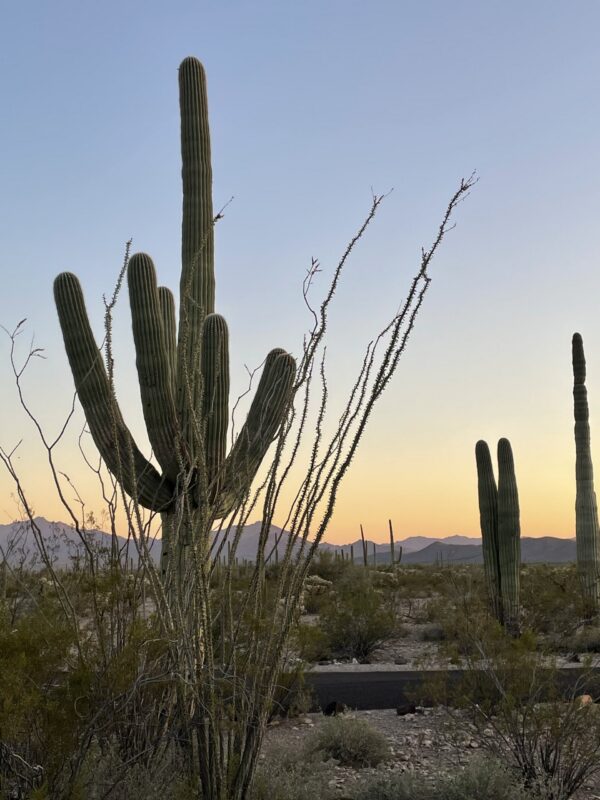
I did get to take part in a ranger program, which I point out because at that stage of covid most parks still had theirs suspended. The program was about the night creatures of the park. I went to bed realizing that scorpions and bats were all around me.

One of those bats is the reason the desert looks the way it does. The lesser long-nosed bat follows the blooming cactus north every year and is the saguaro’s only true night-time pollinator, feeding on nectar and carrying pollen from flower to flower in the dark while everyone sleeps.
The trails were beautiful and remote. I had no idea how many kinds of cacti existed. It is named for the organ pipe, but I saw plenty of other beautiful varieties out on the hike.

Also on the podcast
Organ Pipe Cactus was Episode 5 of The Parks Podcast — America’s Green Desert.
What I’d tell a friend
Water. Lots of it. It was winter everywhere else on my route and sunny and hot here. This is the one thing I would not improvise on.
Stock up long before you arrive. Resupply out here is limited. Do your groceries and anything else you need well before the last stretch of road.
Layers. Hot through the day, cool once the sun goes down.
Book the campground. I got lucky with a site during covid. Twin Peaks takes reservations up to six months ahead now, and it fills.
Ask what the rangers are running. The night-creatures program changed how I understood the place, and I would have missed it if I hadn’t asked.
Plan your visit
Entry: Charged per vehicle, with lower rates for motorcycles and for anyone on foot or bike, valid 7 days. A park annual pass is also sold. Rates change, so check the park’s own page before you go. The park does not take cash — card or mobile payment only.
Or the America the Beautiful annual pass, good for a year at every national park and federal recreation site. US residents and non-residents pay different rates.
Camping: Twin Peaks Campground has 208 sites, open year-round. Check the current nightly rate. Flush toilets, potable water and free solar-heated showers, but no hookups. Reserve through Recreation.gov up to six months ahead.
Getting there: You will pass through Border Patrol checkpoints on the drive in. Carry ID, and paperwork for any pets.
Season: Winter and early spring are the comfortable months. Summer runs past 110°F.
What to pack & wear
Water, and more of it than you think. Layers, because the days are hot and the evenings are not. And whatever groceries and supplies you need for the whole stay — there is very little to restock from once you are out here.
Pets
This one sits in the middle, and it is worth knowing before you commit. Three trails are open to leashed dogs — the Palo Verde Trail at 1.3 miles, the mile-long Campground Perimeter Trail, and the short Visitor Center Nature Trail. That is more than most parks give you. The rest of the trail system is closed to them, and the visitor center is service animals only. Six-foot leash throughout.
The reason for the closures is not bureaucratic. Cholla spines, rattlesnakes and scorpions, rock that cuts pads, and coyotes that carry disease. Then the heat, which runs over 110°F in summer and past 90°F in most other seasons, and a car is not a solution to it.
If you are coming in winter with a dog who is happy with a couple of short walks and a campsite, this works. If you came to hike all day, it does not.
Fees, camping and pet rules change. Check with the park before you go — details here were verified in September 2026.