
For my 50th birthday, I wanted to do something meaningful. So I sat down with the superintendent of the 50th national park.
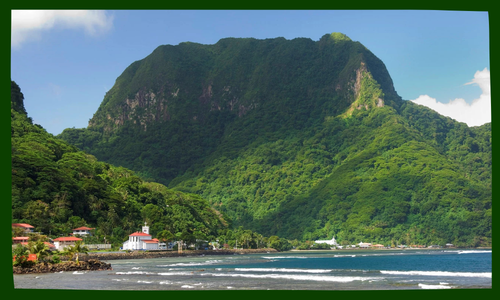
PK Lathrop oversees the National Park of American Samoa — the only US national park south of the equator, the only paleo tropical rainforest in the United States, and home to a single beach with more coral species than the entire Atlantic Ocean. It sits 2,600 miles southwest of Hawaii, it is leased directly from the Samoan people, and Samoa is the birthplace of all Polynesian culture on earth.
I had never heard most of that before this conversation. By the end of it, this park had shot to the top of my list.
A note from Missy: I went into this one knowing almost nothing about American Samoa. I came out completely in love with it. The coral, the flying foxes, the cultural preservation, the lease arrangement — every single thing PK told me was a surprise. If you’ve ever wanted to go somewhere that feels like nowhere else on earth, this is your episode.
Episode Guest
PK Lathrop, Superintendent
National Park of American Samoa
Park Stats
- Location: Pago Pago, American Samoa — 2,600 miles southwest of Hawaii
- Designated: October 31, 1988 (President Ronald Reagan) — 50th National Park
- Size: 13,500 acres (9,500 land / 4,000 coral reef and marine)
- Annual visitors: 22,567 (2024)
- Highest elevation: Lata Mountain, 3,170 feet
- Three islands: Tutuila (main, ~40,000 people), Ofu (snorkeling, shark-tooth mountain), Ta’ū (most acreage, Big Mama coral, Pacific boa)
- 800 native fish species, 200+ coral species on one beach alone
- Only paleo tropical rainforest in the United States
- Samoa is the birthplace of all Polynesian culture — Hawaiians, Tahitians, Maori, Tongans all trace roots to Samoa ~3,000 years ago
- Park is LEASED land — not federal. Year 33 of a 50-year lease. Villages paid annually by Dept. of Interior.
-
Episode Transcript
National Park of American Samoa — The 50th Park, the Birthplace of Polynesia, and 200 Coral Species on One Beach
The Parks Podcast, Episode 62 | PK Lathrop, Superintendent, National Park of American Samoa
Welcome and Park Stats
Missy Rentz: I’m excited to welcome PK Lathrop to this episode of The Parks Podcast. PK is the Superintendent at National Park of American Samoa. PK, welcome to The Parks Podcast.
PK Lathrop: Thank you so much, Missy. It’s my honor to be here.
Missy: This is like such a dream conversation for me because the National Park of American Samoa seems like the dream. It is only the second of the parks I’ve interviewed that I haven’t ever been to. But I’m so excited to learn more about the park.
PK: Sure. It was a bucket list dream for me too. I came here as a visitor in 2017.
Missy: I love it. Let’s do some park stats to let everybody know some basic information about the park. The park is located in Pago Pago, American Samoa, which is 2,600 miles southwest of Hawaii. It is the 50th National Park and was created on October 31st, 1988 when Ronald Reagan was president of the United States. The park is 13,500 acres — 9,500 of that is land and 4,000 of that is coral reef and marine area. Last year in 2024, there were 22,567 visitors. The highest elevation is Lata Mountain at 3,170 feet. There are three islands that are part of the park — it preserves and protects coral reefs, the rainforest flying fox (fruit bats), and the Samoan culture. There are 800 native fish species and 200 coral species. Let’s dive into this amazing park.
PK: Sure. And to put some of that in context — we preserve the only paleo tropical rainforest in the United States. That’s a fancy word that just means our rainforest comes from what we call the old world. It has its family roots in the Papua New Guinea rainforest versus the tropical rainforests of the Americas that we’re a little bit more familiar with. So the only paleo tropical rainforest in the United States. And then you referenced our coral species — just to put that in context. We have one beach inside the park that has over 200 coral species. By comparison, the entire Atlantic Ocean, including the Caribbean basin, all of those wonderful diving and snorkel spots in Cuba and the Dominican Republic — all of that total has 60 species of coral. And here we have one beach with over 200.
Why the National Park of American Samoa Is Part of the NPS
Missy: Why is it important that the National Park of American Samoa is part of the National Park Service?
PK: The park was created to protect the paleo tropical rainforest, specifically calling out the habitat of the flying foxes. We have two species of flying foxes — large, three-foot-wingspan, diurnal (meaning day-flying) bats. A lot of folks when they visit, the first question is where they can see one, and nine times out of ten they’ve already seen plenty. But to our eyes, we’re used to almost dismissing them as maybe crows. They just seem like background noise. But turn your head out the window at any time of day and you’ll see bats flying around.
PK: Third is those coral species — half the park is underwater. We take protecting our corals here really seriously. And then also we preserve the Samoan culture — the fa’a Samoa, the Samoan way of life. Everything we do, except for this podcast, is bilingual. If you follow us on social media, go on our website, come to our exhibits or get any of our publications — they’re all bilingual. All of our staff, except for me and one other, is fully bilingual, and I have my Samoan class later this afternoon. I am working on it.
PK: And then one thing that a lot of people don’t know — it’s easy to get enamored with the beauty. But Samoa is the birthplace of all Polynesian culture. The Hawaiians come from Samoa about 1,500 years ago. Tahitians come from Samoa. The Maori of New Zealand come from Samoa. The Tongans come from Samoa. Polynesian culture starts here in Samoa about 3,000 years ago. And the park has the archaeology that tells that story, which to me still gives me shivers and goosebumps — we have a national park that is really important when it comes to coral and tropical rainforest, but also truly preserves the birthplace of one of the most dynamic cultural diasporas in our entire Earth’s history.
A Culture That’s Still Alive
Missy: One of the things I found the most interesting when I started researching for this conversation is the cultural preservation. I feel like so many parks, what they’re preserving is what has been. And I feel like this is a park that yes, it’s what has been, but it’s a culture that still is alive and thriving today.
PK: I totally agree. I’ve always personally cringed at the term “living history,” which is usually dress up and pretend. And I was always like, if the history is so living, why are we pretending? But you are right — here at the National Park of American Samoa, this is an evolving culture that still works really hard, and the park does as well, to preserve the Samoan way of life but also keep it evolving.
Missy: I had a few clients from American Samoa in my previous life, and the values — family, connection, community — it’s such a beautiful model that I feel like we should all be living off of.
PK: Yeah. I’d add humility there. Hard work, kindness, patience, grace. The team that I am proud to work with embodies all of those attributes so much. I recently bought a moped and drove it to work for the first time in the rain. And as I was parking, they came out, hustled to find me a tarp and weights, and in about five minutes most of the park staff had assembled me a makeshift covered parking spot for my new moped. And I only share that to share the spirit of how we really do value community here and looking out for each other.
The Park Is Leased From the Samoan People
Missy: Is the park intermixed within the community, or is it set aside?
PK: It’s very intermixed. You really can’t separate one or the other. Some of that’s because we’re on a relatively small island. And what I should have led with is that this park is unique in that it is leased directly from the Samoan people. All lands in American Samoa can only be held by Samoans — and that goes for the national park as well. This is not federal land. This is leased land. It’s on a 50-year lease. We’re on year 33 of that lease. And every single year the Department of Interior pays the American Samoan government directly for that lease. And then the American Samoan Government divides it up amongst the villages that we lease from.
Missy: It’s so often I’m talking to parks where the land was taken from indigenous communities. So to have that foundation of cultural respect and community built in — that’s really refreshing.
PK: It is. And it also generates a lot of support for the park. The lease arrangement ties us to the community and holds the park a little bit more accountable. We have regular meetings with those village leaderships about how things are going, from tourism to conservation. It just makes us a little bit more approachable with the community.
The Three Islands
Missy: We were talking about the three islands that are part of the park. What differentiates them?
PK: The main island, Tutuila, is the big city of American Samoa. The entire island has about 40,000 people on it. It’s where you’ll find the international airport, a modest hospital, and most any service you need — if you bring a little island patience and flexibility, you’ll find your barbershops and fishing supply stores and we even have an Ace Hardware.
PK: The other two islands — Ofu is the smallest. Like a shark-tooth mountain that comes straight out of the sea, surrounded by lovely beaches and coral. The park is on one of those strips of beach. That community has about 100 people today — they live a very subsistence lifestyle. Fishing, and the land just provides an awful lot of food. The park does allow for subsistence fishing and harvesting in park waters.
PK: Then the island of Ta’ū — that’s where most of the park acreage is. A population of just shy of 800 or so, and a little more of a mound shape — that’s where you’ll find Mount Lata at 3,300 feet. It’s home to the only indigenous snake in American Samoa, the Pacific boa. And Ta’ū is also home to one of the largest known corals in the world — her name is Big Mama. Worth a Google search. It’s a dome coral about the size of a small house. I have not seen Big Mama yet. I look forward to it.
The Flying Foxes — Cultural Tradition, Ecological Necessity, and a Near-Disaster
Missy: The fruit bats — their importance to the environment there is incredible to me.
PK: Yes. Our fruit bats need their fruit — which sounds easy when I was describing how much fruit is found around island. But that balance can get tipped. One of the impetuses for the creation of the park was a large cyclone. Cyclones are what we call hurricanes down here — same phenomenon, different hemisphere. A very powerful cyclone literally pulled the leaves off of every single tree here on Tutuila. You can find photos — it looks like the island is naked. And the bat population almost went out, almost extirpated.
PK: When there’s no fruit, when you rip all the leaves off of all the trees — flying creatures can’t pack on extra fuel in the form of fat. It goes in quick, comes out quick. So if you disrupt their fuel source, they don’t have a pantry. They don’t have fat reserves. And so the bat population was in serious decline.
PK: Prior to that, it was legal and customary to eat fruit bats here. Which, if you’re from mainland United States, might make you feel a little queasy. But that was the way of life here up until recently. And it was that cyclone and the bat population decline that led to the local government formally banning bat harvesting. The local buy-in was pretty immediate. I think that speaks to the ethos here — when a culture is ready to give up what is a really important cultural tradition, just like that, for the benefit of their island neighbor in the form of a bat, I think it speaks volumes.
Missy: And they’re big pollinators. They’re needing them — it’s the cycle of life. It’s not just that they’re cool to look at.
PK: Yeah. They’re called fruit bats but I see them most with their head inside flowers. There’s a tree here — has big, beautiful white and pink flowers. And you almost always see a bat’s face dug inside those flowers, nectaring it up.
Coral Conservation — Heat Tolerance, Disease, and a Biodiversity Bank
Missy: The other living thing that I often forget is an animal is coral. I always think they’re rocks, and then I start to read about them.
PK: I get to play marine biologist here — I have a coral researcher in my office at least every other week. We’ve had researchers from the Shedd Aquarium in Chicago, the Natural History Museum of New York, lots of universities. The corals on Ofu in particular are some of the most studied corals on earth. They’ve been shown to be highly heat tolerant and heat resistant. As the ocean temperature warms, they are a bit of an outlier — sending out little baby corals throughout the region as that coral home stays really healthy and productive.
Missy: Is there a hope that some of these corals could live in other places in the world?
PK: Exactly that. In two days, we have a multi-organization conversation about biodiversity banking — how can we bank the biodiversity of these really important corals, and how can we replicate them in places that they’re needed?
Missy: Have the corals in your region seen changes as the environment changes?
PK: Yes, for sure. There was a large bleaching event here on Tutuila three or four years ago. Corals can come back from bleaching events and ours largely have. The issues of protecting corals in American Samoa specifically are a few-fold. One is terrestrial development — there’s an area on my commute, Fagalua Bay, that has amazing corals. And the local government is installing a desalination plant. Who can argue against that? Every single person here needs reliable drinking water. But in that area, you’ll see the runoff. The turquoise waters now have a large brown spot — and it’s not aesthetics. Corals are animals that need sunlight most of all. When you cover their spaces with sediment and dirt, that’s a big issue.
PK: Then there’s Stony Coral Tissue Loss Disease. It comes from the Caribbean. It is transported in the ballast tanks of cruise ships. It affects only dome corals — but it is the COVID of dome corals. It’ll kill 60 to 80% of a community in about two weeks. The good news is we know how to treat it — marine biologists get in there with tubes filled with an antibiotic gel and inject it into the cracks of domed corals, and it will cure them. But it keeps us up at night, because Tutuila is very industrial and gets ships from all over the world. It’s probably an inevitability that Stony Coral Tissue Loss Disease will end up here on Tutuila.
Planning a Trip — This Requires a Plan
Missy: Let’s talk about planning a trip there, because this is not a “let me just pop by” kind of park. This requires a plan. What’s the best approach?
PK: I would strongly recommend coming in the summertime — June, July, August, September. It’s just less rainy. We are in our rainy season now, and I don’t care where you’re from — you have not seen rain until you’ve seen our rain. It rains and rains and rains. We had a record year last year. Days and sheets like someone’s turned the ocean upside down. It’s also when our whales are here — humpback whales and sperm whales, especially July, August, September. That’s a great time to come.
PK: From mainland USA, the only way here is on a flight from Honolulu on Hawaiian Airlines. Those flights are currently Monday, Tuesday, and Thursday. I would start with the flight from Hawaiian down here and then work backwards to wherever you’re coming from.
Missy: And when they get there, where are they going to stay?
PK: The island has at least 30 Airbnbs and at least six hotels. The park does not have any lodging or camping.
Missy: What can they do on a visit?
PK: At the top of the list — if you’re going to come all the way down here, I’d recommend you see at least one of those other islands. To get to those, you’ll need Samoa Airways. Book those flights well in advance — many visitors get here with the time and the desire but find the flights are sold out. The more you can plan ahead and get your flights to Ta’ū or Ofu, the better. In a perfect trip: go snorkeling on Ofu, get your cultural dose on Ta’ū, and Tutuila is your hiking island. The Lava Trail is awesome. The Fatifati Trail loops into lava and you’ll use ropes to climb up some really steep rainforest mountains. The Tuafanua Trail has rope ladders that take you down a cliff to the north side of the island.
PK: For water activities — this is not Hawaii with someone on every corner renting you snorkel gear. I would recommend bringing your own gear. There is one boat charter available, and I would give them very long notice — they’re booked for months. And you’ll want to learn your tides. The coral here likes to go all the way to the rim at low tide. If you’re not tucked into a nice pocket, you’re most likely getting scraped on coral. The park can help point you in the right direction.
Missy: So really it’s a place to immerse yourself in the culture, a lot of hiking, and a lot of relaxing.
PK: Yeah. A lot of relaxing. And also — Pago Pago today is really a melting pot of cultures. We have a lot of Filipino residents, Vietnamese residents, Chinese and Japanese residents, and folks from Tonga and Fiji. The restaurants here provide a really awesome, diverse experience. If you want to try a lot of different cuisines you would not expect in American Samoa, that is a thing.
PK: And for clothing — I would avoid any natural fibers like the plague. No cotton. Embrace the wet. I’m typically just in board shorts or gym shorts and that light synthetic material we’re all familiar with. Sandals. That’s the uniform that lets you get in and out of the water as needed. It rains, and you dry off. It is so warm here that rain jackets aren’t going to help you — the rain comes right through, and you’ll just turn yourself into your own sauna. Just be wet.
Missy: And you mentioned before we started recording that you’re the only park that embraces cultural attire.
PK: Sure, yeah. We wear lava lavas, or puletasi for our female employees. Traditional — in the NPS colors. They’ll have the NPS arrowhead on them. I’m in my lava lava right now.
Missy: Is there anything else somebody needs to consider when planning a trip?
PK: We are not open Saturday and Sunday. The park grounds are open, so all that hiking and whatnot. But the visitor center is a Monday through Friday operation. And the Friday flight that is coming later this year will land late Friday night — we won’t be reachable until Monday. So definitely keep that in mind.
Speed Round
Earliest park memory?
Seeing and hearing a baby elk nurse on a hike. I was in college and I was hiking Rocky Mountain National Park — I’d been to parks earlier, but this is what came to mind. I could hear the suckling of this newborn elk, and it was amazing.
What made you love the parks?
Humility. The national parks to me are a place where we are reminded that humans are not the only important thing on this earth. That sometimes it is an elk calf. Sometimes it’s a humpback whale or a flying fox or a coral or hallowed ground where people made sacrifices for this country. But there are things that are as and sometimes more important than us.
Favorite thing about National Park of American Samoa?
The team. My coworkers, hands down.
Favorite thing to do at National Park of American Samoa?
Hike lower Sela’i Trail and, if it’s 100% safe, get in the tide pools.
Park on your bucket list?
Kobuk Valley in Alaska. Desert landscapes — a lot of folks don’t always equate cold and desert, but they often go together. Some really cool archaeology and river rafting. I did all of the Grand Canyon earlier this year, and I’m headed to the Zambezi River in Africa later this year.
Three must-haves for a park visit?
This will disappoint some people. My headphones and water. That’s it. I don’t know if I have three must-haves — the only two things I’m not going anywhere without are water and headphones.
Favorite campfire activity?
Watching it. It’s the original TV.
Tent, camper, or cabin?
Tent or preferably tarp — just under the stars.
Hiking with or without trekking poles?
Without.
Favorite trail snack?
Smoked oysters — although they can be messy.
Best animal sighting?
A jaguarundi in Ecuador.
Favorite sound in the park?
The ocean.
Greatest gift the parks give to us?
Humility.
Missy: PK, thank you so much. This park has skyrocketed to the top of my wishlist. I loved learning about it and I can’t wait to see it in person. Thank you for being here.
PK: My pleasure. Thank you for the fun conversation. Call anytime.
Missy: That’s it for today’s episode. Until next time — we’ll see you in the parks.
Music for The Parks Podcast is performed and produced by Porter Hardy. Follow us @TheParksPodcast or visit TheParksPodcast.com.