
We are deep into My Hammock Summer — and on July 22nd, the whole world catches up with us. National Hammock Day is the holiday that needs no gift, no travel, and no agenda. Just you, a hammock, and permission to be exactly where you are.
This episode was originally released as Episode 33. I’m bringing it back because it’s better now than it was then — not because anything changed about the conversation, but because everything changed about how I understand it. Anna Rawlins, Chief Marketing Officer at ENO Hammocks, described from the outside what I now know from the inside: that a hammock isn’t just a product. It’s an invitation to slow down, to reconnect, to remember you are allowed to just be somewhere.
ENO has been making that invitation more accessible since 1999. This conversation covers everything — the history of hammocking, how to hang one safely, how to use one as a full camping sleep system, and why the moment someone spots a hammock at a park or a picnic, something shifts in them. You’ve seen it. That look. Pure joy.
Happy National Hammock Day. I hope you are listening to this from yours.
A note on Asheville: This conversation was originally recorded in the summer before Hurricane Helene struck on September 27th, 2024. ENO is an Asheville brand, and Anna speaks about the region with such love — which makes it all the more meaningful that when Helene hit, ENO and the entire outdoor community showed up for their city. Asheville is still recovering. The best thing you can do is visit, spend money locally, and support the community that has given so much to the outdoor industry. We’ll keep saying it until it’s no longer necessary.
Episode Guest
Anna Rawlins — Chief Marketing Officer
Eagles Nest Outfitters (ENO)
About ENO
ENO — Eagles Nest Outfitters — was founded in 1999 in Florida by the Hennessy brothers, who started by selling hammocks out of a van at music festivals. Now headquartered in Asheville, North Carolina, ENO pioneered the first knotless hammock suspension system (the Atlas Straps) and has grown into the leading name in portable hammocking. Their products range from the classic Double Nest to ultralight backpacking hammocks, bug nets, rain tarps, and under quilts — everything you need to make the outdoors your living room.
National Hammock Day is July 22nd. Check ENO’s website and social media for annual celebrations, contests, and giveaways.
Transcript
National Hammock Day — The Art of Slowing Down
The Parks Podcast, Episode 76 | Anna Rawlins, Chief Marketing Officer, ENO
Why This Episode Is Back
Missy Rentz: Welcome to The Parks Podcast. I’m Missy Rentz, your host. And before we dive into today’s episode, I want to give you a little context about why I’m relaunching this episode right now.
We are deep into My Hammock Summer — a challenge I set for myself to spend 30 minutes outside in my hammock every single day from Memorial Day to Labor Day. What started as a personal commitment has turned into something I didn’t expect: a practice, a reset, a daily reminder that rest isn’t something you earn. It’s something you need.
So when National Hammock Day lands on July 22nd, it feels like the whole world is catching up with what we’ve been doing all summer.
This episode, which I recorded with Anna Rawlins, the Chief Marketing Officer at ENO Hammocks, was made specifically for this day. And honestly, it’s better now than it was last year when I first released it — because now I understand from the inside what Anna was describing from the outside. That a hammock isn’t just a product. It’s an invitation to slow down, to reconnect, to remember you are allowed to just be somewhere.
ENO has been making that invitation more accessible since 1999, and that’s exactly what this conversation is about. Happy National Hammock Day. I hope you are listening to this from one of your hammocks. Enjoy.
Hammock Stats
Missy: In today’s episode, I am joined by Anna Rawlins, who is the Chief Marketing Officer at ENO. Anna, welcome to The Parks Podcast.
Anna Rawlins: Thank you for having me, Missy. I’m stoked to be here.
Missy: Okay, so we are about to celebrate one of our favorite holidays — National Hammock Day here in the United States.
Anna: July 22nd. It’s marked on our calendars a year in advance.
Missy: Circled and all of that. When we talk to parks we go through park stats, but I’ve done a little homework on hammock stats. There’s some debate on where hammocking began — the thoughts are South Africa and Athens, Greece. We know that hammock-like objects were in etchings and paintings throughout history. Hammocks have been used on Apollo 12 for better sleeping, and the military has historically used them in tight sleeping quarters. It’s a $1.45 billion industry — that’s how many were sold in 2024. A Swiss study found that napping in a hammock leads to better sleeping versus stationary sleeping. And the tallest hammock is located in Utah’s Moab Desert — nearly 500 feet in the air. Intimidating for someone with a fear of heights, but it really does look beautiful.
Anna: I love that you put these together, especially the Swiss study. I find that I sleep better in one myself.
How ENO Started
Missy: I first was introduced to ENO many years ago for your hammocks, and I feel like you all brought hammocks back and made them cool again.
Anna: Very different design.
Missy: Yes. So you started in 1999. How was the company created?
Anna: ENO was founded in 1999 by the Hennessy brothers, selling hammocks out of a van at music festivals and gatherings. They started in Florida, then expanded to the East Coast and the US and now across the globe. The Double Nest was the first product, and then the Atlas hammock straps — the first knotless hammock suspension system, which really opened it up to a much wider range of people. You didn’t have to know how to tie any special knots. It made it easier and more accessible. The whole original idea was rooted in freedom — to explore the world, connect with people, and relax between adventures. By making hammocks portable and accessible to more people, we really see ourselves as pioneers of the hammock counterculture of the late nineties and early two thousands.
Missy: A pioneer is a great way to say it. You see them everywhere — on college campuses, in backyards, always in someone’s car. It’s my go-to graduation gift. But it’s also this word — hammocking. What does it mean?
Anna: It’s kind of a lifestyle. It’s also a product. It’s also a general vibe. Using your hammock however you like to in a safe way — between trees, on a stand, converted to a chair. In your backyard, on campus, in a park, at a music festival, camping in the middle of nowhere, or in the middle of urban spaces. It gives you a spot to take a moment for yourself. You can connect with friends, journal, listen to music, meditate, take a nap, or rock out to music — depending on where you are and what you want to do.
Hammocking Safely and Responsibly
Missy: There’s the safety of how you’re hanging it — and I’ve been to several parks where hammocks weren’t allowed at all. There is a way to safely protect our environment while hammocking.
Anna: We always recommend using the principles of Leave No Trace anytime you’re outside, and especially when hammocking. A lot of it comes down to finding the right location — making sure it’s allowed in that park. A lot of fragile ecosystems won’t allow hammocking because of potential damage. Joshua Tree National Park is one. Make sure whatever you’re attaching to is secure — if it’s trees, you want them to be over six inches in diameter, mature and healthy, with no dead limbs above you. Nothing sharp below you. And we’d always recommend not hanging higher than 18 inches off the ground.
Missy: That surprised me. I do it wrong and I need to fix that.
Anna: Never hang your hammock higher than you’re willing to fall. Don’t stack hammocks — they can break. Take it down when you’re not using it, both to be conscious of the environment and to extend the lifespan of your hammock.
Missy: And care is pretty easy too, right?
Anna: Store it in a cool, dry, dark place out of direct sunlight. Most of our hammocks you can wash by just removing the carabiners. Every stain is a memory. But every time you use it, inspect it — check for pinholes, discoloration, any change in the fabric texture. If you notice any of that, discontinue use and reach out to us. We can see if it’s something we can fix, or it might be time for a new one.
The Appeal of Hammocking
Missy: I feel like hammocking has become a standard in outdoor recreation. What do you think the appeal is?
Anna: They’re easy to use and really comfortable. Hammocks can turn any place into a spot of rest and relaxation — which is much needed these days. You’re off the ground, supported, you can sway with the breeze. You’re immersed in nature. You feel like you’re part of it. And they really invite you to slow down, which is something we don’t tend to do often in our everyday lives. They’re also extremely versatile — the same hammock works from the beach to the backwoods, everyday lounging to your main sleep system when camping or ultralight backpacking.
Missy: National Hammock Day is July 22nd — the 10th anniversary this year. You guys usually do a lot to celebrate.
Anna: This is a holiday where you don’t have to buy a gift for someone. You don’t have to travel to see anyone. We just want you to hammock. We call it ENO Day around here because it’s our main holiday. We take it very seriously in the office. Check out our social media to see how our employees are celebrating this year.
Missy: For me, National Hammock Day reconnects me with my youth because it feels like I’m playing — and there aren’t many times in life where I feel like I’m playing. The look on people’s faces when they see a hammock is just childlike.
Anna: That feeling is somewhat universal. I’ll be working an event and have a hammock strung up, and people just run over to take a seat. It creates this air of community and collaboration and a nice, fun, easy hangout. I’ve met some of my closest friends from just inviting them to sit in a hammock.
How and Where to Hammock
Missy: Let’s talk about how and where people hammock. Starting with camping.
Anna: There are a few ways to use hammocks when camping. You can use it recreationally around camp as a seat that’s off the ground — still have your traditional tent but use the hammock as a place to hang out, always supervised with kids. Or you can use it as your main sleep system. Our more classic gathered-end parachute hammocks work across the board. It’s a very modular setup — hammock, straps, bug net, rain tarp — essentially an elevated tent off the ground. This works really well in areas where the ground is uneven. My favorite part of the modular setup is that if it’s a clear night, you fall asleep looking at the stars and wake up to the sunrise with no barrier between you and the outdoors.
Anna: One important note: when sleeping in your hammock below about 60 degrees, you’ll get a cold back because your body weight compresses the loft of a sleeping bag. An under quilt hangs below your hammock and solves that completely. Then you can use a top quilt or sleeping bag to stay warm on top.
Missy: You may have convinced me to try hammock camping. Watch out, North Carolina.
Anna: Let’s go together.
Missy: Let’s talk about using one at home.
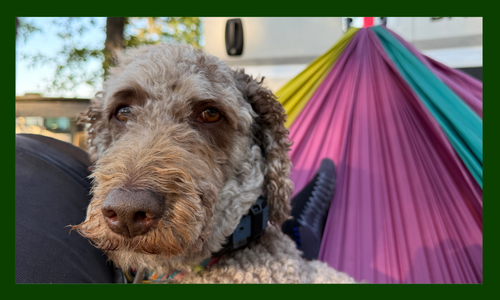
Anna: In the home you can still use a gathered-end parachute hammock with different hanging kits, indoors or outside, or with hammock stands. They’re great as a creative seating option inside — a reading nook in a kid’s room, a dedicated relaxation spot. We have some larger backyard hammocks with stands as well. The Super Nest is one I have at home — I read my Kindle on it every evening after work and snuggle my hundred-pound dog. It’s essentially a queen-size hammock.
Missy: I had mine as back porch furniture once. And I’ve heard so many parents say it’s the only way they can get a toddler to sleep.
Anna: All ages of kids. A lot of young parents at ENO say that. That gentle sway is the same thing that rocks an infant to sleep.
Missy: And in parks?
Anna: Oh yeah — everyday use. Take it to a picnic with friends, using straps or portable stands, in a national park, a local greenway, even a playground. I think anytime we can set an intentional space for people to connect and slow down, it’s going to be beneficial. You can go out with your friends, put the phone down, just sway and chat. A hammock is a product that can unlock all of these different experiences no matter where you go.
Buying the Right Gear
Missy: Is there something people should look for when buying gear to make sure they can hang safely?
Anna: Hammock straps are really the best way to go when hanging from trees. They’re widely tested — just make sure you’re getting them from a reputable brand. Check the capacity and weight rating, and read the directions to make sure you’re setting up correctly.
Missy: Clearly I didn’t do that since I’m hanging mine four feet off the ground. What’s your favorite way to use a hammock?
Anna: The most frequent way is in my backyard — that everyday intentional space to relax. When I was on vacation recently, we strung one up under the pier at the beach. 95 degrees, really hot and humid, you’re in the shade, you have a spot to relax, you’re not getting sandy, you can feel the breeze. It was fantastic. I really love those everyday opportunities.
Asheville — A Note on Recovery
Missy: I want to bring up that ENO is an Asheville brand. When this episode was originally recorded, Asheville was thriving. Then Hurricane Helene hit on September 27th, 2024 — a once-in-a-thousand-year flood that no one saw coming. ENO was a big supporter in the recovery, and you were living in it. How is Asheville doing?
Anna: I appreciate you asking. September 27th will be a day we’ll never forget. Recovery every day is a step in the right direction. The town itself has changed, but being able to see people come together — and the outdoor industry in particular — has been nothing short of amazing. During the thick of it, even rescue operations with our whitewater community. It was really impactful to see how this area is uniquely situated to respond to a situation like that. It is beautiful to see the community come together from where we were nine months ago, and we’re excited to see where we’ll be nine more months from now. The biggest way anyone can help is to come visit, book excursions with local experiential providers, shop locally, go out to eat. Spend all your money in Asheville. It will be a while until things are looking somewhat normal, but every visit helps.
Missy: Asheville is still recovering. I encourage everybody listening to put it on the top of your list for your next outdoor vacation. There is so much to do in that region, and the community needs you there.
Celebrating National Hammock Day
Missy: How will you celebrate National Hammock Day?
Anna: First by getting more people outside hammocking through all of our social content. And then I think we’ll take the dog for a hike in a local park, string up some hammocks, and bring some snacks.
Missy: Check out ENO’s Instagram page leading into and during National Hammock Day — they usually have some really fun contests and opportunities for people.
Anna: Every year on July 22nd, check our website. And if you want a reminder, subscribe to our email list.
Speed Round
Missy: Anna, every episode we end with a speed round. Just answer with whatever comes to mind first.
Earliest park memory?
Running around barefoot, climbing trees, covered head to toe in mud, being chased by geese in a local park where I grew up called Echo Lake — in Glen Allen, Virginia.
Missy: I know Echo Lake. Tootsie likes to bark at those geese.
What made you love the parks?
I’ve always felt free in parks. Running around, climbing on things, getting dirty. That freedom has always been allowed in parks in a way you can’t find in many other public spaces.
Favorite thing about parks?
Having a dedicated space for slowing down, escaping everyday life, and immersing myself in nature.
Favorite thing to do in a park?
Lately I’ve gotten really into mountain biking. There are so many wonderful trails around Asheville — I’ll get together with girlfriends, ride bikes, swim in the lakes, and relax in a hammock. It’s like the perfect day.
Park on your bucket list?
Yosemite. I’m dying to visit. It’s so different visually than what I’m used to on the East Coast. I’d love to experience its epicness and grandness.
Three must-haves for a park visit?
A hammock and straps. Water and snacks. A good book or my bike — depending on the day.
Favorite campfire activity?
S’mores — but we do a weird version. Our graham crackers always get crushed, so we take M&M’s and smoosh them into a very large marshmallow and roast that. The chocolate melts inside the candy, and the peanut gives you the crunch. It’s everything.
Tent, camper, cabin, or hammock?
Hammock, always. Quick setup, fall asleep under the stars, sleep in without getting sweaty.
Hiking with or without trekking poles?
Without — unless it’s super steep or there’s a lot of water crossing.
Favorite trail snack?
Goldfish crackers.
Best animal sighting?
I was foraging for mushrooms and stumbled upon a mama black bear eating berries with her babies. From a safe distance — but just so beautiful to see her in nature.
Favorite sound in a park?
A storm rolling in. The wind comes through the trees first, then it gets louder and more constant, then you can hear the rain at a distance right before it hits you. It feels magical and almost primal.
Greatest gift the parks give us?
Perspective. They remind us that we’re part of something much bigger. They give us a place to reconnect with nature and with ourselves.
Missy: Anna, thank you for taking time to talk to us about hammocking, how to hammock, and getting us ready to celebrate National Hammock Day.
Anna: Thank you, Missy. I hope to see you out in a hammock on National Hammock Day.
Missy: You will see me there. Until next time — we’ll see you in the parks.
Music for The Parks Podcast is performed and produced by Porter Hardy. Follow us @TheParksPodcast or visit TheParksPodcast.com.