
Lake Elmo is one of the best urban state parks in Montana — and it has one of the most surprising origin stories of any park in this series. In the 1930s, the land around this Billings reservoir became a swinging hotspot called the Elmo Club, with a restaurant, two dance floors, jazz music, gambling, and a clientele that Bob Porter knew how to entertain. Then, mysteriously, in 1946, the club burned down. Then Porter opened two more clubs. Those burned down too. Lake Elmo State Park District Manager Emily Tyler joins The Parks Podcast to share the full history — and why this park is one of the best places to stretch your legs, swim, walk the dog, or ice fish in Montana.
A note from Missy: Lake Elmo is a great example of a park that will wow you not just with nature and recreation, but with its story. Oh to be a fly on the wall — or in the nightclubs — that eventually led to this park.
Episode Guest
Emily Tyler, District Recreation Manager
Lake Elmo – Montana Fish, Wildlife & Parks
Park Stats
- Location: Billings, Montana (in the Heights neighborhood)
- Established as state park: 1983
- Size: 123 acres
- Reservoir: 64 acres, 140 feet deep
- Elevation: 3,199 feet
- Hiking trails: 1.4 miles (half paved, half gravel)
- Dog park: 200 square feet with water access
- Summer peak: ~2,000 cars per weekend day in July
- Activities: Swimming, kayaking, paddleboarding, fishing, hiking, biking, volleyball, picnicking, playgrounds
- Winter activities: Ice fishing, ice skating rinks, cross-country skiing
- Accessibility: Action Track Chair available for reservation; adaptive kayak launch planned
- Fee: Montana residents pay $8/year with vehicle registration; out-of-state visitors pay $8 day use fee (good at all Montana state parks that day)
- Montana state parks: 55 total
Show Notes & Links
- “Lake Elmo still used for work, play after 100-plus years” – Susan Olp, The Billings Gazette (Feb 21, 2015)
- “City Lights: Elmo Club’s rarefied era caught on film” – Ed Kemmick, The Billings Gazette (Oct 11, 2009)
- Western Heritage Center
- Lake Elmo State Park — Montana FWP
- Montana State Parks — all 55 parks
- Chief Plenty Coups State Park — National Historic Landmark
- Cooney State Park — most visited state park in Montana
- Action Track Chair reservation — contact Region 5 FWP
- Western Heritage Center, Billings — Elmo Club footage
- Yellowstone River corridor — Lewis and Clark connections
- Pompeys Pillar National Monument
Transcript
Lake Elmo State Park — From Irrigation Reservoir to Billings’ Beloved Urban Park
The Parks Podcast, Episode 11 | Emily Tyler, District Manager, Montana Fish, Wildlife & Parks Region 5
Why State Parks Matter
Missy Rentz: I’m excited to welcome Emily Tyler, who is the Lake Elmo district manager for Parks and Outdoor Recreation of Region 5 for Montana Fish, Wildlife, and Parks. Prior to Lake Elmo, Emily was a park ranger at Chief Plenty Coups State Park. Emily, welcome to The Parks Podcast.
Emily Tyler: Thank you. It’s a joy.
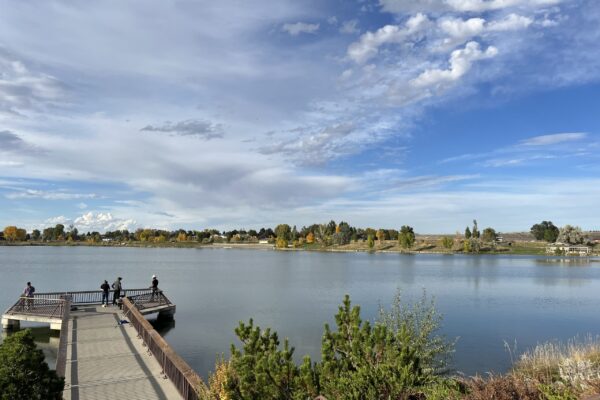
Missy: I am thrilled to talk to you about Lake Elmo. It’s the first state park we’re going to talk about, and I think it’s really important for everyone to realize that when you’re thinking about parks, it’s not just the big national parks — state parks get you close to almost everyone’s home in this country. Let me go through some park stats. Lake Elmo is located in Billings, Montana. It was established as a state park in 1983, but was a park long before that. It’s 123 acres, with an elevation of 3,199 feet. The reservoir covers 64 acres and is 140 feet deep. There’s 1.4 miles of hiking trails. And my four-legged friend loves that it has a dog park with its own water entrance. While you’re at the park, you can swim, hike, paddleboard, picnic, bike, and play on playgrounds. It’s an amazing spot in Billings, Montana.
Emily: It’s one of the best urban parks we have in the state. It’s a very, very popular destination. We had about 2,000 cars every weekend day in July. It’s a very busy park, but it’s really fun to watch the community use it. It’s used every day in the summertime and most days in the wintertime as well.
Missy: Billings is kind of a second home to me and Montana has a dear place in my heart. I’ve spent quite a bit of time there and I go to Lake Elmo when I’m out there quite a bit. I’ve never been there when it’s not busy — but not in a congested way, just in a clearly well-used way. When I first started going there, I assumed it was a city park, and I was surprised when I found out it was a state park. Why is a state park a priority in Montana, and how does Lake Elmo serve the community?
Emily: State parks are part of Montana’s history of conserving and protecting public lands — it’s a very deep-rooted tradition here. We actually have 55 state parks in Montana. They’re all state parks for unique and different reasons. We have natural parks, recreation parks, heritage parks. A lot of our parks are either related to Montana’s history as a state or to Native American history, both recent and going back thousands of years. They’re very unique and wonderful places, and their communities use them for family reunions, birthdays, graduation parties, everyday use, summer camping trips, weddings, and memorial services. People love to come to their state parks and be connected to the outdoors in their own communities.
The Fascinating History of Lake Elmo
Missy: Lake Elmo has an interesting — I’d say non-traditional — story behind it. Can you tell us how it came about?
Emily: Originally Lake Elmo was a marshy wetland — just a low spot. In 1904, an irrigation ditch was being constructed and this place was called Holleen Lake. It was really just the lowest spot along the irrigation route where they could dig out and create a reservoir for the further irrigation of Huntley and Worden and those communities further downstream. The BBWA canal runs from Laurel through Billings all the way out to those communities, and so Lake Elmo was that reservoir.
Emily: Then in the 1920s, Elmo and Miriam McCracken bought the lake and opened it nine years later as a recreation site. That’s when it started becoming called Lake Elmo, after Elmo McCracken. He opened it in 1929. They had a boat club, a swim club, a sailing club. And then in May 1930, they constructed and opened the Elmo Club — a Billings hot spot from the 1930s into the 40s. They had a restaurant and a dance floor on the first floor and a second dance floor on the second level. There was jazz music and gambling and drinking. It was just a hot spot of culture and activity. And then in 1945, the McCrackens sold it to the Porters and the Olsens — specifically to the wives, because Mr. Porter had some background with bad checks and the bank. It was sold to Mrs. Porter and Mrs. Olsen. And then mysteriously, in 1946, the club burned down.
Missy: The article I read in the Billings Gazette started with: “Bob Porter knew how to throw a party.” It must have been quite the spectacle. Is there anything still visible at the current park?
Emily: No. We don’t even have the foundations. But we know where it was — over on the east side of the lake by the comfort stations at the pavilion. It had a really nice view facing south toward the Pryor Mountains and Four Dances Natural Area. It was probably a really prime spot for both nature watching and dancing.
Missy: And after the club burned down?
Emily: In the 40s through the 70s it was still a party spot — they still had their water ski club, meets and competitions on the lake, jump competitions. I cannot now imagine having multiple gas-powered boats on this lake with skiers going behind them. The lake is 64 acres, but when you’re on it it doesn’t feel that big, especially with swimmers on the shoreline and fishermen on the banks. Interestingly, after the Lake Elmo Club burned down, the Porters opened two more clubs in subsequent years, which also mysteriously burned down. I would call it a mysterious happenstance.
Missy: The Western Heritage Center in Billings apparently has some video that someone who attended the Elmo Club took in the 30s and 40s — worth a visit to see what it was really like back then.
From Private Recreation to State Park
Missy: When did it become a state park?
Emily: In 1983 — we bought it for $1.6 million. We don’t have the gas-powered boats anymore, which would be a huge safety concern, but the purpose of being a spot for Billings residents and people from surrounding communities to come and swim is still the same. For Montana state residents, they pay their fee when they register their vehicle and therefore they can come to Lake Elmo for free. We’ve recently redesigned some of the landscape around the lake to add more picnic nodes, more places for people to come set up a little shade structure or a barbecue and have a picnic with their kids, have a birthday party, or just have a great day on the lake. It’s still fulfilling its original purpose as a great place for people to come and have a good time.
Missy: And while it’s a state park, it’s surrounded by a lot of rich national history. Tell me a little bit about the broader area.
Emily: The Yellowstone River — the Crow name for it is Elk River, because it was historically an elk migration corridor. Lewis and Clark, if they were going through, would have had this beautiful cottonwood and willow forest and just animals aplenty. And the nearest I can tell, somewhere around the Billings-Laurel area is where Lieutenant Pryor lost all the horses. He was trailing about 65 horses to meet up with the main body farther down the river. He and three other men went to sleep one night with the horses about 300 feet away. They woke up the next morning — half the horses were gone. Completely gone. They tried to follow some horse prints but found nothing. They packed up, moved along. Next campsite, went to sleep, woke up the next morning. The rest of the horses were gone. And there were moccasins hanging in a tree.
Missy: It’s such a rich environment. If you’re planning a trip to Lake Elmo, you also have Pompeys Pillar and Theodore Roosevelt National Park not far away. The first time I drove out, I was listening to Undaunted Courage and happenstance was kind of following the Lewis and Clark trail the whole way. It’s just amazing to think about what that land must have looked like for them.
Activities at Lake Elmo
Missy: What activities are available at the park?
Emily: People can swim, paddleboard, kayak — anything you want to do on the water that doesn’t involve a gas motor. You can go fishing from a boat with an electric trolling motor or any human-powered boat. If you don’t want to get on the water, there’s a volleyball net, playground, and picnic areas. There’s also the dog park, and we’re planning to expand it to include a separate area specifically for small dogs. And then there’s our 1.4-mile hiking trail — half of it is now paved and half is gravel.
Emily: For those with accessibility issues, we also have what’s called an action track chair for reservation — those with disabilities can reserve the chair, strap in, and go all around the lake. You can even fish from it off the jetties. We’re also hoping to put in an adaptive kayak launch in the springtime, with a path by the boat ramp down to the dock so that people with accessibility issues can get into their kayak and explore the lake more easily. To reserve the action track chair, just call the front office at Region 5 Fish, Wildlife, and Parks — we’ll put a link in the show notes.
Missy: Billings has extreme weather — from summer heat to serious winter. What can people do at Lake Elmo in the colder months?
Emily: We just took out the swim buoys the last nice day of September. Swimming is at your own risk now that it’s getting cold — but we still have a few folks swimming even in October. In the wintertime, the lake freezes over and we still have ice fishing. We’re going to make skating rinks this winter, one at the picnic nodes and one at the boat ramp, to see which is more popular — shovel those out, make the ice a little smoother so people can ice skate or play pick-up hockey. I’m going to bring my cross-country skis to the office and go cross-country skiing maybe once or twice a week. And then there are still the regular walkers — people who walk around the lake every day as their place to come and meditate and get outdoors. I’ve got a couple of elderly dogs that are pushed in strollers. People come and walk around the lake no matter what time of year it is.
Missy: Do you have any tips for people who find wintertime park visits intimidating?
Emily: Plan ahead for weather. Know your roads, know how far you’re going, and pack layers. I always like to have a middle layer so that if I’m walking fast and get heated up, I can take off my outer puffy layer and still have that wind protection. Montana’s really nice in that we have a dry cold. Even if it’s negative 10 degrees, if you’re moving and keeping your body going and you have that wind protection layer, you’re still going to be warm. Pack layers, pack water, pack snacks.
Dogs, Fees, and Getting Here
Missy: What are the rules about dogs in the park?
Emily: The basics — if your dog is outside the dog park, it needs to be on leash and you need to pick up after it. Dogs can’t go on the beach area, which is reserved just for people, but they can go anywhere else in the park as long as they’re on leash. Basic dog etiquette for public places. You see a lot of dogs on kayaks and paddleboards out there, which is really fun. We even had an instructor come out to Lake Elmo this summer to teach a class for dogs on paddleboards and kayaks — how to get them on and off safely and how to put on their protective gear.
Missy: Lake Elmo doesn’t have campgrounds. Where would you suggest people stay?
Emily: If you want camping close to town, we have several fishing access sites further east — Captain Clark, which is a free camping site, and Voyager’s Rest a little bit further toward Worden, Montana, which has a nominal fee. Then closer into town there’s a KOA and several other camping options. And of course Billings is the biggest city in Montana — 110,000 people — so there are hotels and motels with full amenities.
Missy: What is the fee for the park?
Emily: Montana residents pay $8 when they register their vehicles every year — it’s an opt-out fee that gets you into every state park in the state all year. If you’re from out of state, it’s an $8 day use fee, but that day use fee gets you into every state park in the state that day. So in Billings alone, you can also visit Chief Plenty Coups State Park — the homestead of Chief Plenty Coups, one of the last traditional chiefs of the Crow tribe, and a National Historic Landmark. It’s peaceful, great for a picnic, and wonderful for learning about Crow history and culture. And then a little bit farther, there’s Cooney State Park, which is actually the most used park in the Montana state system — a much larger reservoir where you can use motorized boats, with camping and a beautiful view of the Beartooth Mountains. All on that same $8 fee.
Missy: And I think even if you’re just passing through — between Theodore Roosevelt National Park and the Bozeman area — Lake Elmo makes a lovely pit stop. It’s close to the interstate, great for stretching your legs, running the dog, or having a picnic. If you want the most peaceful experience, the southwest side of the lake is the unpaved section — more of the wilderness portion. There’s marshy areas back there. Even on the busiest summer days, it stays nice and quiet.
Emily: Yes, the southwest portion is a really nice peaceful spot no matter what time of year. I’ve seen deer, foxes, migratory birds. We have resident ospreys, which are awesome to watch. And we went on a bat walk the other night — we have bats too, though it was rainy that evening so I didn’t hear much. Even if there are 2,000 cars in the parking lot, the back southwest portion of the lake is still a nice, peaceful time.
Speed Round
Earliest park memory?
A field trip in about fourth or fifth grade to a wetland — I think it was a state park. An interpreter taught us all about what wetlands do for the environment and for water filtering. The one thing that sticks in my head is this beautiful view over the marsh and learning that a lake is defined as deep enough that sunlight doesn’t reach the bottom. That field trip really expanded my mind — oh, there are all types of places, and you can learn about them, and people will tell you all kinds of things. My first park experience that really stuck with me.
What made you love the parks?
Working in them. You can really dig deep into what is unique about each special place. I worked at Chief Plenty Coups State Park and seeing the impact that park has on its community — being the gathering place for family reunions to campaign feeds to kids just looking to spend some time in the creek — made me fall in love with parks and think, yes, this is a career that I want to do.
Favorite thing about Lake Elmo?
That it’s never the same. Day to day, you never know who’s going to come, what’s going to be there. It’s a truly urban park. This is my first summer at Lake Elmo and watching it change from the bustling of summer to the quietness and peacefulness of fall has just been really cool.
Favorite thing to do at Lake Elmo?
Watch the ospreys. We had three residents this summer, and just watching them hover over the lake, watching for fish, and diving into the water was really cool.
Park on your bucket list?
The Everglades. I loved Steve Irwin as a kid, so I want to go see that and experience the diversity and ecology there. It’s just such a unique place.
Three must-haves for a park visit?
Snacks — most important. Layers. And sunscreen here in Montana.
Favorite campfire activity?
Singing Girl Scout camp songs and roasting marshmallows.
Tent, camper, or cabin?
Depends on the trip. If it’s winter in Montana, I want a Forest Service cabin. If it’s summertime, I am content with an air mattress in the back of my Subaru.
Hiking with or without trekking poles?
I only recently began hiking with trekking poles. I use them on the way down and without them on the way up.
Favorite trail snack?
Gorp — trail mix with fruit and everything else in it. Chocolatey and fruity and salty and just delightful. I make my own, picking different things from the bulk section at Winco and mixing them all together.
Best animal sighting?
Any soaring bird, but especially owls because they’re harder to spot.
Favorite sound in the park?
Bird songs, but especially bald eagle whistles. If you don’t know what a bald eagle sounds like, you’re not going to think it’s a bald eagle — because in movies, that screaming noise attributed to bald eagles is actually a red-tailed hawk. Bald eagles make this beautiful whistling noise, but it’s not very intimidating, so they don’t put it in movies.
Greatest gift the parks give to us?
The space to explore and to learn while also connecting to the outdoors.
Missy: Emily, thank you so much for being part of The Parks Podcast and for sharing a little bit about Lake Elmo. I can’t wait to come back — it is one of my favorite things to do when I’m in the Billings area.
Emily: Thank you for having me. I really enjoyed it.
Missy: That’s it for today’s episode. Until next time — we’ll see you in the parks.
Music for The Parks Podcast is performed and produced by Porter Hardy. Follow us @TheParksPodcast or visit TheParksPodcast.com.