
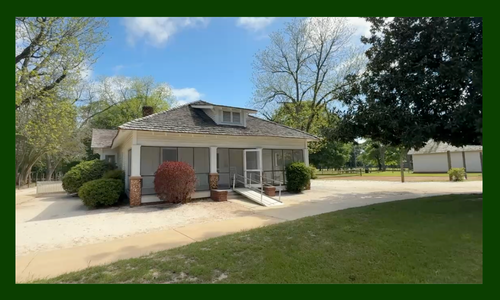
He grew up in a house with no bathroom, in the middle of nowhere, Georgia. After being President of the United States, he came back and lived in the same small ranch house he and Rosalynn built themselves in 1961. When he died, he was buried in his front yard.
Jimmy Carter National Historical Park in Plains, Georgia tells 100 years of history — from birth to death — of two people who never stopped asking what more they could do. Jennifer Hopkins, Lead Education Ranger, joins The Parks Podcast to share what you’ll find there, why it’s worth a full day (at least), and what this place teaches us about what it means to actually live your values.
A note from Missy: I went, intending to stop for an hour. I stayed all day. The boyhood farm alone — a working farm set in 1937, with President Carter’s own voice telling his stories when you push the button — made me feel like I stepped back in time. This is one of those parks that stays with you. And don’t forget to stop for some peanut butter ice cream. I can’t wait to go back.
Episode Guest
Jennifer Hopkins — Lead Education Ranger
Jimmy Carter National Historical Park nps.gov/jica
About Jimmy Carter National Historical Park
Jimmy Carter National Historical Park protects the story and legacy of President Jimmy Carter and First Lady Rosalynn Carter — from their birth in Plains, Georgia through 100 years of history, including their post-presidential work through the Carter Center and Habitat for Humanity. The park was originally designated as a National Historic Site on December 23rd, 1987 and redesignated as a National Historical Park in 2021. It is one of only a few presidential parks that spans a president’s entire life, including their private home and burial site. The Carter Gardens, which include the burial site of both President and Mrs. Carter, are open to the public.
Show Notes & Links
- Jimmy Carter National Historical Park — nps.gov/jica
- NPS app — download for park alerts and maps
- Andersonville National Historic Site — nps.gov/ande (neighboring park — plan a full weekend)
- The Carter Center — cartercenter.org
- Plains Peanut Festival — September annually
- An Hour Before Daylight by Jimmy Carter (President Carter’s memoir of his childhood in Plains)
- First Lady from Plains by Rosalynn Carter (Mrs. Carter’s memoir — she talks about coming back to Plains)
Transcript
Jimmy Carter National Historical Park — The Most Human Story in the National Park System
The Parks Podcast, Episode 79 | Jennifer Hopkins, Lead Education Ranger, Jimmy Carter National Historical Park
Welcome and Park Stats
Missy Rentz: In today’s episode, I’m really excited to welcome Jennifer Hopkins. Jennifer is the Lead Education Ranger at Jimmy Carter National Historical Park. Jennifer, welcome to The Parks Podcast.
Jennifer Hopkins: Thank you for having me.
Missy: I had so much fun at this park and learned so much about a president that I was just a little young to know anything about. So I can’t wait to get into it with you, but we start each episode going through some park stats, so I’m going to run through those so everybody gets a better idea of what we’re talking about. Jimmy Carter National Historical Park is located in Plains, Georgia. The park was dedicated on December 23rd, 1987 as a National Historic Site, and then in 2021 it was rededicated as a National Historical Park. At the time of the original dedication, President Reagan was in office. The park is 71 acres. In 2024 there were 33,031 guests. The historical park includes his childhood farm, Plains High School, and his 1976 campaign headquarters. President Carter and his wife Rosalynn both attended Plains High School, and the school now serves as the park’s headquarters and an incredible museum that displays their history during pre-presidency, presidency, and post-presidency. And not only will you learn about his history as president, but you’re going to see his post-presidential impact with the work he did for Habitat for Humanity and the Carter Center. I had so much fun. This was an unexpected, stayed-all-day kind of park. I loved visiting Jimmy Carter National Historical Park.
Jennifer: Yes, which we find many of our guests can make a whole day of it just because we do have so many sites to see. And downtown Plains is a site in itself that’s in the midst of our park. It’s almost like you’re visiting Mayberry. You go downtown and you can see the presidential campaign headquarters, then walk Main Street with your peanut butter ice cream and look at antique shops. So it is just a great park to take a stroll and take a step back in time.
Why It’s an Important Part of the National Park Service
Missy: You do such an incredible job of pulling people into the history, and you feel like you’re experiencing what it was like on that farm. It’s a really special place. So let’s start with — why is it an important part of the National Park Service?
Jennifer: The National Park Service is here to protect and preserve a lot of good resources, both natural and cultural, and stories. And here at our park, we protect the story and legacy of President and Mrs. Carter. Their story here in Plains starts for both of them when they were born, all the way until 100 years later when President Carter passed away. And so we have 100 years of history to be able to tell and to talk about. People come here and really get a sense of how they grew up, how that influenced their decisions as President and First Lady, and even how that influenced their decisions beyond the presidency — when they were establishing the Carter Center, or why they chose to come back to Plains. Because after being President of the United States, you can live anywhere. And a lot of people would think that the Carters would move to Atlanta. But they came right back home. And so our park helps people answer the question: why Plains?
What You Can See — A Timeline of His Life
Missy: What can people see when they come to visit? Because the town is intermingled in it, and it’s now a historical park versus a historical site, so it has grown.
Jennifer: Yes. So a historical park designation means that our park has a lot of different satellite sites. It’s not a park you can explore on foot — you do have to explore in your vehicle a bit. And so what people can see is a timeline of his life. We suggest that you start out at the boyhood farm. That is the farm he grew up on from the time that he was four years old all the way until he graduated high school. It is set back to 1937, so before the farm had electricity, but after it has running water — we’re in this transitional period. And it is a working farm, so visitors coming today would see crops growing. We do use 1930s farming practices out there, just like the Carters would have used. There is a blacksmith shop with a forge that we have lit up most days during the summer. So people can really step back in time and see the environment that Jimmy Carter grew up in, and see the simplicity of his life.
Jennifer: But beyond that, his farm is located in an unincorporated town called Archery, Georgia — and it was a Black community. And so he grew up essentially in this Black community. And we see that influence reflected later on when he’s governor of Georgia and in his inaugural address saying that the time for racial inequality is over. That is what launches him onto Time Magazine and to the national stage. And then we continue to see it when he becomes President of the United States. At the time, he had the most diverse cabinet of any president. And so all of that starts right there at his boyhood farm.
Missy: Jennifer, there’s another house that’s preserved on the site — a family who worked on the farm and played a pivotal role in President Carter’s life.
Jennifer: It was. So Jack and Rachel Clark — their house is preserved on the farm, and people can go to their house because they had such an impact on young Jimmy’s life. He stayed the night there. He had his own mattress in the corner of their living room. And so if his parents were out of town, that’s where he went to go stay. One of the really neat things about the farm is we have audio all throughout it. When visitors push the button, it is President Carter telling his story. And Jack and Rachel Clark’s house has the longest audio of any of the buildings — which is a testament to their impact on him. He talks about how Miss Rachel really instilled some of the values in him, how Mr. Jack took his time and taught him a lot of things. That Black community is just really incorporated into his childhood and left a lasting impact.
The Boyhood Home — Not Poor, But Resourceful
Missy: I want to talk about his boyhood home for a few minutes, because I found that to be the most spectacular experience. When people talk about President Carter’s childhood, I feel like they reference him as a poor country boy. But his dad was super entrepreneurial, and when you go through the home, it looks like a very minimalist lifestyle — but that might have been kind of normal for the farming community. Tell me a little bit about his life and what it was like to live there.
Jennifer: Yeah, that’s a comment we get from a lot of visitors. When they walk through the house, they automatically say, “Oh man, they weren’t poor — they were rich.” And they were resourceful, which again shows up in his presidency. Earl Carter, his father, was a businessman, and his mother Lillian was a hard worker as well. During that time, they both had a dual-income household, and for the 1930s, that is rare. Miss Lillian was a nurse — out working, nursing really anybody who needed nursing. But she’s also getting young Jimmy to climb the pecan trees to shake pecans down so she can sell them at the local market. Meanwhile, Earl Carter is running the farm, but at the same time he has a commissary — like a general store — running that business on their farm as well. And then he is the founding member of Sumter EMC, an electrical corporation, which is what brings power to Sumter County as part of the Rural Electrification Administration — a New Deal program. Earl Carter was very influential. And that business side of him is also transferred to his son, Jimmy Carter.
Missy: Didn’t he manage a couple of other farms? He kind of had his hand in everything.
Jennifer: They had farmland everywhere, yes. We’re only seeing about 16 acres of the farm he grew up on — that farm was much bigger. But the National Park Service preserves that small acreage where his immediate home and farm buildings were. The Carters had land in Sumter County and adjacent counties as well. And then later in life, his dad opens up the peanut business that everybody knows Jimmy Carter for — and that is the business that Jimmy Carter takes over after his dad’s death. So yes, Earl Carter was very much a businessman, which is reflected in their home — because it is a sizable home for the 1930s. But they did have four children to fit in there along with themselves.
Missy: And when you go on a tour of the house, thinking about four children in that space — it is a sizable home, and yet it would be hard to imagine a family of six living there.
Jennifer: Yeah. The more people you add into it, you’re like, okay, this house is getting a little bit smaller. There’s not much other than the kitchen, living room, and the bedrooms. And the running water — in the tour it looks like the running water comes in from the back porch. They retrofitted it to have running water.
Missy: They did. So when they initially moved there in 1924, it did not have running water. And that water comes from a windmill located at the farm — that’s what pumps the water to the house. The indoor restroom you see in the house is built in later. Initially they’re using the outhouse that is still shown outside and they’re still having to use chamber pots and things like that. And you see the house evolve, because it does eventually get electricity too — that doesn’t come about until Jimmy Carter’s teenage years. I tell students all the time on a tour: think about moving into this house — it doesn’t even have a bathroom. But by the time President Carter passed away, we had the iPhone 15. Just thinking about the advancements that can happen in one person’s life.
His Childhood — Hard Work and Exploration
Missy: So that tells us a little bit about his life, but otherwise — what was his life like growing up?
Jennifer: It was a mixture of exploration and hard work. In his book, An Hour Before Daylight, he really lays out what it was like to grow up in Archery and in Plains — how once he was done with his farm chores, once he was done with whatever his father needed him to do, it was inventing games, playing with his neighbors, going fishing, getting lost in the woods literally, and all those things. He had a life of exploration but also a life of hard work. One of the New Deal programs, the Agricultural Adjustment Act, is what gives him one of his first paid jobs — so one of his first jobs was a government job. He also sold ice cream in downtown Plains. As soon as any of the children were old enough to work, they were put to work, and that’s a testament to Earl and Lillian Carter.
Missy: And then he left for school — but eventually came back to Plains.
Jennifer: That’s right. The main goal was for him to get into the Naval Academy, and he does eventually get an appointment there. He graduates, and shortly after graduation marries Rosalynn Carter, who he had grown up around — but they were not high school sweethearts. They got together after they had graduated high school. And then they lived the life of the Navy, which she was very excited about. She loved leaving Plains and seeing this world outside of her small hometown.
The Return to Plains — and the Road to the Presidency
Jennifer: And then his father passed away in 1953 and they come back for his funeral. Jimmy Carter sees the impact that his dad had on the local community — so many community members were coming up to him telling stories about what his father had done for them and the impact on their lives. It made him question what impact he was making. Even though he was a part of the Navy, he was wondering: but what am I doing for other people? And so he decides to come back to Plains, which Mrs. Rosalynn was not excited about. The family lore has it that the entire time they were traveling back home she would not speak to him directly. She spoke to him through their children — she would say, “Jack, tell your father this,” or “Jeff, tell your father…” Because she just didn’t want to come back to the small-town life. She talks about that in her memoir, First Lady of Plains, where she was a bit bitter about coming back.
Jennifer: When they come back, they don’t have a lot of money. They live in public housing — and that apartment is preserved, not by us but by the Plains Historical Society, so people can go and visit what that place looked like, their first home, set up how the Carters had it with three boys and themselves. They even have the original couch in there. And he is also the only president we’ve had so far who has lived in government housing. So again, he’s very relatable to the people. He’s having to learn the family peanut business from his uncle, and it just takes some time for that to build up a profit. Eventually they are able to build their home here in Plains in 1961. But I like to joke that when it was time to campaign for governor or for president, Mrs. Carter was right there on the trail — because she was campaigning for herself to get out of Plains.
Missy: So tell me — from the time they come back and he’s learning the peanut business, what was that timeline from that to governor and then ultimately president?
Jennifer: So they move back to Plains in the mid-1950s after his father passed away. He takes over the family peanut business and is working there — even Mrs. Rosalynn is helping to keep books in the business. As soon as their sons are old enough to work, their sons are in the business. And he joins a lot of local boards, like the Sumter County School Board and a few other small political offices, and makes an impact here locally. His first run for governor was not as successful as they would have liked, but the second run, he becomes governor. And they kind of reshape what a governor and first lady does, because they work so much like a team. He appoints Mrs. Rosalynn to committees and to help chair some things, and she takes those roles very seriously. One of the things that she does is tackle the mental health issue in Georgia — that was her big thing, because she saw that firsthand in her family. She lost her father when she was 13 years old, and had to essentially help her mother raise her younger siblings and watch her mother go through the devastation of grief during the Great Depression. So mental health is very close to her heart. He implements the kindergarten program. She makes Georgia number one in mental health services. And they just work as this team.
Jennifer: Together they have this conversation of, do we take it to the next step? And it’s like, why not? So they get this bright idea to run for President and First Lady of the United States. She campaigns in over 40 states, with or without him. And then we see people from Plains spending their own money, hopping on trains, going to different states, campaigning for the Carters. It’s the first time you had grassroots canvassing like that throughout the nation. People from Plains were knocking on doors saying, “My neighbor is Jimmy Carter. Ask me anything. What do you want to know about him?” They were called the Peanut Brigade. And it was just one of those things where right time, right place, right people — it all lines up. And here we are: this year is actually the 50th anniversary of him winning the presidential election in 1976. And then their lives are just changed forever.
The 1976 Campaign Headquarters and Plains High School
Missy: His headquarters — it’s an old train depot, right? And when you’re driving through town, it looks exactly like it does in pictures from 1976. It’s really a step back in time. And it’s right in downtown, so you can get your peanut butter ice cream and go see the train depot.
Jennifer: Yeah, and we are in the process of restoring the depot interior to make it look like how it looked during the 1976 campaign. Right now the exterior looks exactly how it did. You walk into the interior and you can read exhibits about what that campaign was like and how it changes future presidential campaigns. But now that we’re getting into the 50th anniversary of him winning the election — and next year will be the 50th anniversary of him being inaugurated president — we want people to see what it actually looked like in ’76 as a campaign headquarters, because it’s just this small, one bathroom, one room building essentially that won a presidential election.
Missy: Yeah, it’s so cool. And then Plains High School, where both he and Rosalynn went to high school, is now the visitor center and this incredible museum to their lives. When this building was vacated, it became part of the historical park.
Jennifer: Yes. The last graduating class from Plains High School was 1979. Then they moved to a county school system, and now students from Plains and the surrounding area go to Sumter County Schools. So this high school was absorbed into the park’s legislation and has been part of the park since the dedication in ’87. It is our visitor center — where you get your maps, your information, your brochures, your park stamps, all of those things. But then it’s also our museum, and it is themed around community because again, the Plains community and Archery community just played such a role in both of their lives. They go through six exhibits, going from a school community to a local community to a national community to a global community — we even talk about their work beyond the White House.
Missy: And I think that part is amazing. Like you said, it’s 100 years of history there. But seeing how pivotal they have been in so many great movements in this country, in this world — because it is global what the work of the Carter Center does — it’s really incredible to immerse yourself in it in this space.
Jennifer: And immerse is a really good word, because of the way the museum is set up. It’s part step back in time and then part interact with the museum. We have a lot of exhibits that you can physically interact with — whether it’s touch screens, or designing your own campaign button, or opening doors and drawers to see more objects or learn more. You can vote in our voting booth. You can sit at the Resolute Desk and think about what you would do as President of the United States. So it is an immersive experience in multiple ways when you come to visit.
Missy: And you touched on this earlier — because he was president at a time where there were cameras and recording equipment, unlike so many of our presidential historical parks and sites, you get to actually see and hear him. And there are moments where he’s telling stories — not recordings as president, but he helps enhance the park with his own memories.
Jennifer: Yeah. And then on top of that, in our local community room, you get to hear community members talk about him. So you have this personal connection with President Carter and the community that he immersed himself in. And I think that’s just a testament to the Carters and how they viewed their life’s work. They approached everything they did with humility, and the goal wasn’t to get the accolade. The goal was to help who they could help.
Back in Plains — and the Carter Home and Gardens
Missy: When they returned to Plains after the presidency, were they just embraced like normal citizens? Would you run into them walking down the street?
Jennifer: Yeah. The community they grew up with only knew them as Jimmy and Rosalynn Carter. So when they came back home, they came back home as Jimmy and Rosalynn. But Plains saw a major uptick in people who were curious about the president and first lady. And when they returned home from the White House, they were also entertaining a lot of dignitaries — so you would have dignitaries coming to Plains just to come to the Carter home. And Plains found that interesting. But their community was pretty protective, and they knew to let them have their space. I think that’s one reason why the Carters kept their private life separate from their work life. Their work life is located in Atlanta at the Carter Center, but then they have this retreat where they’re just home — just Jimmy and Rosalynn. And Plains made sure to stay true to themselves. So when visitors come to visit, the Plains that they’re visiting is the Plains from the 1980s and ’90s. It’s almost like a time capsule.
Missy: Absolutely. It totally is. It’s so special. Okay, so their home is part of the national park, but it’s not open to the public yet.
Jennifer: So their home that they built in 1961 and lived in all the way until they both passed away is a part of the national park. It is not open to the public yet — we are still working on turning a private residence into a museum for visitors to come and see their life post-presidency and see their life here in Plains. However, the Carter Gardens, which are essentially their front yard, is open to the public, and that is the burial site for both President and Mrs. Carter.
Missy: And their house — when you’re driving down the street, you see it right there because you see the Secret Service and the fencing. But it’s normal. It’s not this grand home.
Jennifer: That’s right. It is a single-story, ranch-style house that the Carters designed themselves. And I’m excited for visitors to see the inside of it too, because again, it’s just so humble. You wouldn’t think that this is a president’s house, especially a president from the 1970s and ’80s. Their house just looks like my house. But their gardens are spectacular. Mrs. Rosalynn was an avid gardener, and she actually had a huge hand in designing the Carter Gardens. It’s broken up into two sections. The section right off of Highway 280 is like our recreational area where you can bring your dogs, have a picnic, just relax in the president’s front yard. But then the section with the pond — where they’re buried — is more reflective. We have a brick walking path, a pond with a fountain, several benches for you to sit and reflect on the legacy of President and Mrs. Carter. And do what President Carter did when he was reflecting on his father’s life — reflecting on what you want your legacy to be, what impact you’re making in your community. It’s just very beautiful and contemplative.
Missy: Yeah. And at a time where people are feeling called to do more in their communities, he’s such a great role model for how you do that. Let’s talk about planning a trip to visit the park. Like I said, it was my intention to just stop by, and I spent a solid day exploring the park. How would you recommend people start planning?
Planning Your Visit
Jennifer: Definitely start planning online. Go to our website and see what we have going on — that’s also where you will see any park alerts, if we have any part of the park that is closed for renovations or because we’ve had a storm. The NPS app is also a great place to start. A lot of our visitors also visit our neighboring park, Andersonville National Historic Site, in one day. So plan your time, because Andersonville is also a full day, and then Jimmy Carter is a full day. When you’re coming in person, I recommend stopping by Plains High School first, because that’s our visitor center — that’s where you get the orientation, the map, and then figure out how you want to go from there. Whether you want to explore President Carter’s life in chronological order, or if you want to make your way throughout the school, downtown, and the Carter Gardens first before heading to the farm.
Missy: I will say, obviously there’s no wrong way to do it. I loved going out to the farm first because it set the stage for me for everything else. It was interesting to see humble beginnings before you saw presidential headquarters.
Jennifer: I work with a lot of students who come to the park for their field trips, and when we’re in his home, I make a point for them to really soak it in and to look outside. There are no buildings. We’re not in a major city. We are essentially in the middle of nowhere, Georgia. There’s still no internet out at the farm — and so that kind of tells you just how rural it is. And he went on to be President of the United States. I try to really instill in our students: that could also be you. Your goal may not be to be president, but don’t let where you come from make you feel like you can’t go on to be what you’ve set your mind to.
Missy: And one thing about planning this trip — you can take your dogs, which is not very common in a lot of parks. You can’t take them in the buildings, but you can take them to the grounds. And you do have a lot of school groups. If a school group is coming, do you recommend an official tour?
Jennifer: Yeah. If you are a part of a group coming to the park, I highly recommend contacting us ahead of time to see if you can get a guided tour, because there is so much information to take in — there’s 100 years’ worth. And that feeling that you get from a lot of people who work here — some of us have a personal connection to President Carter. Some of us have met him personally, and some of us have not, but have been a part of the community long enough to where you get a sense of who he was during those tours. We do see a lot of school groups through the year — a little over 3,000 students a year coming and learning about him and his legacy.
Best Time to Visit and What to Bring
Missy: Is there a particular time of year you recommend people come?
Jennifer: I definitely recommend September and October. That’s partially because there is a lot more going on in Plains — we have the Plains Peanut Festival that happens every September, and then October is President Carter’s birthday month. You’ll get to see lots of peanuts, get boiled peanuts, peanut butter ice cream, all the peanuts if you’re a peanut fanatic. And it’s a little bit more mild in Georgia at that time — it’s still gonna be warm, you can still wear your shorts, but without the sweltering heat. And then my next recommendation would be coming more towards later March through April. If you’re not used to the Georgia heat and humidity, that’s probably the perfect time to come.
Missy: And what do people need to bring? It’s not like a park where you’re hiking trails, but still — water and bug spray and sunscreen?
Jennifer: Yes, water, definitely bug spray because we have gnats no matter what time of year it is, and some good walking shoes. A good portion of the park is walkable — you can do Plains High School, the headquarters depot downtown, and the Carter Gardens all on foot, and then drive out to the farm. And so if you like walking, and if you have your dogs with you, that is definitely recommended. But water for sure, especially out at the farm.
Missy: And out at the farm there is a welcome building with restrooms and water fountains. You all have thought about it — there are places to refill your water while you’re out and about. And rangers love to talk about their parks. People think they’re disturbing them, but they’re not.
Jennifer: Yes. And we spend a lot of time reading and researching, and we want to pour our knowledge onto people. So definitely not disturbing us. Definitely find us in uniform.
Speed Round
Earliest park memory?
Little Bighorn Battlefield National Monument in Montana, around 1998. I think that’s because I have personal family ties to that park — my family are ancestors of the Lakota. So that’s the first impact park for me, seeing the space that my ancestors were at and learning about that story.
What made you love the parks?
I feel like I was a little bit forced into it. I moved down to Georgia from Washington State, and my parents decided to do it road trip style — on the way down, we visited every national park, historic site, and monument. And that instilled my love for the National Park Service.
Favorite thing about Jimmy Carter National Historical Park?
I think it’s the diversity that you find within his story — and you can realize what a difference you can make, even just by starting small. You don’t have to start big. You can start small, join a local board, focus locally, and then just watch whatever work you’re passionate about grow from there.
Favorite thing to do at Jimmy Carter National Historical Park?
I am in love with the campaign headquarters, the depot. That is my spot. I love to sit at the old 1970s TV and watch the highlight reels from his campaign and his jingles. Spending time there is my favorite thing to do.
Park on your bucket list?
My husband and I have a goal of visiting all of the national park sites across the country, and we’re doing it as our children grow. On our immediate list is Cumberland Island National Seashore — we’re waiting until our kids are out of strollers to take that ferry.
Three must-haves for a park visit?
Snacks — I always have to have a snack on me. Water. And my national park passport book.
Favorite campfire activity?
Storytelling, or reminiscing on memories and hearing everybody else’s stories.
Tent, camper, or cabin?
I am either a camper or cabin person. I like to be in nature — I don’t like to sleep in nature.
Hiking with or without trekking poles?
Definitely with them.
Favorite trail snack?
Fruit — oranges, apples, grapes — and peanut butter.
Best animal sighting?
The California Condor, when I was hiking the Grand Canyon.
Favorite sound in the park?
Here at Jimmy Carter National Historical Park, my favorite sound is the fountain at the Carter Gardens.
Greatest gift the parks give to us?
Spaces of reflection. No matter if you are at a historic park, a nature park, any park — you can sit and reflect on what you’ve learned, on your life, on your goals, on whatever you need. Nature is amazing like that.
Missy: Jennifer, thank you so much for being part of The Parks Podcast, for bringing to life this amazing historical park and the lives of the Carters. Thank you so much.
Jennifer: Thank you.
Missy: Thanks for listening to this episode. Until next time — we’ll see you in the parks.
Music for The Parks Podcast is performed and produced by Porter Hardy. Follow us @TheParksPodcast or visit TheParksPodcast.com.