
Do you ever wonder about the crimes that happen in national parks? Most people think of parks as Disneyland — safe, controlled, predictable. The reality is a lot more interesting.
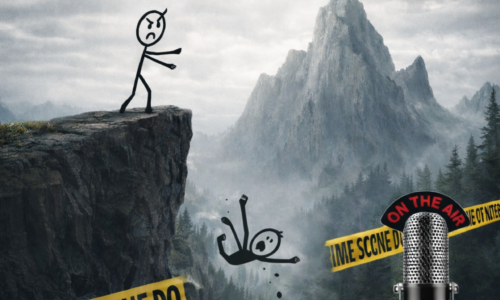
Tara Ross and Nancy Martinz are former NPS law enforcement park rangers who worked together at Yellowstone. In 2023 they started Crime Off the Grid — a podcast dedicated to sharing the stories of park rangers and first responders in wild places, and helping people have safer trips to the outdoors. Today they’re joining me to pull back the curtain on what really happens out there — and what you can do to keep yourself and your family safe.
A note from Missy: I was almost worried this conversation would scare me away from the parks. It didn’t. If anything, it made me a smarter visitor. The odds of something serious happening on your trip are very low — but knowing what rangers actually deal with, and what to do if something goes wrong, is just good sense. This one is equal parts fascinating and practical.
Episode Guest
Tara Ross & Nancy Martinz are former Law Enforcement Park Rangers in the National Park Service & hosts of Crime Off the Grid
Crime Off the Grid Podcast
Episode Transcript
Crime Off the Grid Podcast — What Park Rangers Really Deal With
The Parks Podcast, Episode 65 | Tara Ross & Nancy Martinz, former NPS Law Enforcement Rangers & hosts of Crime Off the Grid Podcast
Why They Started the Podcast
Missy Rentz: In today’s episode, I am joined by Tara Ross and Nancy Martinz, who are former law enforcement park rangers in the National Park Service. In 2023 they started the Crime Off the Grid podcast to share stories of park rangers and other first responder incidents in these wild places, and to help educate people on how to have safe trips to the parks. Tara and Nancy, welcome to The Parks Podcast.
Nancy Martinz: Thank you, Missy.
Tara Ross: Yeah. Thanks so much for having us.
Missy: What was the catalyst for starting Crime Off the Grid?
Tara: I started listening to podcasts only about three years ago, and I gravitated toward true crime — that’s been my thing. As I’m listening to those podcasts, I started thinking about all of the incidents and cases that I had known about or been part of in the National Park Service. I really wanted to share these stories about what park rangers and first responders and investigators and victim specialists do in parks and forests and other wild places to help keep people safe. Because people don’t even think there’s crime in national parks. So many times, for this offender making the mistake and going into the park — a lot of these people may never have been brought to justice, and I just thought people needed to hear that.
Nancy: I agree with Tara on that. At first I came along kicking and screaming because I figured this might be a lot of work. And it is, but it is a lot of fun. It’s just a good time to be able to hang out with Tara and do these podcasts. People just need to know that we do things out there.
Missy: And you guys were both at Yellowstone together, is that right?
Nancy: Yes.
Missy: When I first started listening, I was almost worried the podcast would scare me away. But it runs the gamut. Some of it is gruesome, some of it is road rage. It covers everything.
Tara: Yeah. Everything happens in national parks that happens anywhere else — there are murders, there are assaults. And we have a lot of other rangers come on our show as well and tell their tale — we call those Ranger Tales. That’s really fun for Nancy and I, to be able to connect with some of those rangers and relate to a lot of the crime incidents they’re reporting.
How They Find the Stories
Missy: How do you find the stories?
Tara: When we started this podcast, Nancy and I knew a lot of incidents we wanted to cover, and we know a lot of people in the parks and forest service as well. We contact them because we know they have some incidents and stories. For the most part, we have some kind of nexus where we know some of the rangers involved, or we heard of it while we were working, or we were involved in it in some way. That’s probably most of our stories. And a lot of the really older stories we stumble upon — like there was a cannibal story from Yellowstone that I stumbled upon and I’m like, I can’t even believe all this time working here, I did not know about this cannibal story.
Nancy: Yeah. I think we do too. We either supervised them or worked with them or something like that. But sometimes it’s like one I was just walking by a bookstore and I saw the title. I’m like — went back and grabbed it.
What Crimes Are Common in Parks
Missy: Are there some incidents that are really common in parks?
Tara: I think every park has its own “okay, here we go again” kind of thing. Yellowstone — it’s people getting too close to the bison, or people getting off the boardwalk in the hot springs. Every day is different, and that’s what I loved most about being a park ranger. You just didn’t know — your office was wherever, and it might be 20 miles down the road, it might be five miles down the trail. It was different every single day.
Nancy: And a lot of times we go law enforcement to medical, law enforcement to medical. You don’t know what you’re gonna get into. When I was with the Forest Service, I would make a list of things I have to get done that day, and sometimes I don’t even touch the list.
Missy: One of the things I was listening to — someone was saying that people come to a park on vacation but they’re often bringing a lot of the baggage from outside into the park. Are a lot of the incidents within the same group?
Tara: We have said several times, like people travel with their offender. If the offender comes into a national park, a lot of times they would’ve continued on. One of the best examples of that is in domestic violence cases — because if you are abused or you are an abuser at home and you happen to travel to another park, you’re still an abuser. That’s probably the majority of crime that we deal with in the violent crime situations — people travel with their abusers.
Nancy: And some people, they just bring their crime into the park. We’ve had a couple of bank robberies in Yellowstone. I don’t know if they didn’t know where they were going or how they even got there, but we’ve arrested a couple of those kind of cases too.
Federal vs. State Jurisdiction — It Depends
Missy: If something is done in a park, isn’t it a federal crime?
Tara: It depends on the national park. So when it became a park, there’s different jurisdiction issues depending on the enabling legislation. A big park like Yellowstone, Yosemite, Glacier, military parks — exclusive federal jurisdiction, so every crime’s a federal crime. Some parks have concurrent jurisdiction — they share jurisdiction with the county and the state. Grand Canyon and Grand Tetons are two examples. A crime that occurs in those parks — they figure it out between state, local, and federal partners on who’s bringing the charges. Grand Tetons — a lot of the domestic violence crimes, the state and local would handle those because they had some stronger domestic violence laws. Whereas the sexual assault crimes in Grand Tetons, the assistant US attorney was always taking those cases. So it’s not a simple answer.
Balancing Awareness With Fear
Missy: Like education and awareness — this should not prevent people from going to parks. How do you all suggest people balance awareness of what can happen in a park with fear?
Tara: The odds of getting assaulted or worse while recreating in national parks or forests are actually very low. The crime that occurs in national parks — it’s not zero, but it’s no worse than where you live. Whatever you would do to keep yourself safe when you’re in the Walmart parking lot, be thinking of that when you’re in a national park. There’s no reason to have a lot of fear about it. Most visitors really do have completely safe, peaceful, wonderful experiences. But national parks and forests, because they are so vast and remote, do pose unique risks — there’s no cell service and there’s a great distance to any help.
Nancy: Yeah, you just have to do a little bit of research before you go to a specific park. Depending on where you’re going, whether it’s Alaska or Florida — just do a little bit of research on the weather and the time of year. You can keep yourself out of trouble.
Safety Tips — Before You Go
Missy: What are a few tips you suggest to people when planning a trip when it comes to having a safe trip?
Nancy: If there’s a barricade that says “closed area, closed” — don’t go around it. There’s a reason that they’ve closed off that area, and you just have to be prepared to move on.
Tara: The key word here is planning. I’m not really a planner, but you still have to know where you’re going, what to expect, what’s the weather like. Are you going to need lodging? Even if you’re camping, you have to make those plans and reservations — most national parks or state parks don’t allow camping in undesignated areas, including sleeping in pullouts or parking lots. I always felt so terrible when I’d have to contact somebody at 11 o’clock at night and they just got into the park and had nowhere to stay and were shocked they couldn’t just sleep anywhere. And don’t just plan on GPS taking you somewhere — a lot of parks have certain pieces of the park closed off for whatever reason. You gotta do a little bit of planning before you get to where you’re going.
Nancy: There’s actually a Badlands National Park road where GPS will take you down a two-track road and then it just comes to an end. You do need to plan things out prior to getting there.
Missy: And just something as simple as — if you’re going for a hike with your family, do you have snacks for the kids? Do you have water? You have no idea. At Yellowstone, you can think you’re taking a quick trip and you end up in a backup because there’s a million bison blocking you and you can sit for hours. Do you have what you need in your car for that?
Safety Tips — Once You’re in the Park
Missy: What advice do you have for once they’re in the park?
Nancy: Our first stop is always a visitor center. We’ll go in and talk to the ranger behind the desk and ask what are the fun things to do, what do they recommend? And I always ask — if your family was coming here to visit the park, where would you tell them they need to go? Then they bring out a map and point to the places they enjoy or would tell their own family to go. That’s a great way to orient yourself.
Tara: And I would just say, don’t take unnecessary risks. If there’s a sign that says “Bear Frequenting Area,” make sure you have your bear spray or don’t go. If there’s a place that is closed, closed means closed. I can’t tell you how many times we ended up having a search within a search, an incident within an incident — because people didn’t heed that advice.
Missy: I had an instance where a child went missing and the mom ran to me and I had no idea what the protocol is. So if something happens while you’re in a park, what do you do?
Tara: Call 911 if you have cell service. In a case of a child, most agencies are going to get to that as quickly as they can. There are different protocols. But I also want to mention — the National Park Service has a victim assistance program. There are victim specialists within the NPS at some of the bigger parks — Yellowstone, Grand Canyon, Yosemite, Smokies. As a victim of a crime, know that there are rights that you have. There is assistance for you. And also, a lot of parks have their own ambulance services as well. In some of these bigger western parks, it can take a while to get to you because of the vastness. That’s just something that happens.
Nancy: Most parks have a plan for when things like that happen — either a child being lost or a weather event coming in. They take the plan out and go step by step through it. But it’s important to get everything activated right away. If I can flag down a ranger or another person — stay in that area and get it activated quickly.
Tara: There are a lot of people wearing green and gray in a national park — they could be working on the roadside, they could be giving people a program, they could be talking to people about keeping a safe distance from animals. I would find somebody in green and gray because they have radios. Radios work really quickly — they work better than cell service. If you are at all able to find a green and gray uniformed person, you can get help quicker.
Missy: And even concessionaires and people like that — they all have a way to communicate with one another.
Tara: Yes. Absolutely.
Speed Round — Tara first, then Nancy
Earliest park memory?
Tara: Great Smoky Mountains National Park — being on Newfound Gap, having my picture taken.
Nancy: The St. Louis Arch in Missouri.
What made you love the parks?
Tara: Tennessee State Parks and the state wilderness areas. Backpacking, canoeing with a group of fellow teenagers led by a brave dentist for some reason in my town.
Nancy: Just the love for the outdoors. Going camping, going fishing, from as far back as I can remember.
Favorite thing about our national parks and forests and public lands?
Tara: Yellowstone in the off season — when hardly anybody is around and you can hear all of the sounds and you can actually really get into the nature part of it.
Nancy: I love to camp. I love to fish. Our family goes out hunting — haven’t for a couple years, but I’d say that.
Favorite thing to do in our parks?
Tara: Hike.
Nancy: Hike and fish.
Park on your bucket list?
Nancy (answering for both): Tara and I are going to go to American Samoa.
Three must-haves for a park visit?
Tara: Appropriate footwear. Proper gear for the weather — layers. And always have water and snacks and a headlamp and a knife. Sorry, that’s more than three.
Nancy: Ditto on that for me.
Favorite campfire activity?
Tara: If it’s with buddies, just telling Ranger stories. We can’t stop that.
Nancy: Sitting by the campfire at the end of the night and the stars are out, sipping on a Miller Light.
Tent, camper, or cabin?
Tara: Never a tenter anymore — I was back in the day. Camper or cabin.
Nancy: Camper or cabin.
Hiking with or without trekking poles?
Tara: Newly discovered trekking poles — with on steep and rocky terrain, without on moderate hikes.
Nancy: Yeah, I’ve just learned about trekking poles — got a set at Christmas last year and I’ve got to tell you, I really like them.
Favorite trail snack?
Tara: Trail mix — or usually just protein bars in my pack.
Nancy: Trail mix. If I gave you one quick answer.
Best animal sighting?
Tara: A wolf with the naked eye — not with a scope.
Nancy: I’d have to say a wolf or a grizzly bear. Same thing — naked eye, no scope, but far enough away.
Favorite sound in the park?
Tara: Absolute quiet. Because you can’t find that anywhere.
Nancy: Quiet is good, but a wolf in the middle of the night howling. That’s cool.
Greatest gift the parks give to us?
Tara: Mental health, peace, fresh air. A feeling you can’t get anywhere else.
Nancy: Just a break. A break from the hustle and bustle. Especially if you do go to some places that don’t have cell coverage the whole time.
Missy: Tara and Nancy, thank you so much for joining me. I love your stories, not only in person like this, but on the podcast. Thank you for sharing them with us, for teaching us, and thanks for being here today.
Tara: Thank you.
Nancy: Thank you, Missy. Appreciate you having us on.
Missy: Be sure to check out Crime Off the Grid on your favorite streaming platform. And until next time — we’ll see you in the parks.
Music for The Parks Podcast is performed and produced by Porter Hardy. Follow us @TheParksPodcast or visit TheParksPodcast.com.