
⚠️ The public comment deadline is July 29th. Your voice matters right now.
A 14-day comment period. Over 300,000 acres of sacred public land. Twelve thousand estimated cultural sites — and only 15 to 20% of the area has ever been surveyed. This is what’s at stake at Chaco Culture National Historical Park.
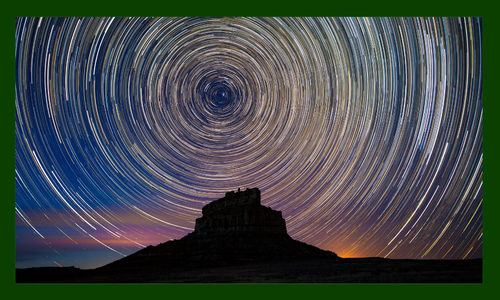
The Department of Interior has proposed revoking the 10-mile protection zone around one of the most significant cultural landscapes in the entire National Park System — a UNESCO World Heritage Site listed alongside the pyramids, the Taj Mahal, and Stonehenge. If the buffer is revoked, more than 300,000 acres of public land will be opened to oil, gas, and mining. The dark skies that helped define an entire civilization — the same skies the ancestral Puebloans used to build their architecture and guide their lives — would be polluted by gas flaring and industrial light. Sacred tribal land, protected through years of advocacy and two separate public comment periods totaling 150 days, would be dismantled in 14.
Maude Dinan, New Mexico Program Manager with the National Parks Conservation Association, joins The Parks Podcast to explain what Chaco is, what this proposal would actually do, and exactly how to make your voice heard before July 29th.
A note from Missy: I had not been to Chaco Culture before this episode. After this conversation, I need to go. But more urgently — we all need to act. I’m going to walk you through exactly how to submit a comment because the government has made it genuinely hard to find the right button. Watch for my how-to video this week. And please share this episode with everyone you know.
Take action before July 29th:
Quick comment: npca.org/chaco
Write your own: Go to the official project page → click Participate Now
Follow NPCA for updates: @NPCA
Episode Guest
Maude Dinan — New Mexico Program Manager
National Parks Conservation Association (NPCA)
Read Maude’s article: Why Chaco Culture’s Buffer Matters
About NPCA
The National Parks Conservation Association is America’s leading voice in protecting and enhancing the National Park System. Founded in 1919, NPCA works with communities, advocates, and policymakers to defend parks from threats — including development, pollution, and the erosion of protections hard-won through decades of public advocacy.
Show Notes & Links
Take action — deadline July 29th:
- NPCA action page — npca.org/chaco
- Official BLM project page — Participate Now (add direct link)
- Find your Congressional representative — congress.gov
- Follow NPCA
-
Instagram: www.instagram.com/npcapics
-
Facebook: www.facebook.com/nationalparks
-
Twitter/X: x.com/npca
-
Threads: www.threads.com/@npcapics
-
Learn more:
Transcript
Chaco Culture National Historical Park — The Fight for the Buffer Zone
The Parks Podcast, Episode 77 | Maude Dinan, New Mexico Program Manager, National Parks Conservation Association
What Is Happening Right Now
Missy Rentz: I am very grateful to Maude Dinan for being on The Parks Podcast today during this incredibly crucial time for Chaco Culture National Historical Park. Maude is the New Mexico Program Manager with the National Parks Conservation Association. Maude, welcome to The Parks Podcast.
Maude Dinan: Missy. So grateful to be here.
Missy: Thank you so much — because this is such an important topic. Last week, just suddenly and kind of out of the blue, I had a flurry of social posts about Chaco Culture National Historical Park and opening up that land to drilling and mining, and I immediately knew that I needed to get to the bottom of it, learn myself, and share the message of what’s going on. So you’re the expert, Maude. What is going on?
Maude: It’s been a really difficult few weeks for those who care for or are connected to public lands with significant cultural resources or ancestral ties. Chaco Culture National Historical Park protects some of the monumental structures that served as a thriving regional center for the ancestral Pueblo people from 850 to 1250 AD. It’s only a fraction of this greater connected cultural landscape that remains important to tribes today. However, it sits within one of the most active oil fields in the nation, so it’s been threatened by oil and gas development for years. And currently, there’s a 10-mile protection zone around the park that might not exist for much longer.
Maude: What you’ve been seeing is that the Department of Interior opened a 14-day comment period on their proposal to revoke that 10-mile protection zone around the park. And if they move forward with their plan, they’ll revoke that protection in full — opening over 300,000 acres of public lands to oil, gas, and mining. This is an insufficient window to study all that might be at risk from the decision, insufficient for getting comprehensive public comment, and it comes following very little government-to-government consultation with affiliated tribes.
What Chaco Culture Is
Missy: I’ve not been to Chaco Culture — I’ve not done an episode on it. Can you tell us a little more about what it is, what historic, cultural, and natural preservation takes place there, and why this area is so important?
Maude: I can’t wait for you to visit one day. Chaco is one of the most culturally significant landscapes in the National Park System and the United States. At the park, visitors can walk among massive stone great houses, dwellings, and kivas built over 1,000 years ago. The structures here were some of the largest buildings in what would be the United States until the 19th century. And keep in mind — these are structures built by hand, from materials like fir and pine trees that were carried over hundreds of miles. The scale and sophistication of these ancient Pueblo communities and economies were unparalleled in the region. For generations, this complex culture brought people together from areas as distant as Southern Mexico to trade, share knowledge, and celebrate important milestones and religious events. And Chaco is also a UNESCO World Heritage Site — listed alongside the pyramids, the Taj Mahal, and Stonehenge for its undeniable value to humanity.
What Drilling Would Actually Do
Missy: The threat is for drilling and mining. How could that change the park?
Maude: That emotional tie is critical here. When you’re at Chaco, the stillness and untouched historic views connect you to the landscape, to generations of heritage past and present, and to our shared humanity. There’s so much at Chaco we’ll never know or understand, which begs us to ask deep questions about why we move, gather, and build. At night, visitors can experience world-renowned dark skies — the park was designated an International Dark Sky Park in 2013. These night skies let us see incredible details of outer space with our naked eye, as well as what the ancient Puebloans saw. They were astronomers themselves and integrated that astronomy into their architecture, cultural practices, and daily lives. Being able to view the Milky Way on a dark night puts into perspective our relationship to one another here on Earth.
Maude: But when we open up this greater landscape to oil and gas drilling, it puts this profound park experience at risk by puncturing these views with the sights, smells, sounds of industry, and it pollutes our night skies with light pollution that may come from gas flaring or new facility infrastructure lights. So the very feature that helped design this entire civilization would be lost to us.
Missy: I didn’t even think about that kind of impact. I was thinking about trucks and pollution and erosion. But that’s fascinating — the culture and the dark sky and how seriously that would be impacted.
Maude: And you’re so right about those other impacts as well. Air pollution, erosion from roads and other infrastructure being built — it really does take a toll on the natural landscape as well.
90% Is Already Leased — So Why This?
Missy: You wrote an article called “Why Chaco Culture’s Buffer Matters” — I’ll put a link to it in the show notes. In it, you mentioned that a large percentage of federal land in that region is already open for drilling and mining. It was just this 10-mile radius that was protected. So why can’t they just maximize what they already have?
Maude: Yes — 90% of federal land around Chaco is already leased. And similarly in the Permian Basin, located partially in southeast New Mexico, 99% of federal land there is already leased for oil and gas as well. When you think about this vast expanse of land that belongs to each of us as public land — that could be used for camping with your family — nine out of ten parcels are used for roads, pipelines, wells, power lines, and other infrastructure that completely changes the experience of a natural place.
Maude: The Bureau of Land Management states this proposal is to meet the administration’s effort to “unleash American energy” — one of Trump’s executive orders to produce more oil and gas in the US. However, according to a Wilderness Society report, of the roughly 22 million public land acres leased for oil and gas, only half are actively producing. That means there’s more than enough land already available and there really is no demand. What’s more, the Bureau of Land Management suggests that only 14 wells will likely be developed in the withdrawal area if this protection is revoked. But 14 wells for over 300,000 acres of sacred lands already determined to be protected by the public feels largely outsized. This move feels less about the need for oil and gas and more about demonstrating the power to favor industry over anything else — similar to what you talked about last week with Bears Ears and Grand Staircase.
Missy: Yeah. I sent a letter to one of my representatives and he wrote me back with a form letter about all the things he was doing. He made it sound like he was so dedicated to nature. But then I started looking — and he has not done anything when it comes to solar energy or wind energy or any of the alternatives accessible to us. So to me, it feels like a revenue money grab more than anything else. And it feels like a slap in the face to a decision that we, the American public, have already said is important to us.
Why the Protection Matters — And What’s Still Unknown
Missy: Why is it important that we continue to protect these lands?
Maude: The decision to protect these lands in the first place wasn’t taken lightly. It was the result of decades of advocacy from tribal nations, elected officials, Indigenous and frontline organizations. The process to establish the protection took a year and a half, included seven public meetings, and entailed two public comment periods totaling 150 days. To undo it just two years later with such a streamlined timeline says that the public say in this decision doesn’t matter — and that’s absolutely not how these places are obligated to be protected.
Maude: We should continue to protect the area around Chaco in totality because it tells a story that’s at the heart of many tribes’ existence. Moreover, it’s a place of endless discovery. Although only 15 to 20% of the area has been surveyed, archaeologists estimate that as many as 12,000 cultural sites and traditional cultural places lie within the protection. We can’t diminish this incredible landscape to an industrial zone. So many people have yet to experience this place, let it move them, let it inspire them to be historians, architects, astronomers. It’s a place of local and global importance.
What You Can Do Before July 29th
Missy: What can people do so that their voices are heard? They’ve made it very hard to figure out how to submit comments — but you all have a shortcut. What can we do to support these efforts?
Maude: People can go to npca.org/chaco to submit a comment in opposition to the proposal. Or if they want to write their own personalized comment, they can scroll to the bottom of that page where the official link for the project is provided, and from there click where it says Participate Now. It’s important to remember that folks have until July 29th. And if they want to stay connected and learn more — because this is interrelated to all of the things happening through this administration — they can follow NPCA for more information.
Missy: And we will definitely link to everything. If you decide you want to add your own comment, it is not obvious where the Participate Now button is — so I’m going to do a social post where I walk you through that. I think it’s really important that we make it as easy as possible. And we’ll make sure we’re tagging NPCA in the social posts so that people know where to go to get the latest information — because you’re where I go to get the latest information.
Maude: Thanks, Missy. This is so great.
Missy: Thank you, Maude. I’m really grateful to you for the work that you’re doing, for fighting for our public lands, and for coming on today during a very busy time to update us all and teach us all about Chaco Culture.
Maude: I appreciate the time, and I appreciate anyone interested in this issue and their ability and desire to step in. We need all of y’all.
Missy: Absolutely. Thanks for listening to this episode. Until next time — we’ll see you in the parks.
Music for The Parks Podcast is performed and produced by Porter Hardy. Follow us @TheParksPodcast or visit TheParksPodcast.com.