
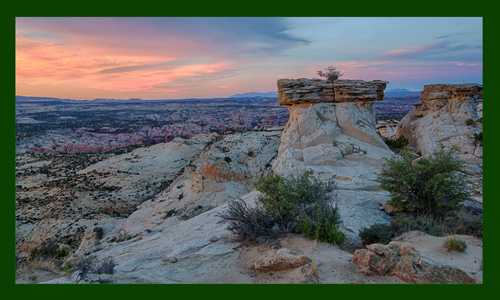
On July 13th, President Trump signed two proclamations that roll back nearly 90% of the protected boundaries of Bears Ears National Monument and Grand Staircase-Escalante National Monument in Utah. Three million acres of public land — land that contains sacred Indigenous cultural sites, irreplaceable archaeological resources, and some of the most significant landscapes in the American West — is now open to potential drilling, mining, and extractive development. The Bears Ears Commission, an intertribal coalition that helped oversee management of the monument, has been disbanded.
Katie Johnson, Campaigns and Engagement Manager at the Conservation Alliance, joins The Parks Podcast for an urgent conversation about what these proclamations actually mean, what they get wrong, and what every listener can do right now.
A note from Missy: I acted quickly on this one because it matters. The ink is dry on the proclamations — but the fight is not over. Katie helped me understand what’s actually in these documents versus what’s being said about them, and what our loudest, most effective next move is. Please listen, share, and take action.
Episode Guest
Katie Johnson — Campaigns and Engagement Manager
The Conservation Alliance – conservationalliance.com
(See also: Episode 37 — Understanding the Roadless Rule with Katie Johnson, and Episode 39 — Business Champions for Our Public Lands)
Transcript
Status Update: Bears Ears and Grand Staircase-Escalante
The Parks Podcast, Episode 75 | Katie Johnson, Campaigns and Engagement Manager, The Conservation Alliance
What Just Happened
Missy Rentz: I’m so grateful to welcome Katie Johnson, the campaigns and engagement manager at the Conservation Alliance, to this very special episode where we’re talking about a status update for the two Utah monuments that are having land removed from their protection. Katie, welcome to The Parks Podcast.
Katie Johnson: Thanks for having me. I’m grateful to be here.
Missy: On Monday, July 13th, President Trump signed two proclamations that reduce the land protection for two Utah National Monuments — Bears Ears National Monument and Grand Staircase-Escalante National Monument. It’s all over the news. It’s huge news. What do the proclamations mean?
Katie: Essentially these two proclamations effectively roll back almost the entirety of the boundaries of both Bears Ears National Monument and Grand Staircase-Escalante National Monument. The new boundaries for Grand Staircase-Escalante would encompass about 182,000 acres, and Bears Ears National Monument would be about 122,000 acres. That’s about a 90% rollback or reduction for each of those two currently existing monument boundary designations. These are larger rollbacks than what we saw in 2017 — we’ve seen similar actions with the former administration — and this includes about three million acres in total. So it’s a significant amount of land.
Katie: In addition to the boundary rollbacks, the proclamations also disband the Bears Ears Commission, which is an intertribal coalition of tribal representatives that help oversee the management of Bears Ears National Monument. These proclamations cite critical minerals needed for national security that are located within the boundaries, and ultimately the rescission efforts will likely open these lands up to extractive activities such as drilling, mining, or other developmental efforts.
The White House’s Reasoning — and What’s Actually True
Missy: This is a surprise but not a surprise — there have been rumors of this for some time, but it happened very quickly. The White House said this is, quote, “restoring sensible land management.” Why do they think it’s a sensible move, and what do they feel we should be doing with this land?
Katie: The proclamation states that the existing monument boundaries extend beyond the “smallest area compatible with the proper care and management of objects to be protected.” So a lot of the lands being rescinded from the boundary could move to state-based or other agencies outside of how they’re currently managed. The proclamation also states that the monuments were too big to manage with current resources at the federal level — meanwhile, we’ve been watching this administration gut federal agency funding and staffing over the last several months. So there’s a bit of a catch-22 there.
Missy: And they’ve also talked about how this is what Utah wants. But that’s not what Utah wants.
Katie: Yes. The majority of voters in Utah are hopeful that Grand Staircase-Escalante and Bears Ears boundaries would remain intact. Across the board, 91% of Western voters believe that existing monuments and public lands currently designated should remain in place. This is a popular issue among voters, and this is a very unpopular decision based on how those voters have shown up — in Utah specifically, but also across the West and frankly across the country.
What This Means for Tribal Nations
Missy: The other thing I think is really important about this space is that it’s sacred land to tribal nations. Talk a little more about how significant this land is.
Katie: I would say this is one of, if not the biggest concern we’re seeing in our community and our organization. The lands within these monuments are extremely significant to tribal nations — that includes cultural sites, historical landscapes, and so much more. And this is devastating for tribal communities, especially hearing that the Bears Ears Commission is being dismantled. That’s just pulling us back in a way that is really devastating and really tough and just hard for our community and for the tribal communities seeing this firsthand.
What This Means for All Public Lands
Missy: What do these proclamations do not just to these monuments, but to our parks and public lands more broadly? I can’t help but feel like this is teeing up even more damaging moves.
Katie: This is just one rollback effort we’ve seen. We’ve seen rollbacks across different landscapes, through different methods, and this is really challenging. The entire premise of these rollbacks is based on false information, and so we’re hopeful we can elevate the truth — especially as we prepare to go to the voting booths in November for midterms, keeping all of this in mind.
Katie: The current monument boundaries already allow for recreational use, hunting, fishing, and grazing. A lot of things that have been cited as prohibited — that access already existed. And it’s also worth noting that wilderness study areas have been referenced as a potential safeguard for some of the acreage being rolled back from the monument itself. But we’re also seeing attacks on wilderness study areas and those processes. While there are potential safeguards in place, we’re seeing the potential for those to be rolled back as well — which makes us nervous that those protections may not last long.
What You Can Do Right Now
Missy: I know I feel like every couple of episodes we’re talking about what people can do and asking them to take action. We’re doing that again now. You hear “executive order” and think it’s done — but that’s not the case. What can listeners do, and is there a way to push back?
Katie: The proclamations are signed and the ink is dry on that. But the action to speak up for these landscapes — to talk about how this impacts you, your community, your state, wherever you are — is still very much alive. There are groups everywhere taking action and sending notes to elected officials to express their opposition to this decision.
Katie: Monuments for All has a great call to action that you can fill out and send in. They have a guided process where you can add your information and it goes directly to your representatives. You can also reach out directly to your elected officials and members of Congress — all staff contacts are easily found at congress.gov. Those are two really easy ways to make your voice heard.
Katie: From the business side, the Conservation Alliance will work with our members and Brands for Public Lands participants on a business sign-on and outreach letter. We’ll garner signatures from businesses that oppose this decision and send that to the elected officials and agency leaders who are making these choices — really expressing the business community’s sentiment here.
Missy: And that’s one thing I’d love to bring up — you are a business organization, and businesses have a very loud voice in the public lands space. If your business touches the outdoor space in any way, you can work with the Conservation Alliance to make sure your voice is being heard.
Katie: Absolutely. The business voice right now actually has a disproportionate level of influence because this administration is very business and economic forward-facing. The economics of outdoor recreation use and the industry as a whole speak for themselves — we’re a $1.3 trillion industry. That’s not insignificant. So yes — businesses can work with us, find more information at conservationalliance.com, and if you’re not currently a member, we’d love to chat.
Missy: In the show notes we’re going to put links to everything Katie has mentioned — how to find your representative, the Monuments for All letter, the Conservation Alliance, and the individual letter link so that if you don’t want to write something yourself, you can simply go on, put your name and where you’re from, submit it, and your voice is heard. Is there anything else people need to know to take action right now?
Katie: I think it’s just a good reminder that these actions are positioned in a very similar frame as a lot of the other battles our conservation community is fighting right now — efforts to keep the public out of public lands, throwing off the balance of long-held land management precedents, favoring the few over the many. Now is the time to speak up. Now is the time to begin or stay galvanized. Write your letter, call your senator, call your congressperson — whatever that looks like for you. Take the action. We’re here to help however we can so that we can all showcase what side of the coin we’re on here, and why this matters for us as people, as businesses, as communities, and for our greater nation and world.
Missy: Katie, thank you so much. I know this was very last minute, but very important. I appreciate you joining us on The Parks Podcast.
Katie: It’s always great to be here. Happy to see you.
Missy: To learn more and stay updated on the latest news, be sure to follow the Conservation Alliance and The Parks Podcast on social media, and subscribe to The Parks Podcast for the latest episodes. That’s it for this episode. Until next time — we’ll see you in the parks.
Music for The Parks Podcast is performed and produced by Porter Hardy. Follow us @TheParksPodcast or visit TheParksPodcast.com.