
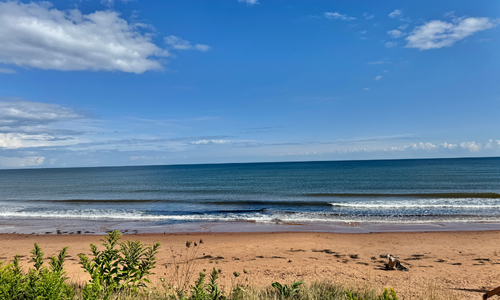
Prince Edward Island National Park was established in 1937 to protect a 25-mile strip of barrier coastline — its dunes, its ecosystems, and the landscape made famous by Lucy Maud Montgomery in Anne of Green Gables. Today it spans three sections of the island’s north shore, includes the historic Dalvay by the Sea hotel, the Skmaqn–Port-la-Joye–Fort Amherst National Historic Site, and some of the most beautiful beaches in North America. Manon Gallant, Interpretation Coordinator at PEI National Park, joins The Parks Podcast for its first Parks Canada episode — and announces that park admission will be free in 2026 under the Canada Strong Pass.
A note from Missy: It’s so fun to share stories from our neighbors to the North. Prince Edward Island is filled with history, nature, and amazing stories. In this first Parks Canada episode, we get the lay of the land for Prince Edward Island National Park.
Episode Guest
Manon Gallant, Interpretation Coordinator
Prince Edward Island National Park
Park Stats
- Location: Dalvay by the Sea, Prince Edward Island, Canada (north shore)
- Established: 1937 (16th Parks Canada national park)
- Size: 5,440 acres
- Highest elevation: 142 meters (466 feet)
- Three sections: Western (Cavendish), Central (Brackley–Dalvay), Eastern (Greenwich — added 1998)
- Theme: The Sea, People, and the Changing Landscape
- Admission 2026: FREE under the Canada Strong Pass (announced during recording)
- Operational season: Early June–mid September (peak July–August)
- Beaches: 12+ beach parking lots; 4 guarded beaches; inflatable floaties banned
- Cycling/walking: 35+ miles of multi-use paths
- Camping: Two campgrounds (Cavendish and Stanhope); bunkies (otic) available
- Dalvay House: Historic hotel (1890s summer home of oil magnate); open to visitors; bookable rooms
- Wildlife: Piping plover (endangered), coyotes, red foxes, raccoons, mink, herons, bald eagles, painted bunting, waterfowl, falcons
- Red Chairs: Parks Canada red Adirondack chairs placed throughout the park — some easy to find, some hidden
- Indigenous history: 10,000+ years; Mi’kmaq, French Acadian, Scottish, Irish, English
- Dogs: Welcome on leash everywhere except beaches (April–October, to protect piping plover)
Show Notes & Links
- Prince Edward Island National Park — Parks Canada
- Camping reservations — Parks Canada reservation system
- Dalvay by the Sea — hotel reservations
- Skmaqn–Port-la-Joye–Fort Amherst National Historic Site
- Greenwich section — dune trail
- Canada Strong Pass — 2026 free admission
- Anne of Green Gables — Lucy Maud Montgomery
- Kouchibouguac National Park — New Brunswick
- PEI National Park on Instagram
Episode Transcript
Prince Edward Island National Park — Sandy Beaches, Anne of Green Gables, and the Sea
The Parks Podcast, Episode 42 | Manon Gallant, Interpretation Coordinator, Prince Edward Island National Park (Parks Canada)
Welcome — The First Parks Canada Episode
Missy Rentz: In this episode, I’m thrilled to welcome Manon Gallant, who is the interpretation coordinator for Prince Edward Island National Park. This is our first episode with a Parks Canada park. Thank you so much and welcome to The Parks Podcast.
Manon Gallant: Thank you, Missy.
Missy: I feel extra special because this was my first time across the border experiencing a park, and it was such an amazing, welcoming, warm environment. And I’m honored to have you be the first episode from the parks up there.
Manon: I am so happy to hear that. We definitely strive for that atmosphere here.
Missy: We start every episode with park stats, so I’m going to go through what I researched, and if I’ve made any mistakes, just feel free to pop in and correct me. The park is located at Dalvay by the Sea, Prince Edward Island, Canada — though there are elements of the park that expand throughout the island. It was established in 1937. The park size is 5,440 acres. Its highest elevation is 142 meters, which is 466 feet. The theme of the park is the sea, people, and the changing landscape. It’s home to the Covehead Lighthouse that commemorates the Yankee Gale — a marine disaster in 1851 where 150 sailors from a New England fishing fleet perished, and many of them are buried within a cemetery inside Prince Edward Island National Park. It has 10,000 years of history inhabited by Aboriginal people, the French Acadian, Scottish, Irish, and English. And it is considered a Canadian Important Bird Area, home to the piping plover — an endangered bird — as well as herons, ducks, falcons, eagles, and so many more. And you’ll also find coyotes, red foxes, raccoons, minks, and more. I loved it, absolutely loved it. I grew up on Anne of Green Gables — my grandmother gave me those books — so I’ve always romanticized this part of the world, and it did not disappoint. Can you share the story of why this park was created and why it’s important in the Canadian National Park system?
Manon: Of course. The creation of national parks started in the western end of the country with Banff at first. PEI National Park was the 16th national park established. What is unique and important about this national park — when you think of a national park, you think like forests and mountains. PEI is very much not that. We have beautiful coastlines and important ecosystems that need to be protected. The original park was created between Cavendish to the west and Dalvay more central PEI — basically a strip of about 25 miles of coastline. The primary function was to preserve the dunes and the ecosystem along those shores. But also there’s the big cultural aspect — as you’ve mentioned, Anne of Green Gables is like our icon here on PEI. Lucy Maud Montgomery lived here and she wrote her books here. And that’s definitely part of preserving that cultural heritage. The landscape is pretty much what you would have seen when Lucy Maud Montgomery was sitting down writing those books. So the National Park plays a big role in that.
The Three Sections of the Park
Missy: Prince Edward Island National Park — you have multiple locations throughout the island and some of them are historic sites. In the US park system, seashores, parks, monuments, and historic sites are all under the National Park umbrella. Does it work similarly there, or are the historic sites part of Prince Edward Island National Park?
Manon: They’re separate. We have an overarching field unit here on Prince Edward Island and the National Park System, and the natural historic sites fall under that same operation umbrella, but we are separate. So you have the national park that has historic sites within it — like Green Gables to the west in Cavendish, Dalvay by the Sea more centrally. They are within national park boundaries but operated separately as national historic sites. And you’re right — if you look up PEI National Park you’ll see Dalvay as the main site. But really it’s pretty much the entire north shore of PEI — the North Shore from Cavendish all the way to the west, all the way down to North Rustico, and then inland and then Brackley Beach to Dalvay. That was the original section. In 1998 they added the Greenwich section. And did you make it up to Greenwich?
Missy: I did not.
Manon: Oh, okay. You’ll have to go back!
Missy: It’s not hard to twist my arm on that.
Manon: So officially we have three sections of the park — the western end, the central end, and Greenwich to the east.
Dalvay by the Sea
Missy: One spot that’s not on the historic sites list but is stunning is Dalvay by the Sea. Can you explain what that is?
Manon: Dalvay House is like one of the anchors — Green Gables being one, Dalvay being the other. It’s a former summer home of an American oil magnate, built in the late 1800s. Kept as a summer home for about 20 years, it sold and changed hands several times and was run as a hotel over the years. It was purchased by the provincial government the year before the park was created, and then the federal government purchased it as part of the creation of the national park. It’s now still run as a hotel — a historic hotel — by a third party, and visitors are welcome to go and check out the lobby. It has a grand fireplace and some really cool architecture from the time period.
Missy: One of the things — and I think it deserves romanticizing — there are Adirondack chairs down by the water in front of it, and people were sitting there covered in blankets. It was just like a quintessential Prince Edward Island moment with the sea and the tall grasses. It’s really a stunning place. And it is within the park limits?
Manon: It is. I’ve met a few couples last year staying at Dalvay who had been coming back for 30-plus years. This is where they come every single year. So it does have a special place in a lot of people’s hearts.
Conservation and Environmental Efforts
Missy: What are you all working on for conservation and environmental efforts?
Manon: Dune preservation, dune restoration — the dune habitat is always a big item on the agenda. Especially in the last few years. We had a hurricane three years ago that took a large chunk of the coastline. There’s been quite a bit of restoration — a lot of effort going into planting marram grass to try and encourage dune formation and stability. With the hurricane, we also lost quite a bit of trees, so we are doing some active planting in areas that need a little bit of help. With Parks Canada, we have a duty to protect endangered species — it’s required by law. So every spring the piping plover comes to our shores and our teams monitor their presence. They will shut down beaches when the plovers are around nesting. The piping plover seems to be the more commonly known one, but we do quite a bit of work around other species as well.
Missy: That’s — you can tell too, when you’re just experiencing the park — biking, walking, hiking — there’s just so much protected space and so much work being done. The other thing I mentioned in the fun facts is the different inhabitants — Aboriginal, French Acadian, Scottish, Irish, English. All of those cultures are really represented throughout the park. And this is where I’m going to let you give me a tutorial — even in one of the historic sites, which I struggle to say.
Manon: You’re referring to Skmaqn–Port-la-Joye–Fort Amherst?
Missy: Yes.
Manon: Yes. The site is called Skmaqn–Port-la-Joye–Fort Amherst. It’s a trilingual name that references the historical timeline of the place. It’s the site of the first permanent European settlement on PEI, located just across the river from Charlottetown — you can actually see the site from downtown Charlottetown. So Skmaqn literally means “meeting place” in the Mi’kmaq language, Mi’kmaq being the indigenous people of Prince Edward Island. Before European contact, this was a place where Mi’kmaq gathered. The French were first to establish a colony there — they called it Port-la-Joye in 1720. That port fell to the British in the 1750s and became Fort Amherst. Parks Canada partnered with our indigenous partners here on the island and have done a really good job at telling the story of the history and the culture from multiple perspectives, with signage in all three languages.
Missy: And that’s at that site, which hopefully we’re going to do an episode on. But I just felt — and I’m pretty sure you can correct me if I’m wrong — that throughout Prince Edward Island National Park, it felt very open to telling the story of its past, even its past inhabitants.
Manon: Yes — that’s one of our values, one of the things that we strive for at Parks Canada, in this spirit of reconciliation with our indigenous partners. We do try to speak the truth and allow everyone to understand. We don’t shy away from our history, and I think the more people know, the better we all are.
Planning Your Visit — When to Come
Missy: Let’s talk about planning a trip, because for most of my audience, most of them are from the United States. This is different, but it’s still not that hard. Because of weather, there’s a short period of time in which you can visit Prince Edward Island National Park. When are you open?
Manon: We are operational from early June to mid-September. That doesn’t mean you can’t come at other times of the year, but that’s when our bathrooms are open, we have staff on site to help answer questions, and we have programming from early July to early September. Peak season is July and August for sure. But we do have a bit of time on either end for visitors. If you want the most out of your visit, operational season would be best.
Missy: I came in late August and I was so excited because I wanted to escape the Southern United States heat and humidity. And so I’m sitting at the campsite, huddled over a campfire in sweats, and everybody’s walking by me in bathing suits headed to the ocean.
Manon: Our winters are so cold — we just try to soak it all up as much as we can. I swam myself just in the last two weeks!
Getting There — Border Crossing and GPS Tips
Missy: Getting to Prince Edward Island is unique — if you’re coming from the US, you have to pass through the border. You need a passport. What else do visitors need to know about getting to the park?
Manon: When you plan your trip, you have to be pretty specific with your GPS as to where you’re going. We’ve had lots of visitors saying, “I ended up in Cavendish and I wanted to be in Dalvay.” Being specific about where you are with your GPS or your phone is going to go a long way. Even then, you’re never more than half an hour from the national park. If you’re staying in Charlottetown, you’re about 20 minutes outside of Brackley to Dalvay, maybe a little bit further to Cavendish, and then maybe 45 minutes to Greenwich. It’s all pretty easy to drive. But yeah — being specific about where you’re going with your search would be the biggest tip.
Missy: And I’ll just add as the person who came from the US — I crossed the border in Maine, and you can take the ferry or the bridge to get there, but you’re going to need your passport. I was also traveling with a dog, and that adds a little bit of complication because you need to have your vet records printed from your vet and they need to physically sign it — it can’t be a digital signature. Check both the Canadian and US customs and immigration websites because that may change. But that’s what it took for me. So it just took some planning.
Manon: Yes. If you’re traveling with a dog, it does make things a little bit more complicated — but certainly worth it if you want to bring your pet with you.
Where to Stay
Missy: They get there — now where are they going to stay? What are the different lodging options at the park?
Manon: Within the park we have two campgrounds. Most are just your regular camping sites. We do have a handful of bunkies, and another type of accommodation called oTENTik — basically a big platform with a tent and some bunks. It’s basic but it’s comfortable, you’re dry, so if you’re not a super avid camper, it’s a good introduction. Other than that, there’s the Dalvay Hotel that can be booked — you can stay within the national park that way. But those are really the only accommodations inside the park. There are dozens of hotels and cottages in and around the park, but I would book as early as possible. Camping books out pretty quickly, as do cottages. It’s a good idea to plan in advance. Our booking system goes live in late winter — follow our social media to find out when the campsites are open for bookings.
Missy: And this is the perfect time to start planning — we’re recording this in October of 2025. Your campgrounds are far from standard — they are really nice. I stayed at Cavendish. It was a large campsite with super tall grasses that give total privacy, and there’s electricity and water at some of them, and great bathhouses. They are spectacular.
Manon: I’m glad you had a good experience. It is a beautiful campground.
What to Do in the Park
Missy: Okay — they get there, they’ve checked in. What can people do when they’re visiting the park?
Manon: There’s tons to do in the national park. This being a coastal region, your main activity is going to be the beach. We have something like 12 beach parking lots in the national park. The parking lots do fill up during peak season — if you’re looking for a nice beach day, you want to get there before lunch for sure. Swimming is definitely one of the main activities. We have lovely cycling paths and multi-use paths, basically going along the entire shore — those are paved paths. And then we have a couple of trail networks, overall around 35 miles worth of trails for cycling or walking. I wouldn’t say there’s hiking necessarily — they’re mostly easy, flat, compacted gravel. If you’re looking for hills, they’re not in the national park.
Missy: No, there probably aren’t many on the island actually.
Manon: Central PEI has a bit of elevation — it’s nothing dramatic, but you can find some challenging hikes if you know where to go. We have access to water — lots of canoeing, kayaking, paddleboarding opportunities. We don’t have any rentals currently within the national park, but there are businesses adjacent to the park like in North Rustico and in Tracadie that do rentals. It’s beautiful, especially on a calm day. Keep in mind it can be windy. Beautiful birdwatching in all three regions really — especially in Greenwich, if I’m being honest. And fishing — especially locals, they’ll come out in the evening and fish for striped bass right off the beach. You don’t need a permit or anything. If you’ve got a fishing rod, you can set up on the beach and try to catch some bass.
The Red Chairs
Missy: I saw a social media post about a red chair program — what is that?
Manon: Those are red chairs — it’s a Parks Canada-wide initiative. There are red Adirondack chairs sprinkled throughout the national park. We have several here on PEI. Some are really easy to find — the ones at Dalvay Lake, you must have seen them in your travels. But then we have some that are pretty well hidden, like on Robinson’s Island — you would actually have to take your bike out for five kilometers and find them along the little trail. So they’re fun if you’re into that kind of thing — just drive around and hike around to search them out. And there was a social media promotion where you would tag the national park in your red chair photos. It’s neat to see all the pictures.
Water Safety
Missy: It is unique to go to a park that’s on an ocean. What are some of the rules or recommendations you have to help people have a safe trip?
Manon: We take water safety really seriously here at the national park. We have four beaches that have surf guards during the operational season. I would definitely recommend going to one of those guarded beaches if you’re not a confident swimmer. The ocean conditions here change pretty drastically from one day to the next depending on how the wind is blowing. If we have a south wind, it could be calm as a mirror — and then a few days later with some north winds, there can be some pretty wild surf with some rip currents. So it’s always best to check with surf guards. There’s a park-wide ban on inflatable floaties — so if you’re wanting to bring your floaty unicorn, you’re going to have to leave it in the car. And then we have some jellyfish — the red arctic jellyfish, which has stringy red tentacles. Those will sting. They’re not poisonous or venomous, but it’s uncomfortable. They come with the currents, they’re here for a few weeks out of the year, and then they move along. So that’s something to watch for as well.
Fees and Passes
Missy: Are there any fees or passes that people need to know about?
Manon: Normally we do have admission fees to the national parks — rates are usually around $7 US per person per day. We have group and senior discounts, and if you’re going to be spending a bit of time in the national park here on PEI or visiting multiple national parks, you might look into getting what’s called a Discovery Pass — it covers all of the national parks. That being said, we just had an announcement today — they’re bringing back the Canada Strong Pass that we had this year. So admission is going to be free next year again.
Missy: Amazing.
Manon: Yeah, so we had free admission this year. We’ve definitely seen an increase in visitation this year — that’s probably related to that as well.
Missy: Now is the time to start planning and take advantage of that free entry.
Bringing Your Dog — Pet-iquette in the Park
Missy: Something that was really important for me because I took my dog Tootsie — you are dog friendly and you have a park etiquette program. What do people need to know when bringing their four-legged family members?
Manon: We love dogs here — we love them in the national park. We do have some strict rules about domestic animals on beaches. Basically between April and October they’re not allowed on beaches. That’s to protect wildlife and domestic animal interactions — the piping plover being endangered is one of the main reasons, but also other wildlife and visitor safety. In terms of petiquette, you want to keep your dog on a leash at all times and avoid wildlife interactions as much as possible — all the general rules, picking up after your pet. And I would advise you to check before you go, because not all places are necessarily going to be pet friendly. If you’re looking for beaches with your dog, there’s a pet-friendly beach not too far from the national park pretty much anywhere you are. Just ask one of the friendly park employees you encounter and they’ll be happy to direct you. Dogs are welcome pretty much anywhere humans are welcome — just not on the beaches. All the trails, the boardwalks — lots of opportunities to spend some time with your four-legged friend inside the park.
Missy: One thing — I went on this lovely walk down the main drive with Tootsie, and you also have these really great areas set up with a bench and a picnic table before you go down the stairs to the beach. We just sat there and still got to watch and soak up being there. Even if you have your dog and you can’t go on the beach, there are really lovely ways to enjoy the park with your dog — it was a very busy day for the birds, and it was beautiful.
Manon: Absolutely.
What’s Coming Next at PEI National Park
Missy: What else is happening at Prince Edward Island National Park, or what do we have to look forward to?
Manon: For myself, in my role as interpretation coordinator, we’re looking back at this past season and seeing what went well and what we can improve on. I’m looking forward to maybe bringing in some new interpretive programs for next season — knowing we’re probably going to have another high visitation year. What are people interested in? What were our good programs and where can we really help people get the most out of their visit? We have free visitation, which was just announced today, so that’s exciting. And then just the general ongoing work — our teams are always hard at work trying to keep everything nice and clean for everyone, and visitor safety is always top of mind as well. We’re already gearing up for next year.
Speed Round
Earliest park memory?
I grew up near Kouchibouguac National Park, which is in New Brunswick. My earliest memory would be driving through the forest — the winding road through the forest, it seemed like it was going to take forever, but it was just so beautiful. And then we’d finally get to the campground or the beach and it was just such an adventure, just even driving through.
What made you love the parks?
As a kid it was just the adventure of it, being in nature — I’ve always loved being outside. As an adult I can appreciate more the conservation efforts and just having a place that’s untouched and natural, where you can just sit and connect with nature.
Favorite thing about Prince Edward Island National Park?
The Greenwich Dunes Trail. A beautiful walking trail in the Greenwich section of the park — it winds through some open fields into the forest, onto a floating boardwalk, and you end up climbing over this giant sand dune. It’s just wonderful. I never, ever tire of it.
Favorite thing to do at Prince Edward Island National Park?
I actually live about five minutes from Dalvay, so my favorite thing is to get up early and go for a beach walk — or even just sit and read a book before the hustle and bustle. That’s my favorite.
Park on your bucket list?
In Canada — Gros Morne National Park in Newfoundland. I’ve seen pictures and it just seems like such a drastically different world, with the fjords and the mountains. It just looks incredible. That’s definitely on top of my bucket list.
Three must-haves for a park visit?
Here in PEI in summer — sunscreen, water, and a beach towel. Because you’re going to go in the water.
Favorite campfire activity?
Telling stories. Just chatting — people are more open when they’re watching a fire, and I like to hear what comes out around a campfire.
Tent, camper, or cabin?
I’m going to say camper van. I’m very jealous of your setup. I don’t own one, but that is definitely my goal — to own one of those and drive around the country.
Hiking with or without trekking poles?
Without — there’s zero elevation here, no need.
Favorite trail snack?
A really good trail mix. It has to have cashews, dried cranberries, dark chocolate.
Best animal sighting?
Fox kits playing on the beach. Special mention to the bald eagle.
Favorite sound in the park?
Those morning beach walks — usually the water’s pretty calm, and just that gentle wave lapping on the beach.
Greatest gift the parks give to us?
Hopefully just ongoing preservation, protection, and presentation of the most beautiful places in our country — just for future generations.
Missy: Thank you so much for being part of the podcast, for teaching us about Prince Edward Island National Park, and letting me relive a spectacular visit up there.
Manon: My pleasure. This was fun.
Missy: Thanks so much for listening to this episode. Until next time — we’ll see you in the parks.
Music for The Parks Podcast is performed and produced by Porter Hardy. Follow us @TheParksPodcast or visit TheParksPodcast.com.