
Everything you learn outside follows you home. The resilience to own a mistake in front of your team. The ability to sit with discomfort without shutting down. The capacity to notice something beautiful you’ve walked past a hundred times. Jesse Tubb, founder of GRIT Adventures and former active duty Army officer, joins The Parks Podcast to talk about what nature actually teaches us — and why the most powerful classroom for kids, veterans, grieving families, and burned-out adults isn’t a room at all. It’s outside.
A note from Missy: I met Jesse at the Maryland Outdoor Recreation Summit when I was trying — and failing — to ride a bicycle that was way too small for me on an obstacle course. He kept cheering me on. That pretty much tells you everything you need to know about him. This conversation reminded me that everything I love about being outside isn’t separate from real life. It’s practice for it.
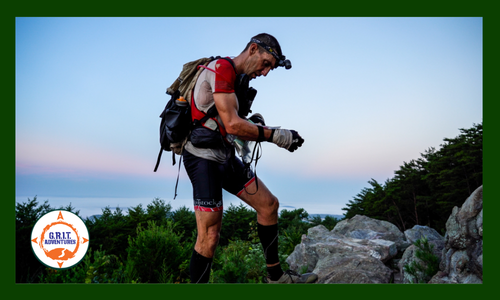
Episode Guest
Jesse Tubb — Founder & Head Coach
GRIT Adventures
(GRIT = Generating Resilience, Independence, and Tenacity)
Show Notes & Links
- GRIT Adventures
- TAPS — Tragedy Assistance Program for Survivors
- Wounded Warrior Project Odyssey program
- Sierra Club Military Outdoors
- The Anxious Generation — Jonathan Haidt
- Leave No Trace
- Trust for Public Land — 10-Minute Walk Campaign
- Jesse’s eating meditation on YouTube
- National Outdoor Leadership School — NOLS
- Find green spaces near you — Google Maps satellite view tip
About GRIT Adventures
ABOUT GRIT ADVENTURES
GRIT stands for Generating Resilience, Independence, and Tenacity. Founded during the pandemic by Jesse Tubb, a former active duty Army officer, GRIT Adventures uses the sport of adventure racing as a vehicle for teaching mindfulness-based resilience skills. Programs serve youth, veterans, sports teams, corporations, schools, and military families — helping people build confidence, communication skills, emotional regulation, and conflict resolution through play-based outdoor experiences.
Transcript
What Playing Outside Teaches Us — Resilience, Mindfulness, and the Gift of Nature
The Parks Podcast, Episode 73 | Jesse Tubb, Founder of GRIT Adventures
Missy Rentz: I’m really thrilled to welcome Jesse Tubb to The Parks Podcast. Jesse is the founder and head coach at GRIT Adventures. Jesse, welcome.
Jesse Tubb: Thanks for having me.
Missy: Jesse and I met at the Maryland Outdoor Recreation Summit last fall — when I was trying to ride a bicycle that was way too small for me on an obstacle course. Head coach is an appropriate title because you kept cheering me on as I kept falling over. So tell us — what is GRIT Adventures?
What Is GRIT Adventures
Jesse: I started GRIT Adventures during the pandemic. GRIT stands for Generating Resilience, Independence, and Tenacity. My two teenage kids at the time were drowning in the virtual space, as all kids were. As an active duty Army officer, I was getting paid but everything was shut down — so I was home with them. I started taking them and their friends out to local fields, doing workouts and incorporating mindfulness-based resilience skills.
Around that time, a show I was on called Eco-Challenge premiered on Amazon Prime — an adventure race filmed in Fiji. When my kids saw it, they said, “Can you do something like that for us?” So I created a five-hour version. They were tubing down the Patapsco River, mountain biking, falling down, getting muddy, using a first aid kit. They had a great time. That really inspired me to use adventure racing as a vehicle for teaching these skills — helping kids become more confident, learn conflict resolution and communication, all through play in nature.
Why People Aren’t Going Outside
Missy: So many wonderful things came from COVID — and I think this whole approach to mindfulness and our health and healing is one of them. Why do you think people aren’t going outside? What are the barriers?
Jesse: It sounds cliché, but I really think it’s our devices. I notice that when I stop at a stoplight, my first instinct is to reach for my phone. I was watching Mad Men with my wife, and it struck me — they would mail packets to clients and wait weeks for a response. That gap between communications is why they had so much time to think, to laugh, to wonder. Now there’s no gap. We’re never bored. We’re never left wondering what’s outside or what we want to do right now. The constant hit of dopamine from digital connection doesn’t even leave room to ask the question. We’re not exploring our inner space, let alone our external space anymore.
Missy: I remember as a kid, if you said you were bored, my dad would assign you a chore. So we learned fast — don’t say you’re bored, go find something to do. Cultivate that boredom. Sometimes just sitting in it is really nice too.
Jesse: That doesn’t happen anymore.
What Nature Actually Teaches Us
Missy: You and I are both all about nature and mindfulness. There’s so much to learn from being outside. When I hear about schools removing recess, removing PE — I get upset about it because there’s so much you learn outside that you can’t learn in a classroom. You’ve spent a lot of your life outside. What are the key things you’ve learned — and what do the youth coming through GRIT learn?
Jesse: At a macro level, spending time in nature over years gives me a perspective on time that I don’t have in normal life. When I see how slowly things shift in a park — a tree falls, and eventually the trail just goes around it — I think about how this park didn’t exist 100 years ago. That slowness is medicine.
There’s also something I think about a lot: as a culture we reward entertainment above almost everything else. Our sports stars, actors, musicians — the most financially rewarded people in our society. The irony is that in schools, we’ve removed all of those things. We’ve removed sports, activity, play, drama, music — the very things we value and reward as a culture. We need movement.
When I take kids through GRIT, a lot of times this is the first time they’ve ever been outside adult supervision. They’re reading a map and compass, finding checkpoints in the woods. They get lost. Someone makes a wrong call at a trail junction and has to own it — not just internally, but in front of their team. It creates the same somatic experience of stress and overwhelm that shows up at home and at school. But here, there’s no adult to intervene. They have to figure it out.
The curriculum gives them tools — how to express themselves, how to regulate their emotions, how to communicate calmly and resolve the issue. And then at the end we’re deliberate about the transfer: “Here’s what showed up out there. What does that look like with your sibling? With your teacher? And how can you apply what you did well — and do differently what didn’t work — back home?”
What started as a kids program has grown to include veteran organizations, sports teams, corporations, and schools.
The Eating Meditation
Missy: I love that. I was talking to a park ranger recently who puts a hula hoop on the ground and gives kids 10 minutes to identify everything they see within it. That kind of observation and focus — you don’t get that running down a path or sitting in an office. The pebbles we all think are gray are actually purple and orange and red. You’ve talked about resilience and the coping skills you’re teaching. Tell me about the eating meditation.
Jesse: I bring in clementines — I’ve done this everywhere from youth programs to the Baltimore Department of Juvenile Services detention center. I lead them through noticing the skin, peeling it, smelling it, really engaging all the senses. They eat one small wedge and feel it fully.
At the very end, I show them the tag that tells them where the clementines are from — Chile, Peru, somewhere far away. And I tell them: the dirt, the water, the soil from that part of the world is now becoming your body. Tomorrow it becomes your blood, your fingers, your hair, your eyes.
You think you’re from Baltimore. You are made of the entire world, literally.
When we take kids on trail and they drink from a river through a LifeStraw, I tell them: this river is now part of you. It reframes the whole idea of being separate from nature. You are nature.
Missy: I’m going to eat my banana very differently this afternoon. Would you be willing to record that meditation so I can share it?
Jesse: I actually have one on YouTube I can send you.
Missy: Send it to me — I will share it.
Over-Parenting, Under-Parenting, and the Freedom Kids Have Lost
Missy: I want to go a little deeper on the removal of recess and free time — and I think it’s not just schools. Both parents work full time now. We’re missing the benefits of being outside. And when you appreciate nature, when you’re feeling it, you’re kinder to it too.
Jesse: Jonathan Haidt wrote The Anxious Generation, and his main thesis is that we’ve done our generation a disservice by over-parenting in the real world and under-parenting in the digital world. I’m almost 50 and I was free range. My parents didn’t want me home.
Missy: When the streetlights come on — that’s what I heard.
Jesse: Be within calling distance. We don’t allow kids that space anymore because we’re so afraid of something happening to them. What I try to facilitate is giving people — kids and adults — the chance to be outside and have some of the rough experiences that come with it.
And one thing I emphasize: we don’t drive an hour away. We go to neighborhood parks. There’s a spot near me called Maple Lawn — fairly developed suburban area. I take kids there on Wednesday nights. There are creeks nearby. Their minds are blown. They’ve lived there for years and never knew those outdoor spaces were in their backyard.
Nature doesn’t have to mean a curated park experience. There are wild pockets all around us. Open Google Maps in satellite view and look at your area — you’ll see so much green. Those little pockets are everywhere. For a lot of people, that’s the gateway.
Missy: Programs like Trust for Public Land have a goal of a park within a 10-minute walk of every home in the country. It doesn’t have to be a big journey. Sometimes for me it’s just digging in the dirt for a few minutes — it releases something in my brain that’s just very soothing.
The 5% Problem — Micro Adventures
Missy: I learned recently that the Outdoor Industry Association found only 5% of outdoor users are avid — the extreme athletes you see on magazine covers and billboards. 95% are not that. We need to position the outdoors as accessible.
Jesse: I gave a presentation to the Maryland Department of Natural Resources called “Micro Adventures.” The whole idea is that there are small, accessible adventures all around us. A walk 10 minutes from your house. A drive to a local park. These still produce all the same benefits — the awe, the wonder, the connection. What would it be like to highlight those experiences instead of the epic five-percenters? To show people who don’t look like elite athletes that the outdoors is for them too?
Missy: Any body can be outside. It’s not just the model kayaking down a class five rapid situation. People need to see themselves outside.
The Healing Power of Nature — Veterans and Military Families
Jesse: I participated in a Wounded Warrior Project Odyssey experience in Myrtle Beach — 12 active duty and veteran participants, two-mile kayaking trip on very calm water. For me it was a 2 out of 10 in terms of challenge. For one woman, it was an 11. She was terrified. But she had support, and they floated down together. Afterward she said it was the most amazing experience of her life — just the birds and the water, wildlife all around, in a safe space. She’d spent her entire adult life saying “I don’t do water sports.” Now she does. That’s what a facilitated experience in nature can do.
Missy: That’s a great example of what your programs make possible. Building their outdoor confidence — 10% outside the comfort zone, then back, then a little further. That’s how we grow.
Jesse: Exactly. Don’t go into the overwhelm zone — then we shut down. Lean into slight discomfort, resource yourself back, repeat.
Missy: Let’s talk more about the work you do with veterans and military families specifically.
Jesse: I work with TAPS — the Tragedy Assistance Program for Survivors — an international nonprofit serving military families who have lost a service member. I’m on their advisory board and lead experiential workshops and weekend retreats for families in grief. We do outdoor activities, go through the curriculum together, and then test it in real experiences.
One of the frameworks is team. When a spouse or parent is lost, the surviving family member often carries all the roles alone. We use team-based outdoor challenges to help rethink what that can look like — who can step forward, how do you empower your teammates, even if those teammates are your children.
With Wounded Warrior and other veteran organizations, communal outdoor experiences are profoundly more powerful than anything indoors. Everyone’s a little uncomfortable — maybe not showering as much, sleeping outside, getting dirty. There’s a shared joy in the misery. Little pods of connection form and grow into something larger. People smile more. They open up faster. For eons, this is how we developed as human beings. It makes sense that it’s what nourishes us.
How to Start
Missy: What advice would you give to someone who hears this and thinks “I think I can do it”?
Jesse: Go in your backyard. Go for a walk in the neighborhood. Even in a dense urban environment, there is a park somewhere. Open Google Maps, switch to satellite view, find the green. The US park system has curated safe, accessible outdoor experiences — you can walk paved paths and still get all the same benefits.
Go 10% outside your comfort zone, then come back. Then go a little further.
Get other people involved. Find an accountability partner. If someone in your life is more outdoorsy, ask them to be your gateway. Go to your local REI and be vulnerable — tell them you’re nervous, you don’t know what you need. You don’t have to buy the whole store. A few key items can make the whole thing feel possible.
Start small. Start local. Start now.
Missy: And social media and the internet can be a benefit here too — there are people posting all the time, groups in your community doing things. Anything we can do to get you outside.
About GRIT Adventures
Missy: If someone or an organization wants to work with you, what should they do?
Jesse: I’ve transitioned to working primarily with organizations rather than individual families. Organizations bring me in for either a one-off workshop or a longer engagement. I just finished spending an entire season with a men’s college lacrosse team — team-building at the start, mindfulness work on Mondays, and on the sidelines every game for four months. That kind of deep immersion is really special.
Organizations — sports teams, schools, veteran groups, corporations — can reach out directly to explore working together.
Missy: Mindfulness comes up throughout everything you do. Why is it so central to your work?
Jesse: Because it’s the prescription I need for my own stress and anxiety. I contend with that. And I’ve found mindfulness to be the most powerful antidote. I’m careful not to identify with it — I’m not anxious, I have an anxious experience. But when these skills are presented in real, accessible ways, they’re incredibly powerful.
I’ve worked with thousands of people, and they consistently report that mindfulness skills help them navigate the stresses and conflicts and obstacles that keep showing up in life. If we don’t find a way to push the reset button, it can feel overwhelming.
Missy: Nature is that automatic reset. You don’t have to do much other than go out and be in it.
Jesse: Agreed.
Speed Round
Missy: We end every episode with a speed round — just answer with whatever comes to mind first. Let me know when you’re ready.
Jesse: Let me do a quick mindset reset. All right. I’m good.
Earliest park memory?
Growing up in Lake Tahoe, our elementary school did a lot of outdoor experiences through the park system. That was my first real introduction — and I was lucky enough to grow up in one of the most beautiful places in the world.
What made you love the parks?
Realizing how precious that space was. As an elementary school kid, I remember seeing a little postage-stamp piece of forested land for sale and thinking, “I wish I could buy that and just keep it as forest.” Growing up in Tahoe, being surrounded by all that wilderness, and coming to appreciate the fact that our government is preserving these spaces for us — that felt really special.
Favorite thing to do in a park?
Creeking. Walking up and down a creek, in the water, trying to stay upright, investigating everything. When I design courses, I often send people through creeks just to get a little wet and uncomfortable. It doesn’t take much.
Missy: I’ve never heard that phrase. I love it. Creeking is going on my summer list.
Park on your bucket list?
Yellowstone. I’ve raced in Wyoming but never actually been inside the park. Wyoming is just wild and wonderful.
Three must-haves for a park visit?
Map, extra food and water, and some kind of rain jacket or layer — because you never know.
Favorite campfire activity?
Talking. Or just watching the fire dance.
Tent, camper, or cabin?
Almost 50 now, so cabin. I used to be a tent camper but I just don’t sleep well in a tent anymore.
Trekking poles or no poles?
It depends. Without for day hikes. With for long races — some of mine last up to 11 days.
Favorite trail snack?
Pierogies. Thirty hours into an adventure race, my teammate pulled out salty pierogies and it was pure magic. After all the sweet energy gels, that umami hit was everything.
Best animal sighting?
A moose in Alaska. I’ve seen plenty of bears, but moose feel exotic. Powerful. Unforgettable.
Favorite sound in a park?
A creek or a river.
Greatest gift the parks give us?
The reminder of who we are.
Missy: Jesse, thank you so much for being here. Thank you for what you’re building with GRIT Adventures and for this conversation about what nature actually does for us. I’m grateful I fell off that bike so we could meet.
Jesse: I’m grateful you invited me on. This was wonderful.
Missy: Until next time — we’ll see you in the parks.
Music for The Parks Podcast is performed and produced by Porter Hardy. Follow us @TheParksPodcast or visit TheParksPodcast.com.