
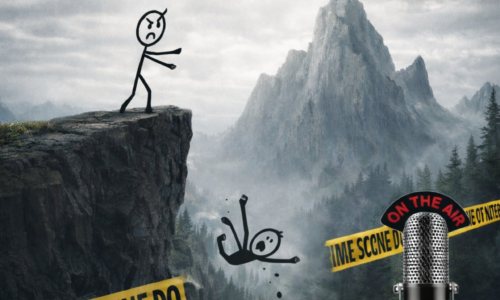
Episode Guest
Tara Ross & Nancy Martinz are former Law Enforcement Park Rangers in the National Park Service & hosts of Crime Off the Grid
Crime Off the Grid Podcast
Episode Transcript
Do you ever wonder about the crimes that happen in parks? In today’s episode, we’re gonna explore crimes off the grid and the podcast that dives into those stories. I’m your host, Missy Rentz, and this is the Parks podcast.
Missy Rentz
In today’s episode, I am joined by Tara Ross and Nancy Martinz, who are former law enforcement park rangers in the National Park Service. And in 2023 they started the Crime Off the Grid podcast to share stories of the park rangers and other kind of first responder incidents in these wild places. And to help educate people on how to have safe trips to the parks. Tara and Nancy, welcome to The Parks Podcast.
Nancy Martinz
Thank you, Missy. Welcome.
Tara Ross
Yeah. Thanks so much for having us.
Missy Rentz
I love talking to you all because I love to listen to the podcast, to your podcast. What was the catalyst for you all starting Crime Off The Grid?
Tara Ross
I started listening to podcasts only about three years ago, and of course I gravitated toward true crime since, that’s been my thing. I watch all the Dateline documentaries. But anyway, as I’m listening to those podcasts, I started thinking about all of the incidents and cases that I had known about. Or been part of in the National Park Service. And I really wanted to share these stories about what Park Rangers and first responders and investigators and victim specialists do in parks and forests and those other wild places to help keep people safe. And’cause people don’t even think there’s crime in national parks. And so many times, and Nancy and I cover these stories, but for this offender making the mistake and going into the park, whatever park, a lot of these people may never have been brought to justice and there’s some so many cases like that and I just thought people needed to hear that.
Nancy Martinz
And I agree with Tara on that. At first I, I came along kicking and screaming because I figured this might be a lot of work that we’d have to do. And it is, but it is a lot of fun. It is a lot of fun to do this together with her just because we worked in the same place for so long together and it is a good time to be able to hang out with Tara and do these podcasts. People just need to know that we do things out there.
Missy Rentz
And you guys were both at Yellowstone together, is that right?
Nancy Martinz
Yes.
Missy Rentz
When I first started listening to the podcast and certainly the name of it, I thought it was gonna be like this salacious dateline esque horror stories of the parks. And I was almost worried that,’cause I’m not like a scary story person, I was almost worried that it would scare me away. But it runs the gambit. I listened to one, the one you released in early December was a little gruesome that involved some sex crimes and you censor that, which was really good. But some of it are just like road rage and it, so it does run the gambit.
Tara Ross
Yeah. Everything happens in national parks that you would happen anywhere else and, there are plenty of murders, there are plenty of assaults. There are all kinds of incidents and so that, yeah, we do cover that. Yeah. And we have a lot of other rangers come on our show as well and tell their tale.’Cause we call those stories ranger tales. And that’s fun. That’s really fun for Nancy and I to be able to connect with some of those rangers and we can relate to a lot of their, the crime incidents that, that they are reporting as well.
Nancy Martinz
Yeah, absolutely.
Missy Rentz
I bet it is reunions with people to, to reconnect over these things and relive some of these incidents. One of the ones that I think this was an early on episode. It was from Shenandoah National Park and it was, know, somebody had been murdered and I had no, I grew up there. I had no idea. So sometimes these are, do I call’em cold cases? Some of these are cold case stories you’re telling.
Tara Ross
These stories are, we don’t do commentary or we’re not sleuths, so we’re not covering current, these are usually stories that have been adjudicated and so they may be old cases. I wouldn’t say cold cases because most of them have been resolved. So yeah, we do old cases, current cases, but we usually do cases that have a conclusion. I.
Missy Rentz
Yeah. And on that one I noticed, and Nancy, maybe you can, talk to this, like that one there was a follow-up. So sometimes there’s follow-ups that you do when something has developed from them.
Nancy Martinz
Especially on those cold cases, that haven’t been solved and they continue to work on them. And then every once in a while we do get follow up on the case sometimes it takes a year or two for somebody to go to trial or sentencing or be, whatever their crime was. So yeah it’s good to do a follow up’cause we try and listen to what comes up or when they’ve gone to court what they’ve been sentenced to. And, it’s just not all murders or violent crimes. And we talk about incidents that Rangers and Forest Service. I was a patrol captain for the Forest Service for several years. And, we deal with all that too and just try and follow up on whatever area we’re talking about, whether it be Forest Service, park service, BLM, anything like that.
Missy Rentz
And I, the other one I really like is tips on how to be safe. I think that, particularly for my audience, which is, more new to the parks, I think it’s important to know how to be safe in a park.
Nancy Martinz
It’s interesting’cause there’s times where you’ll be out in public and people will honestly look at you and say, why do you wear a gun?
Tara Ross
Yes.
Nancy Martinz
They’re just like that. They’re like, I think they think nothing happens in national parks. It is, Disneyland or something. I don’t know. But but it is,
Tara Ross
Back to the tips that one episode we did were, we got a lot of tips from listeners, which I loved, and they, some people wrote or emailed or whatever, some tips that we, Nancy and I never thought about like that. What a great idea, that seems like an easy thing to, just a little thing to do that kind of helps you make a little more safe. So that was really a fun episode that we did.
Missy Rentz
Yeah. I think we all learn a lot from each other out in the, in nature. We all know John Goodwin. He’s a friend of ours. He’s done episodes, and he’s been on your podcast. He’s been on mine. But in talking to him and reading his book, he talks about how no day is the same, but are there some incidents that are really common in parks?
Tara Ross
I think every park has its own, okay, here we go again, kind of thing. Yellowstone, it’s people getting too close to the bison or people getting off the boardwalk in the hot springs. And a lot of those things, that’s, those are the common things and, but. He’s right. Every day is different, and that’s what I loved most about being a park ranger. Like you just didn’t know your office was either, depending on what kind of ranger you are. If you’re in the back country or in the front country, you know your office was wherever, and it might be, 20 miles down the road, it might be. Five miles down the trail. It was different every single day and I love that. I did like the unpredictability of it. It was different every day.
Nancy Martinz
And a lot of times we go, law enforcement to medical law enforcement to medical. And you don’t know, like Tara says you don’t know what you’re gonna get into. And when I was with the Forest Service, I would make a list of things that I have to get done that day, and it’s sometimes I don’t even touch the list.
Missy Rentz
Really? I bet. One of the things I saw, I was listening recently, listening to an episode and the person you were talking to said something about you don’t like the, when people come vacation in a park, they’re often bringing a lot of the baggage that’s outside of the park into the park. And that can be where, crimes happen. They’re suddenly now together with people that maybe there’s issues outside of the park. Are a lot of the incidents within the same group. Is it, I don’t know. I just found that to be really an interesting thought that people are bringing their issues into vacation.
Tara Ross
We have said several times, like people travel with their offender If the offender coming into a national park, a lot of times they would’ve continued on. And what one of the best examples of that is in domestic violence cases because if you are abused or you are an abuser at home and you happen to travel to another park, you’re still an abuser and is, probably the majority of crime that we deal with, not necessarily domestic violence, but where a lot of people travel with their abuser. In the violent crime situations it does seem like we hit on the boogeyman crimes a lot because those are just they really get your attention. They got get our attention, but for the most part, people travel with their offenders.
Missy Rentz
And isn’t it? If something’s done in a park, isn’t it a federal crime?
Nancy Martinz
Yes, it is.
Missy Rentz
So not
Tara Ross
on the park.
Nancy Martinz
Oh, that, that’s true. Yeah.
Tara Ross
It depends
Missy Rentz
in a national park or in a
Tara Ross
It depends on the national park
Missy Rentz
really?
Tara Ross
so there’s jurisdiction different jurisdiction issues. So a big park like Yellowstone, Yosemite it depends on the enabling legislation. So when it became a park, so it may have exclusive federal jurisdiction, so Yellowstone, Yosemite, Glacier, military parks, all of them, every crime’s a federal crime. Some parks have what’s called current jurisdiction and they share jurisdiction with the county and the state. So Grand Canyon is an example and Grand Tetons, those are two examples of, they have concurrent jurisdiction. And so a crime that occurs, it’s a toss up. They figure it out between the partners, state and local partners on who’s bringing the charges. So it may be a state crime. Like homicide probably. Or I’ll just say, I don’t know how they figure it out, who decides what, but Grant Tetons, for example, a lot of the domestic violence crimes in the park, the state and local would handle it just because they had some stronger domestic violence laws. Whereas the sexual assault crimes in Grand Tetons the assistant, US attorney was always taking those cases, and I don’t necessarily know why, but anyway, it just depends, but there’s always a concern. Yeah. If you can, if you’re committing a big crime, it could be a federal crime.
Nancy Martinz
Then also some people, they just bring their crime into the park. We’ve had a couple bank robberies that we got in Yellowstone that we caught the people. I don’t know if they don’t know where they’re going, or how they even got there, but we’ve arrested a couple of those kind of cases too.
Tara Ross
Yeah.
Missy Rentz
Wow. Obviously you guys have a lot of years of experience at this. How do you find the stories?
Tara Ross
When we started this podcast, Nancy and I knew a lot of incidents that we wanted to cover, and we also know a lot of people in the parks and the work for the forest service as well, and we contact them and we know that they have some incidents and stories. For the most part, we have some kind of nexus where there’s we know some of the rangers involved or we heard of it while we were working or we were involved in it in some way. So that’s probably the most of our stories. And a lot of the really older stories we stumble upon, like the there was a cannibal story from Yellowstone that I stumbled upon and I’m like, I can’t even believe all this time working here. I did not know about this cannibal story. So we have stumbled upon some, but most of them I think, I don’t know, Nancy, if you agree I’m always asking Nancy. She’s let me call so and see what he had to do with that. So we do have some kind of nexus.
Nancy Martinz
Yeah, I think we do too. We either supervised them or worked with them or so, something like that. But like the one we did in Florida about the rookery, being all shot up. That I was just walking by a bookstore and I saw the title. I’m like, went back and
Missy Rentz
Your life algorithm brings these things to you, I’m sure.
Nancy Martinz
I think
Tara Ross
That’s a good way of putting it.
Missy Rentz
And like education and awareness, this should not prevent people from going to parks and I think that there is a level of fear that people have and whether it’s crime or insects or animals or whatever the case may be, how do you all suggest. People balance awareness of what can happen in a park with fear.
Tara Ross
That’s a good question and. I don’t know about Nancy, but even me, I pause now more than I did as a ranger when I’m recreating in wild places or, forest service or whatever. But, the odds of getting assaulted or worse while recreating in national parks or forest are actually very low. And what we do try to tell people is like the crime that occurs in national parks, it’s not zero. There’s not zero crimes, but it’s no worse than where you live. And it, but it’s similar like whatever, per capita, I guess when you have people, you have crime and so whatever you would do to keep yourself safe when you’re in the Walmart parking lot, be thinking of that, when you’re in a national park, so you, there’s no reason to have a lot of fear about it, and most visitors really do have completely safe and peaceful, wonderful experience. But I guess the thing about national parks and forests, because they are so vast and remote, it does pose unique risks, really there’s no cell service and there’s a great distance to any help. And if you can reach help if you’re by yourself, like a lot of people, very few people go solo, and if you do, you just have to plan for that.
Nancy Martinz
Yeah, you just have to do a little bit of research before you go to a specific park and depending where you’re going, whether it’s Alaska or Florida, I mean you, just do a little bit of research on the weather and the time of year that you’re going there. You can keep yourself outta trouble.
Missy Rentz
I think that’s so true because I feel like a lot of the, a lot of the crime could be road rage or speeding or getting too close to animals and, those sorts of things that are completely preventable. Just know the rules of the park and listen. These aren’t amusement parks. It’s the wild.
Tara Ross
Yeah.
Missy Rentz
Yeah. When I first met you guys and chatted with you, Tara, I love that one of your missions was to use the experience that you both have to help people plan trips to a park and not meant to, although I do get geeked up when I listen to the stories, it isn’t meant to instill fear, it’s meant to educate people. What are a few tips that you suggest to people when they’re planning a trip when it comes to having a safe trip?
Nancy Martinz
I guess for me it’s if Tara and I talk about this off and on when people ask us different questions, and I was telling her when I worked for the Forest Service if there’s a barricade that says, closed area closed, don’t go around it. There’s a reason that they’ve closed off that area and you just have to, be prepared to move on and not go down that trail or not go, down that road that’s been barricaded.
Tara Ross
The key word here is planning I’m not really a planner. I do like to do things impulsively. However, you still have to know where you’re going, what to expect, what’s the weather like, are you going to need. Lodging. Even if you’re camping, you have to make those plans or those reservations about where you can stay, because most national parks or really even state parks, they don’t allow camping in undesignated areas, including sleeping in pullouts or parking lots. They just, that’s not allowed. And and I always felt so terrible when I’d have to contact somebody at 11 o’clock at night or midnight, and they just got into the park and they had nowhere to stay and they were shocked that they couldn’t just sleep anywhere. So basically you gotta do that planning, even if it’s a little bit spur of the moment. A lot of parks have certain pieces of the park closed off for whatever reason. Maybe there’s a big search going on, or maybe it’s a weather closed off a whole mountain pass and you can’t get where you’re going. So don’t just plan on GPS taking you somewhere. Just you gotta do a little bit of planning and before you get to where you’re going.
Nancy Martinz
There’s a, actually a Badlands National Park, GPS will take you down a two track road and then it comes to an end and it just ends. It’s just yeah, you do need to plan things out prior to getting there.
Missy Rentz
And I also, I think too, like just something as simple as if you’re, going for a hike with your family. Do you have snacks for the kids? Do you have water? You have no idea. Or Yellowstone’s, the perfect example. You could think you’re taking a quick trip into Yellowstone. I’ve done this, and you end up in a backup. Because there’s a million cars or there’s a million bison that are blocking you and you can sit for hours. Do you have what you need in your car for that? And those things are really important.
Tara Ross
Right.
Missy Rentz
What advice do you have for them when they’re in the park? So we talked about planning a trip for the park, but once they’re in the park, how do they stay safe?
Nancy Martinz
For us, Dwayne and I are trying to see all the national parks. All 63 of’em. And so our, usually our first stop is a visitor center and then we’ll go in and talk to the Ranger behind the desk and just ask, especially if it’s like on the East coast and we don’t make it out there that often, then you know, we’ll just have a chat with them and ask them what are fun things to do, what do they recommend? And my husband will, I always ask him, if your family was coming here to visit the park, where would you tell them they need to go? Then they put out, bring out a map and and point to the places. Either they enjoy going to, or this is where I would tell my family to go visit. Things like that.
Missy Rentz
That’s a great idea. I’m gonna use that one.
Nancy Martinz
You go ahead.
Tara Ross
And I would just say don’t take unnecessary risks. And if you’re coming into a park that’s a smaller park and your whole plan is just to stay in your car and then go see, scenic pullouts, or go to those places. That’s a little bit different than maybe when you’re going into a backcountry or going on a trail. And like Nancy alluded to earlier, if there’s a sign that says Bear Fre frequenting area, then maybe make sure you have your bear spray or don’t go. Or if there’s a place that is closed. Closed does mean closed and there’s reasons for that. I know people don’t like to hear that, but it’s I can’t tell you how many times we ended up having a search within a search or an incident within an incident, like we would say, because people didn’t heed that advice, those doing those risky things.
Missy Rentz
Okay, so in this I had an instance that brought to light this next question for you all. I was at a park and a child was missing, went missing, and the mom, I was like one of the first people the mom ran to when she got off the trail and I was like, I have no idea what the protocol is on what to do in this situation. So should something happen while you’re in a park, what do you do? What steps should you take?
Tara Ross
I would just say regardless on something like that, call 9 1 1. If you have cell service. 9 1 1 if it will go to the right people who will get somebody to you. In a case of a child, most agencies are gonna get to that as quickly as they can. And there’s different protocols. Like I, Yellowstone had a big protocol we’re almost gonna alert the entrances, get as much information as we can. We’re gonna, start a hasty search or whatever it is, get is there a vehicle involved? Because my first thought is always gonna be abduction with a child. It’s where I go.
Missy Rentz
And this was, the kid just ran ahead of their parent and got lost.
Tara Ross
So that’s just my first thought, and that’s the worst case scenario. So I think that’s, hopefully law enforcement are kinda thinking that, but when ever something else does happen if you become a victim of a crime and as soon as you get into an area where you are able to contact help, of course, contact 9 1 1. But I did wanna take just a second to mention that the National Park Service has a victim assistance program. And so there are victim specialists within the National Park Service and they are in some of the bigger parks, Yellowstone, Grand Canyon, Yosemite, Smokey’s. But. As a victim of a crime, just know that there are rights that you have. There’s assistance for you and also a lot of parks have their own ambulance services as well. So if you’re injured, just call 9 1 1 as soon as you can or, if you’re not in cell service, get somebody going ahead. Get to this as soon as you can get to cell service, please call 9 1 1. But you know why in some of these bigger Western parks, especially it takes a while to get to you potentially just because of the vastness. That’s just something that happens.
Nancy Martinz
Yeah, and like Tara, said most parks have a plan for when things like that. Either a child being lost or a weather event that’s coming in and every, they got a plan, so they just take the plan out and go step by step through it. But yeah, like Tara said, it takes a while, especially in Yellowstone, we spool up right away, but it can take a while for anybody to get to your location. And I would just, if I can flag down a ranger or a person and something and stay in that area and,’cause it might just be a child that went ahead but is now coming back. So it’s just important to get everything activated right away.
Missy Rentz
Yeah.
Tara Ross
There’s a lot of people wearing green and gray in a national park and they could be somebody, working on the roadside. They could be somebody you know who’s talking to you, know people to help keep them away from the animals or just giving them a program. So I would find somebody in green and gray’cause they have radios. Radios work really quickly, they work better than cell service. So if you are. At all able to find a green and gray uniformed person, you can get help quicker.
Missy Rentz
Yeah. And that’s the other thing is I know, you have interpretive rangers and security and park police and whatnot, but they all work together, even concessionaires and stuff, I have found that they have a way to communicate with one another.
Tara Ross
Yes,
Nancy Martinz
they do. Yep.
Tara Ross
absolutely.
Missy Rentz
Listeners can find crime off the grid on all streaming platforms, And it’s typically weekly though you have take, you sometimes will take breaks for your own sanity, but it’s a typically weekly episode available on all streaming platforms.
Tara Ross
Yes. Yes.
Missy Rentz
So I end each episode with a speed round of questions and you just answer with what first comes to mind. Maybe we’ll go, Tara, answer first and Nancy answer second on
Nancy Martinz
Oh yeah. Sounds good.
Tara Ross
sounds good.
Missy Rentz
What is your earliest park memory?
Tara Ross
Great Smokey Mountains National Park, and just being on newfound gap, having my picture taken
Nancy Martinz
The St. Louis Arch in Missouri.
Missy Rentz
What made you love the parks?
Tara Ross
for me. It was Tennessee State Parks and the state wilderness areas. Backpacking, canoeing with a group of fellow teenagers led by a brave dentist. For some reason in my town.
Nancy Martinz
Mine was just the love for the outdoors. Going camping, going fishing from the, as far back as I can remember.
Missy Rentz
What is your favorite thing about our national parks and forests and public lands?
Tara Ross
I’m just gonna say Yellowstone but it’s like the off season when hardly anybody is around and you can hear all of the sounds and you can actually really get into the nature part of it.
Nancy Martinz
I have to say that too, that I love to camp. I love to fish. Our family goes out hunting, haven’t for a couple years, but I’d say that.
Missy Rentz
And what’s your favorite thing to do in our parks?
Tara Ross
Mike.
Nancy Martinz
I’d say hike and fish.
Missy Rentz
What park have you yet to visit, but it’s on your bucket list and why?
Nancy Martinz
I’m gonna answer this one, Tara. Tara and I are going to go to American Samoa.
Missy Rentz
Amazing. When are you going?
Nancy Martinz
We don’t know yet.
Missy Rentz
You don’t,
Tara Ross
That’s the big bucket list. The big bucket list park.
Missy Rentz
What are three must-haves you pack for a park visit?
Tara Ross
Okay. If you listen to this, you’re gonna hear me say this all the time, appropriate footwear. But also proper gear for the weather, like layers and always have water and snacks and a headlamp and a knife. Sorry, keep going.
Nancy Martinz
I would have to say ditto on that for me.
Missy Rentz
What is your favorite campfire activity?
Tara Ross
for me and if it’s with buddies, it’s just telling Ranger stories. We can’t stop that. It seems I love hearing.
Nancy Martinz
For me, I’d say sitting by the campfire and the end of the night and the stars are out and sipping on a Miller Light. Tara.
Tara Ross
Yes, it’s gotta be Miller Light for Nancy.
Missy Rentz
And are you tent, camper or cabin people?
Tara Ross
I am a never tinter I was back in the day. I’m a camper or a cabin person.
Nancy Martinz
I am a camper or a cabin person.
Missy Rentz
And when you’re going hiking, are you with or without Treking poles?
Tara Ross
Newly discovered trekking poles so width on the steep and rocky terrain without on moderate hikes.
Nancy Martinz
Yeah, I’ve just learned about trekking poles, and so my husband’s done a lot of research on’em, and so last year at Christmas, I got a set of trekking poles, and I gotta tell you I really like them.
Tara Ross
Yeah.
Missy Rentz
Get a bad rep. It’s amazing how controversial they are, but they’re fantastic.
Tara Ross
Oh, they are,
Nancy Martinz
Yeah.
Missy Rentz
What is your favorite trail snack?
Tara Ross
This sounds boring, but trail mix. But usually I just have protein bars in my pack.
Nancy Martinz
Yeah. I’d have to say trail mix. If I gave you one quick answer.
Missy Rentz
What is your favorite animal sighting?
Tara Ross
A wolf with the naked eye, not with a scope.
Nancy Martinz
I’d have to say a wolf or a grizzly bear. Same thing. Naked eye, no scope, but far enough away.
Missy Rentz
What is your favorite sound in the park?
Tara Ross
Absolute quiet because you can’t find that anywhere.
Nancy Martinz
Quiet is good, but a wolf in the middle of the night howling. That’s cool.
Missy Rentz
And what is the greatest gift that the parks give to us?
Tara Ross
Mental health, peace, fresh air. A feeling you can’t get anywhere else.
Nancy Martinz
Just a break. A break from the hustle and bustle. Especially if you do go to some places that don’t have cell coverage the whole time.
Missy Rentz
Tara and Nancy, thank you so much for joining me. I love your stories, not only in person like this, but on the podcast. Thank you for sharing them with us, for teaching us and thanks for being here today.
Tara Ross
Thank you.
Nancy Martinz
Thank you, Missy. Appreciate you having us on.
Missy Rentz
Be sure to check out Crime Off the Grid on your favorite streaming platform. And until next time, we’ll see you in the parks.
Thanks for listening. If you enjoyed today’s episode, please be sure to like and share on your favorite podcast platform. Music for the parks podcast is performed and produced by Porter Hardy. For more information, please follow us at The Parks Podcast, or visit our website at TheParksPodcast.com.