
What if preschool was outside? What if childhood was spent playing in the mud, building ecosystems, and learning to read a trail the way other kids learn to read a book?
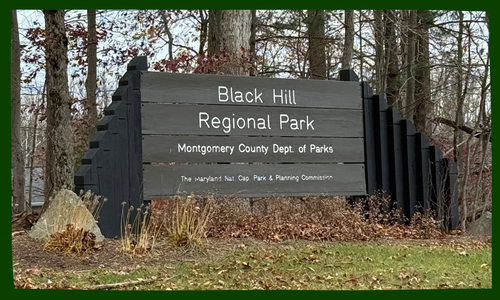
That’s what’s happening at Black Hill Discovery Center in Montgomery County, Maryland — just a few miles from Washington DC — and it’s been happening for over 10 years.
Katrina Fauss — Principal Park Naturalist at Black Hill Discovery Center — joins me to talk about nature-based education, the science of outdoor childhood development, and why Montgomery County has built one of the most thoughtful public nature education programs in the country. We also dig into the park itself: 2,500 acres, a 505-acre reservoir that holds four billion gallons of emergency drinking water for the DC region, 20 miles of trails, and a hidden gem status that means most of the county doesn’t know it exists.
A note from Missy: Katrina started our conversation with a Rachel Carson quote that I’ve been carrying around ever since: “If a child is to keep alive his inborn sense of wonder, he needs the companionship of at least one adult who can share it.” That’s the whole mission. That’s the whole episode.
Episode Guest
Katrina Fauss | Principal Park Naturalist
Black Hill Discovery Center at Montgomery Parks
Show Notes & Links
- Black Hill Regional Park: montgomeryparks.org
- Montgomery Parks: 416+ parks, 38,000+ acres
- Black Hill Discovery Center: nature education programs, forest school, nature-based preschool
- Rachel Carson quote: The Sense of Wonder (1965)
- Geocaching: geocaching.com — Katrina’s favorite way to explore any park
Episode Transcript
Black Hill Discovery Center, Montgomery County Parks
The Parks Podcast, Episode 67 | Katrina Fauss, Principal Park Naturalist, Black Hill Discovery Center, Montgomery Parks
Welcome and Park Stats
Missy Rentz: Imagine spending your childhood learning in nature, playing in the mud, and building ecosystems. In this episode we’ll learn how nature can enhance development and a sense of wonder and joy. Join me as we explore Black Hill Discovery Center. I’m your host, Missy Rentz, and this is The Parks Podcast.
Missy: I am really excited to welcome Katrina Fauss to The Parks Podcast. Katrina is the Principal Park Naturalist at Black Hill Discovery Center at Montgomery Parks in Montgomery County, Maryland. Katrina, welcome to The Parks Podcast.
Katrina Fauss: Thank you, Missy. I’m so excited to be here.
Missy: I am so excited to talk to you. We met several months ago at a conference, and the work that you’re doing there just blew me away. I remember sitting in a session that you presented and I was just beaming with excitement. So let’s dive in and we can teach all of the listeners about the amazing work that you are doing. First of all, let’s talk about some park stats. Black Hill Discovery Center is located in Montgomery County, Maryland. It is part of Black Hill Regional Park. The park opened in 1986 and is more than 2,500 acres. Just some field notes for everybody to know — the property has a history of gold mining since the late 1800s. The mining holes were discovered by George Chadwick when he bought the farm in 1947, and he filled most of those holes in and turned it into a dairy farm. But there is still at least one mining hole there, which is really cool. It’s the home to Little Seneca Lake. The park is filled with all sorts of recreation, including 20 miles of hiking trails, biking trails, fishing, boating, playgrounds, a dog park, and more. And it’s home to the Discovery Center, which helps visitors learn about the area’s diverse ecosystem. It’s such a great park — and who knew it was just a few miles from Washington, DC.
Katrina: It is — we are a hidden gem. Often when people come, they say, “I’ve lived here for 20 years and did not know this park was here.” So yeah, definitely a hidden gem in Montgomery County.
Missy: I am one of those — and I wonder if it’s because I wasn’t into parks so I didn’t know, or if it is just hidden. Because even a couple of months ago when I stopped by, you were like, you have to have Google Maps. It’s not easy to find.
Katrina: Yeah, we’re just off of 270, but I think we’re just far enough over that people don’t realize there’s this lake here.
Missy: Yeah, and you’re driving through these townhome neighborhoods and you think, there’s a park here? And all of a sudden, boom, there’s 2,500 acres of land.
Katrina: Yeah. We are Montgomery Parks’ second largest regional park, so to be called a hidden gem is fun.
Why the Park Exists — and Why County Parks Matter
Missy: Why is the park important?
Katrina: So this park was created in the name of drinking water, if you will. We have a reservoir called Little Seneca Lake, and the reservoir itself belongs to the Washington Suburban Sanitation Commission. They created this 505-acre lake as emergency drinking water. The idea is if our region should have a drought — and it has, it’s been used twice — this would be just enough water to fill in the time period between when they needed it and when they would also release water from Jennings Randolph Reservoir out in western Maryland and West Virginia, a much larger reservoir. So this water just keeps us with enough water until that water gets down river.
Missy: A really important thing — you don’t think about that when you’re just coming in enjoying the beach or putting a boat on the water.
Katrina: So it’s about 505 acres. It’s 4 billion gallons of water, and it’s estimated that is about three days of drinking water.
Missy: Wow, that’s impressive. And you’re the first regional park I’ve spoken to — hopefully the first of many. Why is it so important that counties create these spaces to protect our lands and water?
Katrina: I think that county parks are woven into the fabric of our lives. When I think back to my history as a park goer, it’s early things like the parks near my house. And that’s what our county parks are — we are part of people’s everyday life, and that’s what makes them special and important to people. We manage over 416 parks and over 38,000 acres of our county. We’ve got teeny tiny parks that are your neighborhood playground. We manage a lot of stream valley and protect a lot of streams. Then we have these large expanses of wilderness — as wild as you could be — right outside of DC. We are the second largest park district. Our sister park across 270 is Little Bennett, and that’s over 3,500 acres — some of the most wild land in Montgomery County.
Katrina: So there’s those big things, but they’re also the parks that people are walking every day. These are the places you take your dog. They’re the places you take your celebrations of life — I can’t tell you how many weddings we’ve witnessed, how many memorials, how many graduation parties, how much just joy. But also finding nature. And in COVID it was never more obvious how important we were to people — you’d drive into the park and there were just people six feet apart everywhere. This was very clearly an important part of their life.
Missy: Yeah. And sometimes I think when I’m saying The Parks Podcast, people think of the big national parks. And it is that — and it is also just being outside. And sometimes that’s just a city block where you can be with trees and hear birds and climb on a playground. Those are really important moments for us as people.
Katrina: Right. They’re so important. One of our parks nearby that I like to do some programming in is Germantown Town Center Park — it’s right outside the library in Germantown. Germantown is a pretty urban area, and this park protects wetlands. It was built around a wetland and it does a cool job of it in an artistic way, and it serves this community in the middle of this suburban, urban area. And it’s a tiny bit of wild. Those are the things that I think county park systems give to people in a different way than national and state parks — which are also super important.
Missy: I am guilty of oftentimes seeing a park and going, oh, that park is there for the soccer fields. And then when I dig deeper — like with your park — and I learn all that it does, most of the time it’s not. And I don’t want to diminish the soccer field — it is very important. It serves a huge purpose for a community and for health. Yet so many of these parks are meant to do things that benefit us in other ways — like the water, or making sure we have oxygen because we have our natural habitat, or protecting species of animals that are endangered in our communities because we keep pushing them out with big highways and whatnot.
Katrina: A lot of times our land comes from developments — we protect a portion of water or something like that as urban or suburban expansion happens. There’s important work that we do as a county park system that you probably don’t even see if you’re here for a picnic.
Nature-Based Education and Outdoor Childhood
Missy: I met you at the Maryland Outdoor Recreation Conference, and I often think about the benefits people gain from being outside and being in parks. You introduced me to this whole new concept in outdoor space — educational programs. And I was a kid that played outside, but when I think about having my preschool be outside — that’s game changing for development. And I just wonder how that changes someone and their future to have such a great connection with nature as their entry to life.
Katrina: And I think for so many of us, we’re either lucky enough to have an outdoor childhood or at least portions of it that were outdoors. I do find in our field too, there’s often the opposite — people who were city kids and want to give that to others. And I think about this Rachel Carson quote that is probably my mantra and what I would like to leave this world with: “If a child is to keep alive his inborn sense of wonder, he needs the companionship of at least one adult who can share it, rediscovering with him the joy, excitement, and mystery of the world we live in.” And so I hope to be that one adult.
Katrina: When we’re striving to put together programs, those are the things that we want to do. And when we think about the child as a whole — I often joke that we want to do from birth to death here at Black Hill — we want to provide this continuum of adding to your nature experiences and to your outdoor life. That’s how we’ve created the things we’ve done, and also in response to our community and what they want and what they need. Outdoor nature-based preschools or forest schools have come to the forefront, and so we’ve for 10 years now provided a very affordable, public-park-facing option to do that kind of programming here.
Missy: Tell me more about what a nature-based preschool or a forest school is.
Katrina: So at the most basic level, being outside as much as possible — in all weather, embracing it. And so that does mean playing in the mud and the muck and rain and cold temperatures. And the science behind it supports that so much. Our immune systems are improved by being outside and being dirty — I don’t mean dirty in a bad way, I mean getting in contact with nature. And so that’s something that we can do. Our preschool is outside 95% of the time in good and bad weather. And there’s just such documented benefits to executive functioning, to physical health, to emotional health. The research really supports it — especially now, when children are spending much more time inside and on screens. Getting outside and experiencing nature just opens up so many things in a child’s development.
Missy: And when you think about sensory — all the different textures and sounds and sights and smells. I just wonder what that does to a child’s brain versus just being in a classroom.
Katrina: It’s well documented that it is really important. And there’s an ability to take risks that’s also important to brain development that you can’t necessarily do inside. Being able to climb a tree, to assess risk — even a little bit of risk — really is important for child development and something that can easily be done outside in nature.
Missy: I just want to note — because for some parents who might be listening, it can be scary. I think we’ve been so conditioned to protect and cushion our children, that I think parents would potentially feel nervous about that. But what I will say from what I’ve seen is it’s a supervised activity, so they’re not out there by themselves.
Katrina: Right. And actually, being risk-averse is something that’s detrimental to child development. So yes, we do allow children to take risks in a supervised way. They get to assess that risk and go, is this too big of a risk for me? And that’s something that they need to learn. And that’s something that kids are capable of — even our youngest kids know when something is a little too much for them. We learn how to modulate that. And it’s a beautiful thing.
Missy: I also wonder about — you’re building the next generation of people who love and appreciate parks. And so you’re building future advocates for our public lands by developing this love of nature in children.
Katrina: Oh, a hundred percent. And it’s that Rachel Carson quote again. We’re building those companions to go out into the world, right? And so yes, I hope some of our students who have been with us for years go on to want to be outside and go to national parks and have that love. I really do hope that.
Programs for All Ages — From Birth to Death
Missy: So let’s talk about what’s happening at the center and your programming. You said birth to death — what does that mean in terms of what the center offers?
Katrina: So our preschool is the youngest. But we also do nature-based programming for very young children — for toddlers — and their parents. So it’s that companionship piece: a parent learning how to be in nature with their child, helping their child build that sense of wonder. We have lots of different youth programs for kids of different ages — some of them are school field trips, some of them are community programs. We do school-year programming where kids come on a regular basis and have a dedicated program to them, which is really fun. We also do summer camps. And then we also do programming for adults — for older adults specifically, but also just general adults. One of the programs that I’m really proud of is we do a therapeutic programming for adults with intellectual disabilities who come once a week, every week of the year. And the changes that we see in participants from the beginning of the year to the end of the year are just remarkable and beautiful. And so that, I think, to me, is close to the death end of it, or rather the care end of it. And so we really do believe that nature benefits everyone throughout their entire life.
Missy: That’s so beautiful. And I think there’s a mental health piece to all of this as well. There’s a ton of research that shows that being in nature is healing for mental health as well.
Katrina: Right. And that’s something where I hope that my field starts to really collaborate more and more with the mental health field — because I think there’s a lot that we can offer. And I think the research is going to continue to support that being in nature does support mental health in a meaningful way. And it’s not just going for a hike. It’s sitting in nature. It’s putting your hands in the dirt. It’s being with animals. It’s all of those things that together, over time, with consistency, really do make a difference.
Nature at Every Scale
Missy: What else goes on at Black Hill Discovery Center that we haven’t covered?
Katrina: So we have a Discovery Center, which is a nature center that’s open to the public. We have live animals — we have turtles, we have snakes, we have a beehive behind glass that people can see. We have a touch table where you can touch different things from nature. We have exhibits that change seasonally. We also do evening programs — I love doing evening programs. Doing a night hike, doing a night sky program. There’s something really special about being in nature after dark. We also offer programs just about the lake — fishing programs, things like that. And we’ve been working on building more of a birding program because birding at our park is really good. We are on a major migratory flyway and so we get some really special birds in the spring and the fall. So we’re really trying to build on that and partner with the local birding community to do that. And then we do geocaching programs — I’m a big geocacher myself, and there are lots of caches hidden in our park.
Missy: That’s so cool. I’ll put a link in the episode page to your website and the programs that you offer. For anybody who’s in the DC or Maryland area, this is a place that you should definitely check out. How do they find out more information about the programs?
Katrina: So our website is montgomeryparks.org, and if you go to Black Hill Regional Park, all of our programming is listed there with all the details — when it’s offered, how to sign up. Most of our programs are free or very low cost, which is intentional. We want to make sure that everyone can access what we offer.
Speed Round
Earliest park memory?
Camping in a tent trailer as a young child — a magical first outdoor memory that started a lifelong love of being outside.
What made you love the parks?
Rachel Carson’s words; the mission to be the adult who shares wonder with a child. “I hope to be that one adult.”
Favorite thing about Black Hill Discovery Center?
The community it serves and the diversity of what the park offers — from protecting emergency drinking water to forest school to therapeutic programming.
Favorite thing to do in a park?
Nature-based programs with kids. And sitting in the park with a camp chair. “I like sitting in parks.”
Park on your bucket list?
Visit every Maryland State Park — about halfway through. “That’s my goal.”
Three must-haves for a park visit?
A backpack with water. Phone — for photos and geocaching. A camp chair — “because I also like sitting in parks.”
Tent, camper, or cabin?
“My soul’s in a tent. My body’s in a cabin.”
Hiking with or without trekking poles?
Has them in the car; leaves them there most of the time. “I just appreciate anyway people get outside.”
Favorite trail snack?
A pepperoni sandwich.
Best animal sighting?
Kayaking when fledgling barred owls appeared in the trees above — an owl pellet landed on her arm and boat. “It was magical.”
Favorite sound in the park?
Children laughing.
Greatest gift the parks give to us?
“Connections. Connections to people, connections to the place. It’s about connections and community.”
Missy: Katrina, I am so grateful to you for joining me today — for teaching us about what you have going on at your park, but also just opening up the world of education and development in nature. It’s a beautiful thing. So thank you very much for taking the time.
Katrina: Thank you for the opportunity. This really was full of joy and wonder — just like how we met.
Missy: Yay. Thanks for listening to this episode. Until next time — we’ll see you in the parks.
Music for The Parks Podcast is performed and produced by Porter Hardy. Follow us @TheParksPodcast or visit TheParksPodcast.com.